



Discovering the Taj Mahal: India’s Most Iconic Monument
The Taj Mahal is one of the world’s most celebrated architectural landmarks, admired for its white marble beauty, symmetrical design, intricate decoration, and extraordinary story of love. Located in Agra, Uttar Pradesh, India, on the banks of the Yamuna River, this magnificent mausoleum attracts visitors from around the globe. It is recognised as a UNESCO World Heritage Site and is widely regarded as a masterpiece of Mughal architecture.
Commissioned by Mughal emperor Shah Jahan in memory of his wife Mumtaz Mahal, the monument represents an extraordinary combination of personal devotion, imperial ambition, artistic achievement, and engineering skill. Its beauty is not limited to the famous central dome. The surrounding gardens, reflecting pools, calligraphy, geometric patterns, and carefully arranged buildings all contribute to a unified architectural experience.
For travellers, a visit offers more than an opportunity to photograph a famous landmark. Understanding its history, symbolism, craftsmanship, and practical visitor arrangements makes the experience considerably more rewarding.
The History and Love Story Behind the Monument

Construction began in 1632, following the death of Mumtaz Mahal in 1631. Shah Jahan commissioned the complex as her final resting place, creating a monument that would express both his grief and the power of the Mughal Empire. The principal mausoleum was substantially completed in the 1640s, while the wider complex and surrounding works continued for several more years.
The project brought together architects, calligraphers, stone carvers, masons, and artisans from different parts of the empire and beyond. Although Ustad Ahmad Lahori is traditionally associated with its architectural direction, the monument was the result of extensive collective craftsmanship rather than the work of one individual. Historical records and architectural research help explain the scale of this imperial undertaking.
The story of Shah Jahan and Mumtaz Mahal gives the site its emotional significance, but its historical meaning is broader. It also reflects Mughal political authority, Persian-influenced garden design, Islamic funerary traditions, and the artistic exchange that flourished during Shah Jahan’s reign.
Mughal Architecture and the Beauty of White Marble

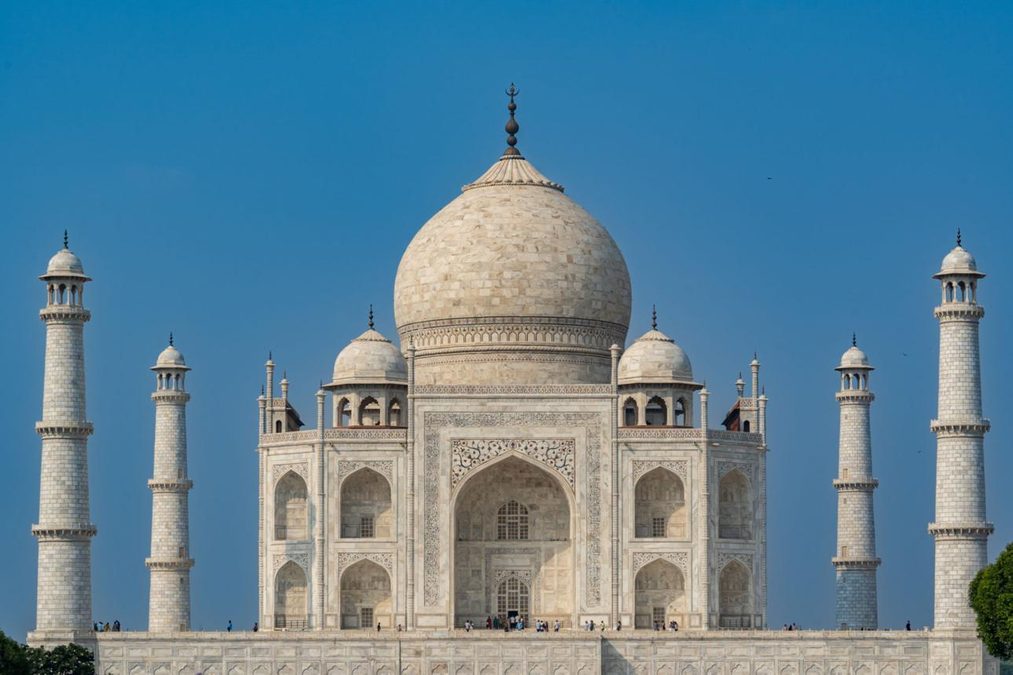
The architectural design combines Persian, Islamic, and Indian influences into a carefully balanced composition. The central mausoleum stands on a raised marble platform, with a large onion-shaped dome surrounded by smaller domed structures and four minarets. The minarets frame the building visually and are positioned with subtle outward inclinations, a design feature often discussed in relation to structural safety.
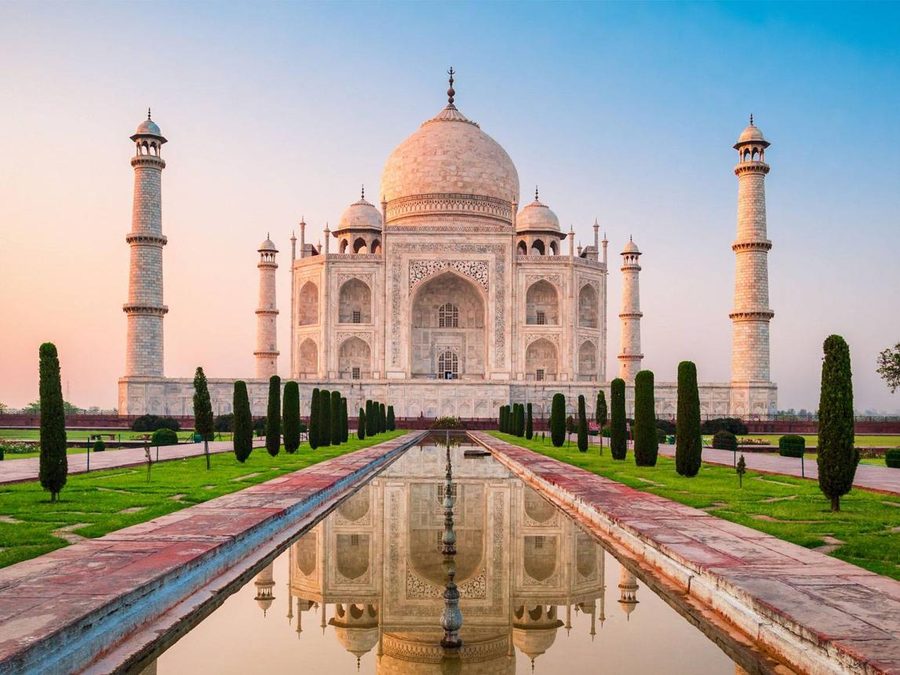
White Makrana marble gives the building its distinctive appearance. Its surface changes with the light, appearing warm and golden around sunrise, bright white during the day, and sometimes softly coloured under moonlight. This visual transformation is one reason photographers and visitors often choose different times of day to appreciate the same structure.
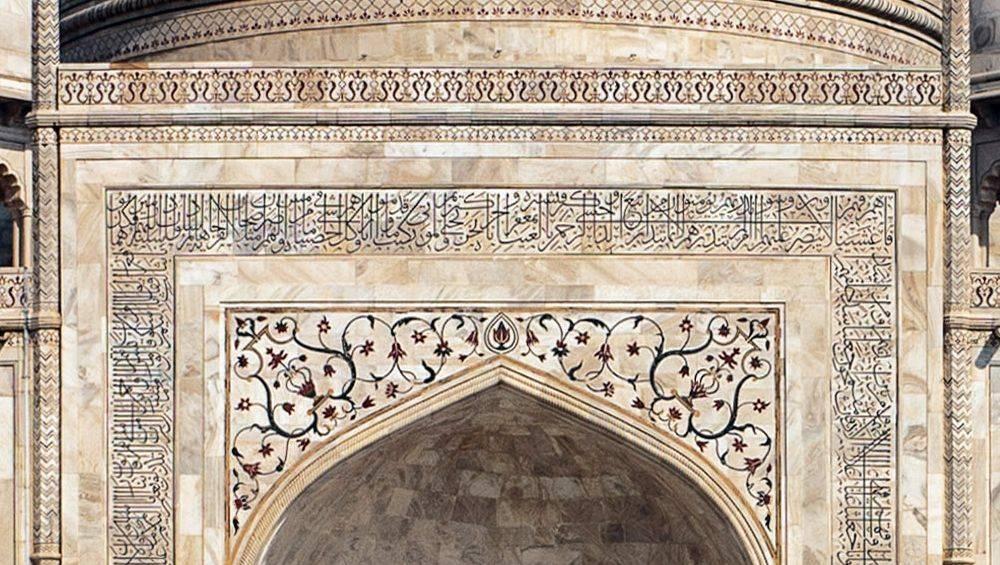
The exterior decoration is equally remarkable. Pietra dura, a technique involving carefully fitted coloured stones, creates delicate floral patterns across the marble. Verses from the Quran appear in elegant calligraphy around entrances and architectural frames. The lettering was designed with optical adjustments so that inscriptions appear proportionate when viewed from below. These details demonstrate how decoration, geometry, and engineering work together rather than competing for attention.
The Gardens, Reflecting Pool, and Complete Complex
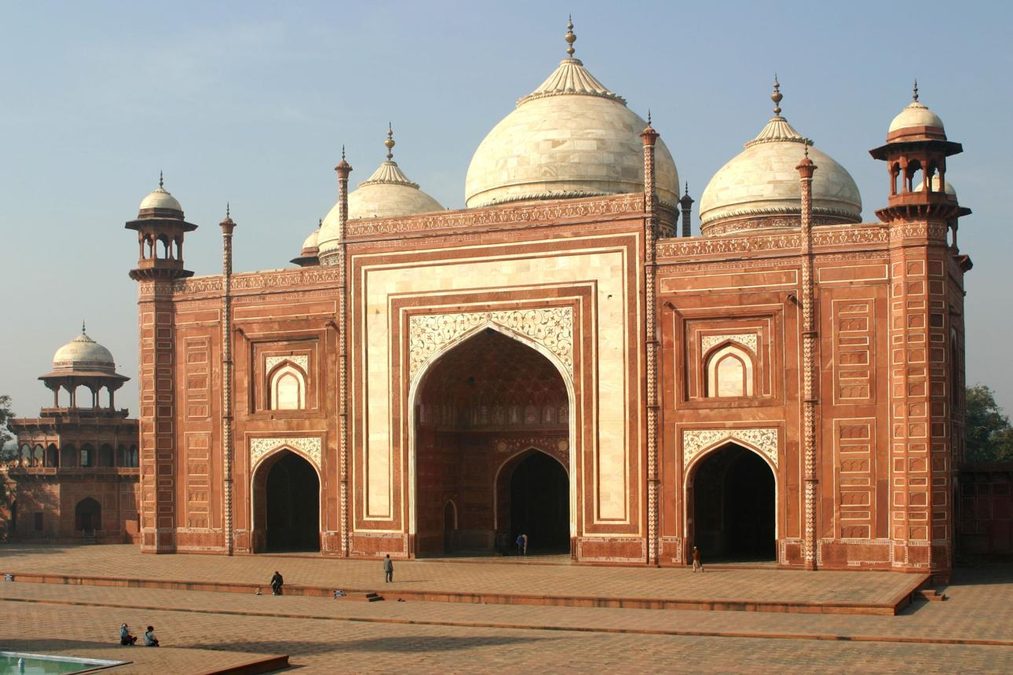

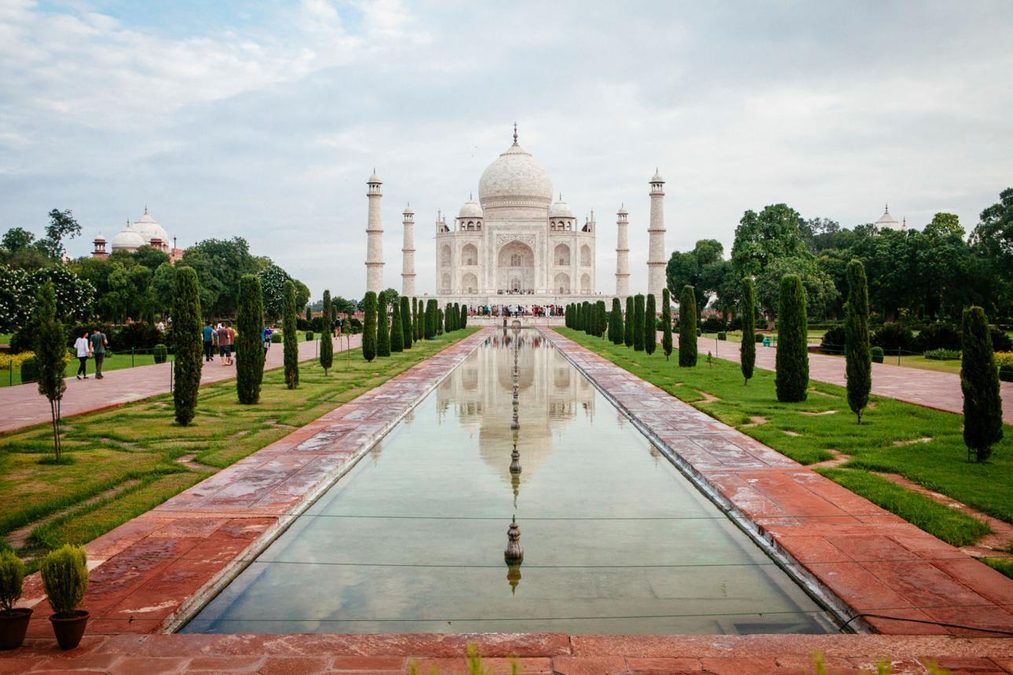
The monument is part of a larger architectural complex, not a standalone building. Its formal Charbagh garden follows a traditional four-part layout associated with Persian and Islamic garden design. Water channels and pathways divide the grounds into symmetrical sections, creating a carefully organised landscape that complements the mausoleum.
The long reflecting pool along the central axis is among the most photographed features. On calm days, the marble building appears mirrored in the water, producing a striking sense of symmetry. Trees, pathways, fountains, and garden sections contribute to the impression of a carefully planned paradise garden, a concept with spiritual associations in Islamic architecture.
Two major red sandstone buildings stand on either side of the main mausoleum: a mosque to the west and a jawab, or architectural counterpart, to the east. Their balanced placement reinforces the symmetry of the complex. Together, these structures show why understanding the entire site provides a richer experience than focusing only on the central tomb.
Best Time to Visit and What to Expect
The most comfortable months for sightseeing in Agra are generally October through March, when temperatures are cooler than during the intense summer period. Early mornings are particularly appealing because the light can be beautiful, crowds may be more manageable, and the weather is often more comfortable for walking through the gardens.
Summer, especially April to June, can bring extreme heat. Visitors travelling during these months should plan around the hottest part of the day, drink sufficient water, wear suitable clothing, and check local weather warnings. The monsoon season can bring humidity and heavy rain, which may affect outdoor sightseeing and photography.
The site is traditionally closed to ordinary visitors on Fridays, while night viewing is offered on selected dates around the full moon, subject to official arrangements. Opening times, entry rules, and special viewing schedules can change, so check current information from the Archaeological Survey of India before travelling.
Visiting the Taj Mahal: Tickets, Entry, and Practical Tips
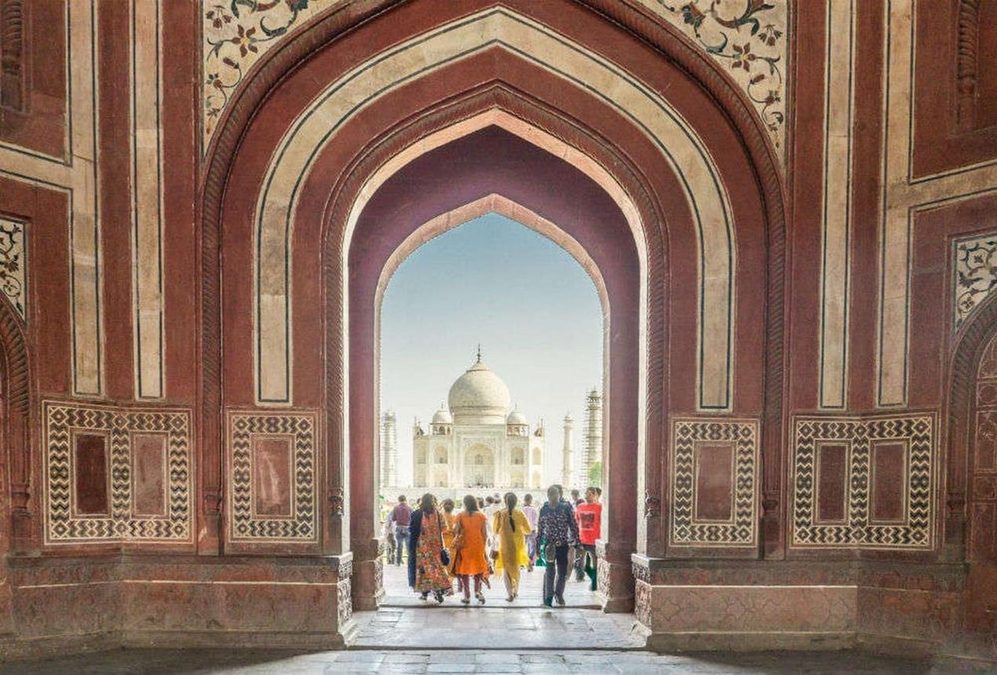
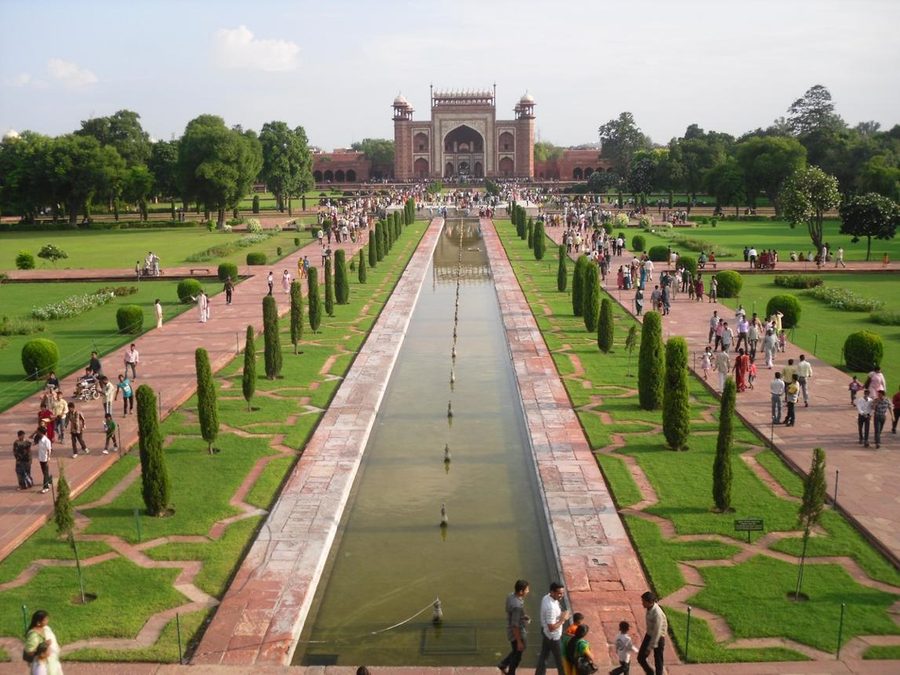
Planning ahead helps make a visit more comfortable. The complex has designated entrances, security checks, and restrictions on certain belongings. Visitors should purchase admission through official channels where possible, check the latest ticket categories and entry conditions, and arrive with enough time for security screening. Foreign visitors and domestic visitors may have different ticket arrangements, so confirm the applicable fee before travelling.
Large bags, food, tobacco products, tripods, and some other items may be restricted or subject to specific rules. Carry only essential belongings, keep your ticket accessible, and follow instructions from security staff. Comfortable walking shoes are useful because the complex involves substantial walking across pathways and courtyards. Visitors should also respect the monument as a protected heritage site by avoiding littering, touching delicate surfaces, or marking the marble.
Photography is a major part of the experience, but the best approach is to look beyond the standard front-facing image. The entrance gateway, side perspectives, garden pathways, and marble details all reveal different aspects of the design. Photography rules vary by area, particularly inside the mausoleum, so follow posted instructions and avoid using equipment that is not permitted.
Exploring Agra Beyond the Monument

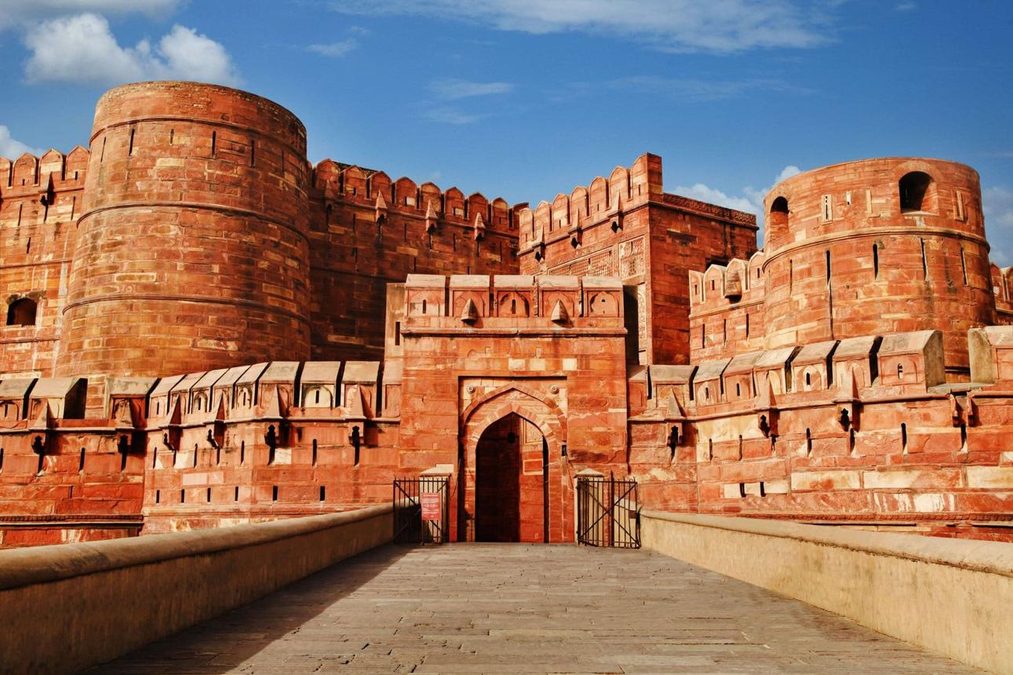
Agra has several important historical attractions that help place the Mughal era in context. Agra Fort, another UNESCO World Heritage Site, was a major imperial residence and military stronghold. Its red sandstone walls, courtyards, audience halls, and palace buildings reveal the political and architectural world in which Shah Jahan lived. The fort also offers views towards the distant mausoleum across the Yamuna River.
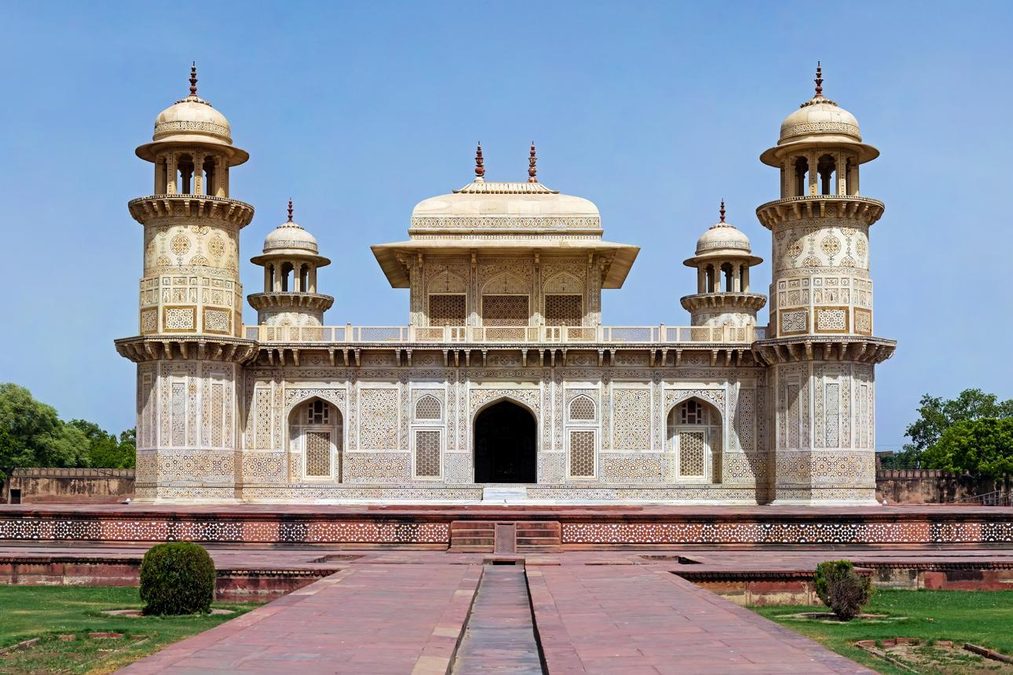
Itimad-ud-Daulah’s Tomb is another worthwhile stop. Often nicknamed the “Baby Taj,” this smaller Mughal mausoleum is known for its refined marble decoration and intricate stone inlay. It provides a useful comparison with the larger imperial monument, particularly for visitors interested in the development of Mughal decorative architecture.
Mehtab Bagh, a garden complex across the river, is known for its views of the mausoleum from the opposite bank. It can offer a different perspective, especially around sunset when the light changes across the river and marble façade. Combining these places creates a fuller historical itinerary rather than treating Agra as a single-attraction destination.
Travel Planning: Transport, Accommodation, and Local Experiences
Agra is connected to major Indian cities by road and rail. Travellers commonly arrive from Delhi, which is roughly a few hours away depending on the chosen transport and traffic conditions. High-speed and express train services can make rail travel convenient, while private cars and organised day trips provide flexibility. Always confirm current schedules and allow extra time for transfers.
Accommodation ranges from budget guesthouses to luxury hotels, including properties with views towards the monument. Staying overnight is often more rewarding than attempting a rushed day trip, because it allows visitors to experience the site at a quieter time and explore Agra Fort and other heritage attractions without hurrying. Choose accommodation based on location, verified reviews, transport access, and clear cancellation conditions.
Agra’s food culture is another part of the experience. Local specialities include petha, a sweet made from ash gourd, and Mughlai-inspired dishes such as kebabs and rich curries. Choose reputable food establishments, check food hygiene, and be mindful of dietary needs. A thoughtful itinerary combines historic sightseeing with time to enjoy the city’s markets, crafts, and cuisine.
Visitor Planning Checklist
A successful visit depends on matching the itinerary to the season, arrival time, and current entry rules. The following overview can help organise a practical day in Agra.
| Planning detail | Recommendation |
|---|---|
| Best general season | October to March |
| Comfortable sightseeing time | Early morning |
| Typical visit duration | 2–3 hours |
| Weekly closure | Friday for ordinary sightseeing |
| Nearby major attraction | Agra Fort |
| Alternative viewpoint | Mehtab Bagh |
| Local speciality | Agra petha |
| Official visitor information | Archaeological Survey of India |
One useful perspective comes from poet Rabindranath Tagore, who famously described the monument as “a teardrop on the cheek of time.” The phrase captures its emotional reputation, but the site is also an extraordinary historical record of Mughal craftsmanship and imperial design.
Frequently Asked Questions About the Taj Mahal
Why was the Taj Mahal built?
The monument was commissioned by Mughal emperor Shah Jahan in memory of his wife Mumtaz Mahal, who died in 1631. Construction began the following year, creating a grand mausoleum that reflected personal grief, imperial power, and the artistic achievements of the Mughal period. It later became one of the world’s most recognised symbols of love and architectural excellence.
Where is the Taj Mahal located?
It is located in Agra, in the northern Indian state of Uttar Pradesh, on the southern bank of the Yamuna River. Agra is connected to Delhi and other major destinations by rail and road, making it a popular stop on travel itineraries through northern India.
How long does it take to visit the Taj Mahal?
Most visitors should allow around two to three hours to explore the main gateway, gardens, mausoleum, and surrounding buildings. Those interested in architecture and photography may want longer, while travellers combining the visit with Agra Fort and other landmarks should plan a full day or an overnight stay.
What is the best time of day to visit?
Early morning is often a good choice because temperatures are generally more comfortable and the changing light creates beautiful views of the marble. Sunrise visits can also help visitors avoid some of the busiest periods, although crowd levels vary by season and day. Always check current opening arrangements before setting out.
Is the Taj Mahal a UNESCO World Heritage Site?
Yes. It was inscribed on the UNESCO World Heritage List in 1983. UNESCO recognises its outstanding architectural significance, its combination of artistic traditions, and its importance as a major achievement of Mughal architecture.
Can visitors see the monument at night?
Night viewing is traditionally arranged on selected dates around the full moon, subject to official rules and availability. Access is limited and operates under specific arrangements rather than normal daytime entry. Check the Archaeological Survey of India’s current announcements for eligible dates, booking procedures, and restrictions.
Is Agra worth visiting beyond the Taj Mahal?
Yes. Agra Fort, Itimad-ud-Daulah’s Tomb, Mehtab Bagh, historic markets, and local food experiences make the city a worthwhile cultural destination. These places reveal different aspects of Mughal history and architecture, helping visitors understand the wider historical setting of the famous mausoleum.
Conclusion: Why the Taj Mahal Remains Unforgettable
The Taj Mahal is far more than a beautiful marble building. Its history connects the personal story of Shah Jahan and Mumtaz Mahal with the political power, artistic traditions, and technical achievements of the Mughal Empire. Its symmetrical gardens, delicate stone inlay, monumental dome, and carefully planned surrounding structures reveal a level of design that rewards close attention.
A memorable visit combines the famous central viewpoint with time to explore the wider complex, Agra Fort, Mehtab Bagh, and the city’s local culture. Planning around seasonal weather, official entry information, and respectful visitor behaviour makes the experience smoother and more meaningful.
Ultimately, the enduring appeal of the Taj Mahal comes from the way architecture and human history meet in one extraordinary place. Its beauty is immediately visible, but its deeper significance emerges when visitors take time to understand the people, craftsmanship, and cultural legacy behind it.