


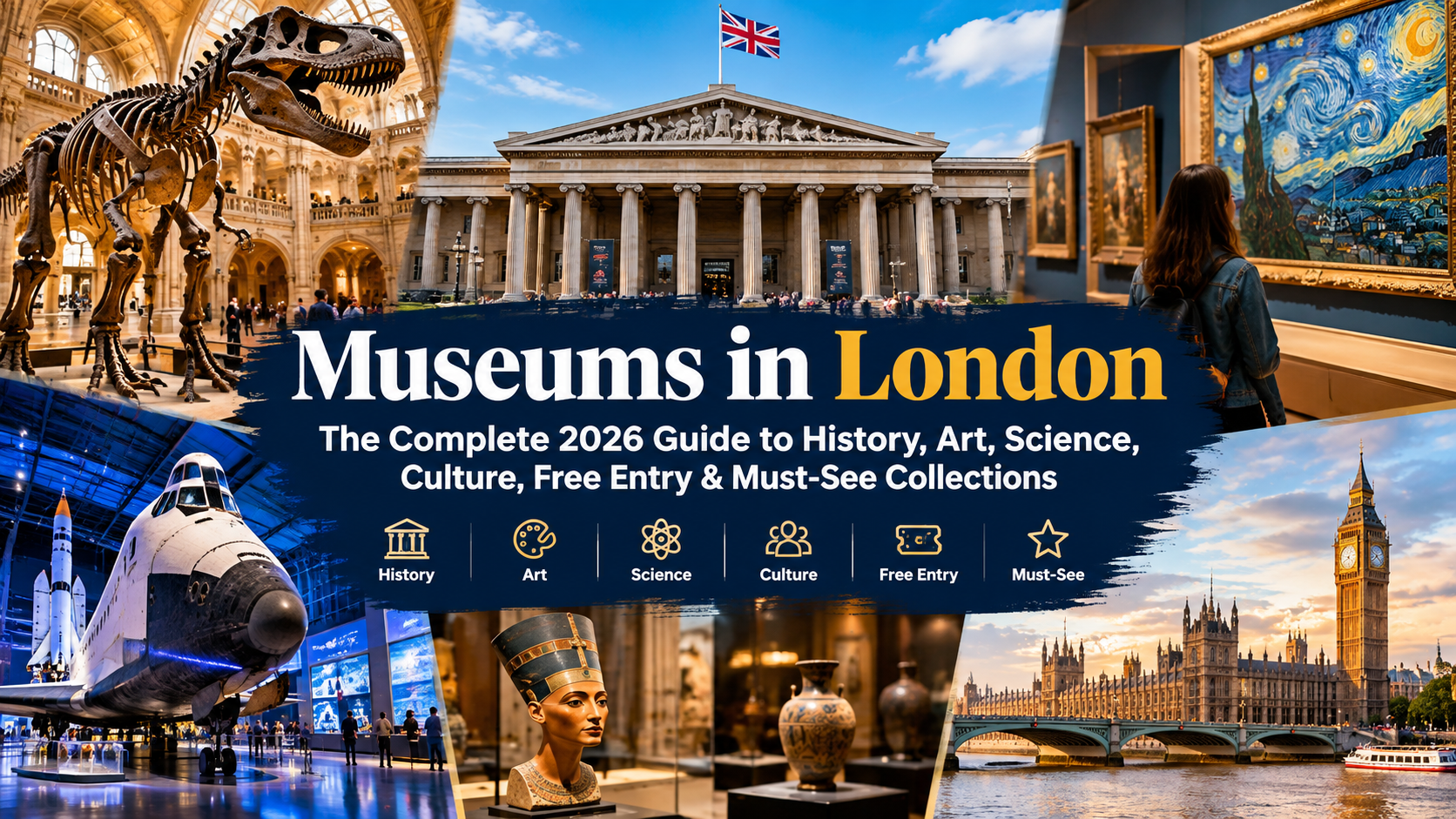
London is one of the world’s great museum cities, bringing together ancient civilizations, British history, fine art, natural science, technology, design, transport, medicine and popular culture. For travelers, students, families and curious locals, the city’s museums offer far more than a rainy-day activity—they provide a way to understand how London and the wider world have changed over thousands of years.
With more than 190 museum venues across the capital, deciding where to begin can be surprisingly difficult. Some institutions are enormous and internationally famous, while others are small specialist collections that can completely change how you see a particular subject. Many major permanent collections are also free to enter, although special exhibitions, immersive experiences and temporary displays may require paid tickets.
The best approach is not simply to chase the most famous building. Instead, choose museums around your interests, available time and location. A visitor fascinated by ancient history will have a very different ideal itinerary from someone traveling with children, an art student researching design or a traveler interested in London’s own social history.
Why London Is One of the World’s Great Museum Cities
The strength of museums in London comes from their extraordinary range. You can examine Egyptian mummies in the morning, explore Victorian engineering in the afternoon and finish the day looking at modern art beside the River Thames. This concentration of cultural institutions makes London particularly rewarding for independent travelers because learning does not have to be separated from sightseeing.
The city’s museum landscape also reflects centuries of collecting, scholarship, scientific research and public education. Institutions such as the British Museum, Victoria and Albert Museum, Natural History Museum and Science Museum have collections that extend far beyond what can be displayed in a single visit. In other words, a museum building is often only the visible part of a much larger research and conservation organization.
A useful way to think about London’s museums is as different lenses on the same world. Art museums explore human expression; science museums explain how the physical world works; history museums preserve evidence of societies and conflicts; design museums reveal how objects shape everyday life. Together, they create a remarkably broad cultural map.
The Best Museums for History and Ancient Civilizations
For travelers interested in human history, the British Museum remains one of the most significant cultural institutions in the capital. Founded in 1753, it brings together objects connected with civilizations across Africa, Asia, Europe and the Americas. Its collections cover more than two million years of human history, with famous highlights including the Rosetta Stone, Egyptian mummies and the Parthenon sculptures.
The challenge is scale. Trying to see everything can turn an interesting visit into an exhausting march through galleries. A better strategy is to select a few areas—such as Ancient Egypt, Ancient Greece and Rome, the Middle East or Asia—and spend enough time with individual objects to understand their historical context. As Visit London notes, the museum has more than 60 free galleries, making advance planning particularly useful.
For a different perspective on London’s own history, the Guildhall Art Gallery and its Roman Amphitheatre offer an unusual combination of art and archaeology. The remains beneath the gallery provide a tangible connection to Londinium, the Roman settlement that developed into modern London. Meanwhile, the gallery above explores London’s artistic history through paintings and related works.
The Natural History Museum and London’s Science Museums
The Natural History Museum is among the most recognizable museums in London, particularly because of its spectacular architecture and enormous collections. Its galleries cover dinosaurs, human evolution, minerals, fossils, Earth’s geological history and biodiversity. The collection contains more than 80 million specimens and objects, illustrating the extraordinary scale of scientific research behind the public displays.
For families, the museum works particularly well because scientific concepts are presented through objects that are visually memorable. A dinosaur skeleton, enormous blue whale model or sparkling mineral collection can turn an abstract scientific topic into something concrete. The experience is also useful for adults because the displays connect individual specimens to larger ideas about evolution, climate, geology and the history of life.
The Science Museum offers a complementary experience focused on technology, engineering, medicine and scientific discovery. Instead of asking only what the natural world contains, it explores what humans have invented, measured and engineered. Historic aircraft, spacecraft, medical objects and industrial technologies demonstrate how scientific knowledge has influenced everyday life.
Together, these South Kensington institutions form one of the most convenient cultural clusters in the city. Visitors can combine them with the Victoria and Albert Museum, although trying to explore all three thoroughly in one day is unrealistic. Choosing one primary museum and adding a shorter second visit is usually more enjoyable.
Art, Design and Visual Culture
Art lovers have an enormous amount to explore, from classical European painting to contemporary installations. The National Gallery in Trafalgar Square is particularly important for Western European art, while Tate Britain focuses strongly on British art and Tate Modern presents an extensive collection of modern and contemporary works.
The Victoria and Albert Museum, commonly known as the V&A, occupies a slightly different position. It is especially valuable for people interested in decorative arts and design, with collections covering fashion, textiles, furniture, ceramics, sculpture, architecture and jewelry. The museum demonstrates that design is not merely decoration—it can reveal technology, economics, social values and changing ideas about identity.
One of the pleasures of museums in London is that visitors can move between these disciplines without traveling far. A person researching fashion might start at the V&A, continue toward contemporary art, and then explore photography or architecture elsewhere in the city. This makes London’s cultural scene particularly useful for students, designers and creative professionals seeking visual references and historical context.
Free Museums and How to Visit Them Without Overspending
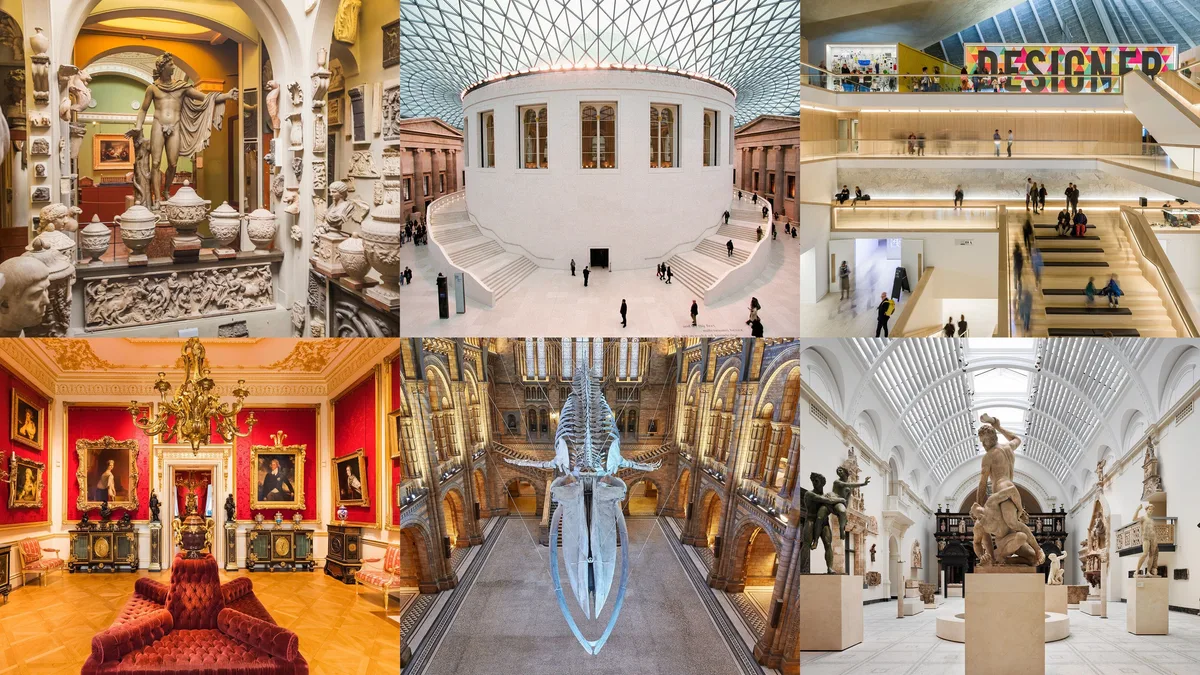
One of London’s biggest advantages for culture-focused travelers is the number of major institutions offering free permanent collections. The British Museum, Natural History Museum, Science Museum, V&A and several other major institutions provide substantial free access, although temporary exhibitions and special experiences can have separate charges.
Free does not mean that planning is unnecessary. Popular museums can become crowded, particularly during weekends, school holidays and peak tourist periods. Booking a free timed-entry slot where offered can make arrival smoother, while visiting early often provides a quieter experience. Always check the official museum website before traveling because opening hours, entry procedures and exhibition arrangements can change.
| Museum | Main Strength | Typical Visit | Entry Approach |
|---|---|---|---|
| British Museum | World history and archaeology | 2–4 hours | Permanent collection generally free |
| Natural History Museum | Dinosaurs, geology and biodiversity | 3–4 hours | Permanent collection generally free |
| Science Museum | Science, engineering and technology | 2–4 hours | Permanent collection generally free |
| V&A | Art, design and fashion | 2–4 hours | Permanent collection generally free |
| National Gallery | European paintings | 2–3 hours | Permanent collection generally free |
| Imperial War Museum | Modern conflict and wartime history | 2–3 hours | General admission generally free |
| National Maritime Museum | Naval and maritime history | 2–3 hours | General admission generally free |
| London Transport Museum | Transport and urban history | 1.5–3 hours | Paid admission |
The important distinction is between general admission and special exhibitions. A museum can be free while a headline temporary exhibition has a separate ticket price. Treat the free collection as the foundation of your visit and paid exhibitions as optional additions when they closely match your interests.
Museums for Families and Children
Family-friendly museums work best when children can interact with ideas rather than simply look at objects behind glass. The Natural History Museum is an obvious example because dinosaurs, animals, fossils and geology naturally encourage questions. The Science Museum adds another dimension through engineering, space, medicine and interactive scientific experiences.
The London Transport Museum is particularly effective for children who enjoy vehicles and machines. Historic buses, trains and transport technology help explain how London’s infrastructure developed and how transportation changed the shape of the city. Younger visitors can connect what they see in the museum with the Underground, buses and railway systems they encounter outside.
The Young V&A is another valuable destination for families, especially those interested in creativity, play, design and childhood culture. For family trips, the best strategy is to avoid treating a museum like a checklist. Pick a handful of highlights, build in breaks and allow children time to investigate objects that genuinely capture their attention.
Specialist and Unusual Museums Worth Exploring
The famous institutions receive most of the attention, but some of the most memorable museums in London are highly specialized. The Wellcome Collection explores medicine, health and human experience through objects, images, archives and artistic interpretation. The Horniman Museum and Gardens combines anthropology, natural history and musical instruments in a setting that feels very different from central London’s grand national museums.
The Imperial War Museum provides another powerful specialist experience, documenting conflict through objects, personal stories, photography, film and historical interpretation. Its First World War and Second World War galleries help visitors understand not only military events but also how wars affected civilians, societies and individual lives.
Greenwich is another excellent museum destination. The National Maritime Museum explores Britain’s relationship with the sea, while the wider Greenwich area adds the Queen’s House, Royal Observatory and Cutty Sark to the cultural experience. This makes Greenwich useful for visitors who want a museum day combined with architecture, historic landscapes and riverside sightseeing.
How to Plan a Museum Day in London
The biggest mistake visitors make is trying to visit too many museums in one day. Large institutions are mentally demanding as well as physically large. After several hours of looking at paintings, artifacts, specimens or technical exhibits, concentration naturally declines. A focused itinerary usually produces better memories than an aggressive checklist.
Location should therefore guide your planning. South Kensington is ideal for combining the Natural History Museum, Science Museum and V&A. Greenwich works well as a separate cultural day. Bloomsbury and central London provide easy access to the British Museum and other cultural attractions. The South Bank and Thames area can be combined with Tate Modern and nearby landmarks.
A practical rule is simple: choose one major museum as the anchor for your day, then add one smaller museum, gallery or attraction nearby. This creates enough structure to keep the day efficient without making it feel like a race.
The Best Time to Visit London’s Museums
There is no single perfect time for every museum, but weekday mornings are generally useful for visitors who prefer quieter galleries. Weekends and school holidays can bring larger crowds, especially to famous family destinations. Late openings can also be valuable because they allow travelers to explore after traditional sightseeing hours.
Weather is another factor. London’s museums become especially attractive during rainy or cold days because they provide substantial indoor experiences without requiring constant movement between outdoor attractions. However, this also means that poor-weather periods can produce sudden visitor surges.
For popular museums, checking official opening hours and ticket policies immediately before your visit is sensible. A museum’s schedule can change for public holidays, private events, maintenance or special exhibitions, so information found months earlier should not automatically be treated as current.
Common Problems and Practical Solutions
One common problem is museum fatigue. The solution is selective viewing: choose several priority objects or galleries rather than attempting to absorb an entire collection. Another problem is unexpected queues. Advance booking, early arrival and avoiding peak periods can reduce unnecessary waiting where timed entry is available.
Another issue is confusing permanent admission with exhibition admission. Travelers sometimes assume that a free museum means every exhibition is free. Instead, check whether the specific display is part of the permanent collection or a separately ticketed temporary program.
Accessibility also deserves attention. Major museums increasingly provide step-free routes, lifts, accessible toilets, seating and other visitor services, but arrangements vary between buildings. Visitors with specific accessibility requirements should check the institution’s official accessibility information before arrival rather than assuming that every historic building offers identical facilities.
Why Museums Matter Beyond Tourism
The value of museums extends beyond sightseeing. They preserve physical evidence that allows people to examine how societies lived, created, traded, fought, worshipped and communicated. A centuries-old object can sometimes explain a historical period more powerfully than a page of text because visitors can see its materials, craftsmanship and physical condition directly.
Museums also encourage critical thinking. Collections can contain complicated histories involving colonialism, conflict, scientific discovery, cultural exchange and changing ideas about ownership. A responsible museum visit is therefore not simply about admiring beautiful or famous objects. It is also about understanding provenance, interpretation and the different perspectives surrounding cultural heritage.
This is why the strongest museum experiences often happen when visitors slow down. Instead of asking how many galleries they can complete, they can ask what a particular object reveals about the people who made, used, collected or preserved it. That shift turns sightseeing into genuine learning.
FAQs About Museums in London
Are museums in London free?
Many major national museums in London offer free general admission to their permanent collections. The British Museum, Natural History Museum, Science Museum, V&A and National Gallery are prominent examples, while temporary exhibitions and special experiences may charge separately. Entry arrangements can change, so checking the museum’s official website before visiting is recommended.
How many museums are there in London?
London has more than 190 museums and museum venues, according to Visit London’s 2026 tourism guidance. They range from enormous international institutions to small specialist collections covering subjects such as transport, medicine, military history, design, literature and local heritage.
Which museums are best for families?
The Natural History Museum and Science Museum are particularly strong choices for families because their collections connect naturally with dinosaurs, animals, space, technology, engineering and scientific discovery. The London Transport Museum and Young V&A also provide family-oriented experiences with strong visual and interactive elements.
How long should you spend at a London museum?
A major museum can easily require two to four hours, while some visitors could spend most of a day exploring a large collection. The ideal duration depends on the institution and your interests. For a first visit, selecting several priority galleries is usually more rewarding than trying to see every room.
What are the best museums for art lovers?
Art-focused travelers can explore the National Gallery, Tate Britain, Tate Modern and Victoria and Albert Museum. Each provides a different perspective, ranging from European painting and British art to modern, contemporary and decorative arts. Combining institutions based on artistic period or subject can make a visit more coherent.
Are London’s museums suitable for solo travelers?
Yes. Museums are particularly convenient for solo travelers because you can move at your own pace, spend longer with interesting objects and change your itinerary without coordinating with a group. Audio guides, tours, cafés and reading areas can also make solo museum visits more engaging.
Conclusion: Making the Most of London’s Museum Scene
The extraordinary strength of museums in London is not simply the number of institutions available. It is the depth and variety of knowledge concentrated across the city. Ancient civilizations, British heritage, natural history, scientific innovation, art, fashion, transportation, military history and design can all be explored within a relatively compact urban area.
For a first trip, start with one or two major institutions that genuinely match your interests rather than trying to collect museum checkmarks. Use free permanent collections to build a cost-effective itinerary, reserve special exhibitions when they are particularly relevant, and group museums geographically to reduce travel time.
Ultimately, the best museum visit is not measured by how many objects you see. It is measured by what stays with you after you leave—the artifact that changes your understanding of history, the painting you keep thinking about, the scientific discovery that suddenly makes sense, or the small detail that makes an entire city feel more understandable. That is what makes exploring museums in London such a rewarding part of experiencing the capital.