


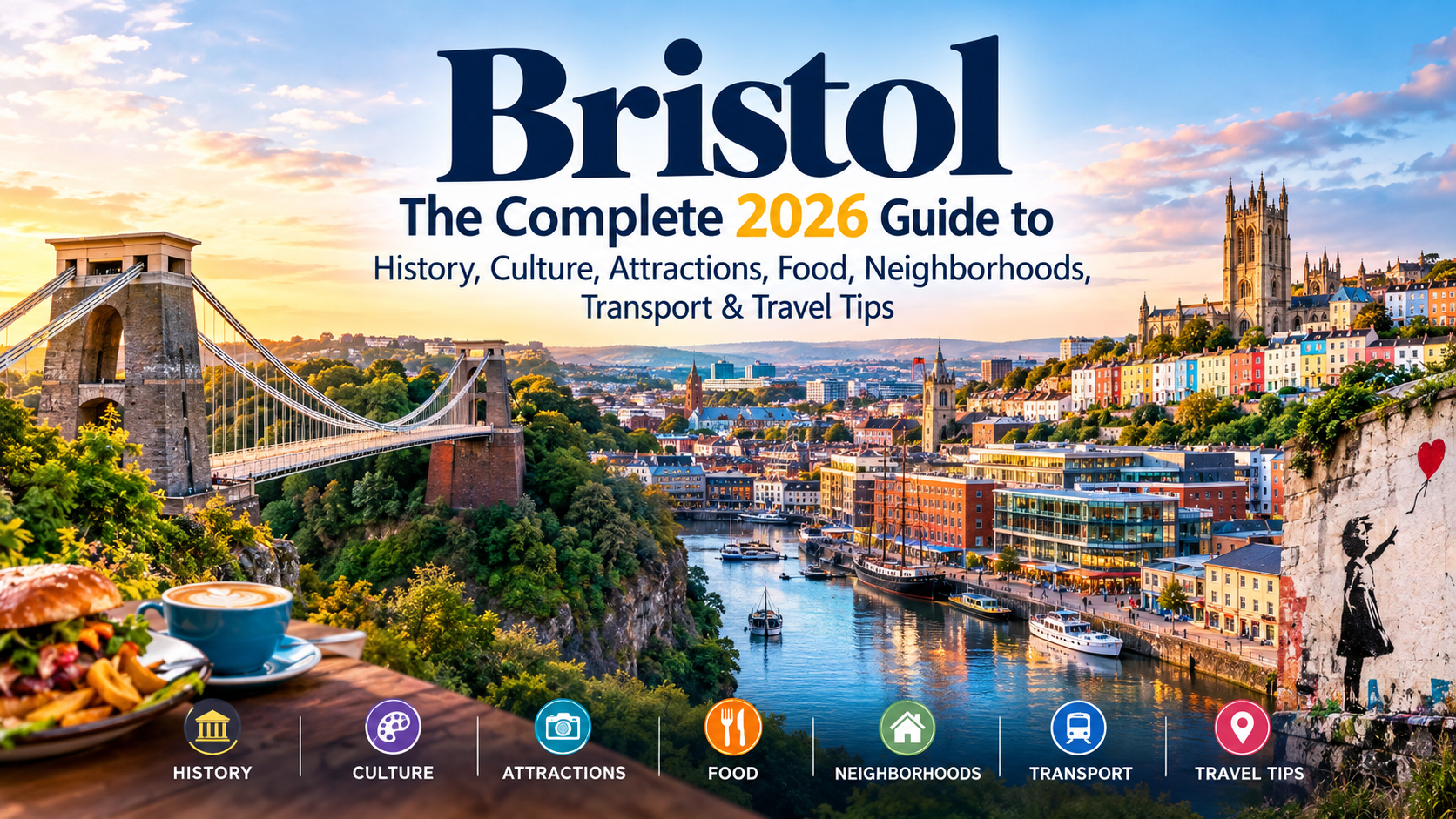
Bristol is one of England’s most distinctive cities, combining maritime heritage, Victorian engineering, creative culture, independent businesses, green spaces and a lively modern atmosphere. Located in South West England around the River Avon, it has developed from an important historic port into a diverse city known for attractions such as the Clifton Suspension Bridge, SS Great Britain, Harbourside and its strong street-art culture.
The city is also unusually diverse and youthful. The latest Bristol City Council estimate puts the mid-2025 population at about 495,300, while the city reports more than 287 ethnic groups, over 185 countries of birth and more than 90 languages spoken. In 2024/25, around 68,800 students were registered at the city’s two main universities, helping give the urban landscape a strong student and creative character.
What makes Bristol particularly interesting for visitors is the way its past and present overlap. A short walk can take you from medieval and Georgian architecture to contemporary galleries, independent cafés, colorful streets and regenerated waterfront spaces. As the official tourism organization puts it, the city has a story shaped by “passionate locals” and an independent identity.
Why Bristol Is Worth Visiting
The appeal of Bristol comes from variety rather than a single attraction. Travelers interested in history can explore the Old City, Bristol Cathedral, St Mary Redcliffe and maritime museums, while engineering enthusiasts can follow the legacy of Isambard Kingdom Brunel through the Clifton Suspension Bridge and SS Great Britain. Art lovers can search for Banksy-associated works and explore the city’s galleries and creative districts.
The city also works well for different types of trips. A couple can combine a Harbourside walk with restaurants and sunset views, families can explore museums and attractions around the waterfront, while solo travelers can spend hours moving between markets, cafés, galleries and historic streets. The key is to avoid treating Bristol as a collection of isolated sights; its character is best understood by walking between neighborhoods and noticing how the architecture, landscape and culture change.
Bristol History and Maritime Heritage
The history of Bristol is deeply connected with trade, shipping and the River Avon. Its historic port helped make the city an important commercial center, while the Floating Harbour later became a defining feature of its urban landscape. Today, areas once associated with docks and maritime industry have been transformed into cultural and leisure destinations while retaining reminders of their industrial past.
Maritime history is particularly visible around the Harbourside. Brunel’s SS Great Britain remains one of the city’s major heritage attractions and sits in the same dry dock where the famous iron-hulled ship was built in the nineteenth century. Nearby M Shed explores local history, while Underfall Yard provides insight into the engineering behind the Floating Harbour. This creates a useful problem-and-solution lesson for urban travelers: rather than seeing regeneration as the disappearance of history, Bristol shows how industrial heritage can become part of a modern visitor experience.
Clifton Suspension Bridge and Brunel’s Legacy
The Clifton Suspension Bridge is arguably the visual symbol most strongly associated with Bristol. Spanning the Avon Gorge, it represents one of the city’s most remarkable engineering stories and is closely connected with Isambard Kingdom Brunel. The bridge project began in the eighteenth century, Brunel won the design competition in 1829, construction began in 1836, and the completed bridge opened to the public in 1864 after significant delays and financial difficulties.
Seeing the bridge from different perspectives makes the experience more rewarding than simply taking a photograph from one viewpoint. Clifton Observatory provides views across the gorge, while the surrounding Clifton area offers attractive Georgian streets and walking routes. The deeper lesson is that the landmark is not just an architectural object; it connects engineering, landscape, Victorian history and the development of the city.
Harbourside, Museums and Cultural Attractions
The Harbourside is one of the easiest places to understand modern Bristol. The former dock area now contains restaurants, bars, hotels, cultural venues and attractions, with walking routes following the water. Visit Bristol highlights destinations including SS Great Britain, Bristol Aquarium, M Shed, Arnolfini, Spike Island, Watershed and Underfall Yard around the wider waterfront area.
For visitors with limited time, the Harbourside can solve a common travel problem: trying to fit too many attractions into one day. Instead of crossing the entire city repeatedly, travelers can group several experiences geographically. A museum visit can lead into a waterfront walk, followed by lunch or coffee, then an evening meal nearby. This makes the area especially practical for first-time visitors and families who want flexibility.
| Area or attraction | What it offers | Best suited to |
|---|---|---|
| Clifton | Georgian architecture, viewpoints and the Suspension Bridge | Walkers, couples, photographers |
| Harbourside | Museums, waterfront walks, restaurants and culture | First-time visitors and families |
| Old City | Historic streets, architecture and markets | History and architecture lovers |
| Stokes Croft | Creative culture, street art and independent venues | Art and nightlife enthusiasts |
| Cliftonwood | Colorful houses and residential character | Photography and relaxed walks |
| Brandon Hill | Green space and city viewpoints | Outdoor breaks and panoramas |

Neighborhoods and Local Character
One of the best ways to experience Bristol is to move beyond the headline attractions. Clifton has an elegant architectural character and sits close to the Avon Gorge, while Cliftonwood is known for colorful homes and attractive streets. The Old City offers a stronger connection with historic Bristol, with surviving architecture and compact streets that are easy to explore on foot.
Other districts reveal a more contemporary side. Stokes Croft and nearby areas are associated with independent businesses, creative activity and street art, while Southville has become known for cafés, local shops and a community-oriented atmosphere. Neighborhood choice can therefore shape the entire mood of a trip: a visitor seeking heritage may naturally gravitate toward Clifton and the historic center, while someone interested in independent culture may spend more time exploring creative districts.
Food, Markets and Bristol’s Independent Scene
Food in Bristol reflects the city’s diverse population and independent-minded culture. Visitors can find traditional British dishes alongside international cuisines, vegetarian and plant-based choices, cafés, bakeries, street food and contemporary restaurants. The city’s large student population and international communities contribute to a broad dining landscape rather than a narrowly defined local cuisine.
For travelers, the practical solution is to treat food as part of neighborhood exploration. Instead of planning every meal around major tourist attractions, leave room for independent cafés, markets and restaurants encountered while walking. Local cider and craft beer are also part of the wider South West food-and-drink culture. The result is a dining experience that often feels more connected to everyday city life than a purely sightseeing-focused itinerary.
Street Art, Creativity and Contemporary Culture
Bristol has a globally recognized association with street art, particularly through Banksy, whose work has become closely connected with the city’s cultural identity. Official tourism information includes Banksy street-art tours among the city’s notable experiences, alongside its bridges, boats, museums and creative attractions.
The important thing, however, is not to reduce the city’s creative identity to one artist. Galleries, music venues, festivals, independent shops, film culture and community projects contribute to a broader creative ecosystem. Bristol is also recognized by UNESCO as a Creative City of Film, according to Visit Bristol’s current tourism information. For visitors, this means contemporary culture can be discovered in ordinary streets as easily as inside formal cultural institutions.
Getting Around and Planning a Visit
Bristol is a practical city to explore on foot in its central areas, although its hills can make walking more demanding than a map might suggest. Comfortable footwear is useful, particularly if your itinerary includes Clifton, Brandon Hill, the Harbourside and historic streets in the same day. Public transport can help when distances become inconvenient, while cycling and other active travel options can also work for suitable routes.
A useful planning principle is to group attractions by area. For example, a morning around Clifton can include the Suspension Bridge and nearby viewpoints, while an afternoon around the Harbourside can combine museums, waterfront walking and food. Visit Bristol provides an official 2026 visitor guide together with maps and travel information for planning journeys before arrival.
When to Visit Bristol
There is no single perfect season because the best timing depends on what you want from the city. Spring and summer generally make outdoor exploration, parks, waterfront walks and viewpoints more comfortable, while autumn can bring a different atmosphere to historic streets and green spaces. Winter can suit travelers who prefer museums, cafés, restaurants and indoor cultural experiences.
Events can also influence the character of a visit. Bristol has a substantial calendar of festivals and cultural activities, and its official tourism site regularly publishes current event information. Because event dates, opening arrangements and attraction schedules can change, checking official information shortly before travel is more reliable than depending on an old itinerary.
How to Spend a Day in Bristol
A well-balanced one-day itinerary should focus on geography rather than trying to see everything. Start around Clifton and the Avon Gorge, explore the Clifton Suspension Bridge and surrounding streets, then move toward the city center. This gives the morning a strong combination of scenery, architecture and engineering history.
Spend the later part of the day around the Harbourside and historic center. A museum or ship visit can be followed by a waterfront walk, dinner and an evening exploration of central streets. The advantage of this approach is that the day feels like a continuous journey through the city rather than a checklist of attractions.
Practical Travel Tips and Common Mistakes
One common mistake is underestimating the city’s hills and walking distances. A route that appears short on a map can feel considerably longer when it involves slopes, busy streets or multiple stops. Another mistake is trying to photograph famous landmarks without spending time understanding their history. Reading a little about Brunel, the port and the Floating Harbour can transform familiar sights into much more meaningful experiences.
Another useful tip is to leave space for unexpected discoveries. Bristol rewards travelers who wander because independent shops, street art, cafés, architectural details and small cultural venues are spread throughout different districts. The city’s official visitor resources also provide current information on attractions, areas, maps, accessibility and travel planning, making them useful for checking practical details before a trip.
Frequently Asked Questions
What is Bristol best known for?
Bristol is particularly known for the Clifton Suspension Bridge, Brunel’s SS Great Britain, its historic maritime heritage, Harbourside, creative culture and association with Banksy. Its combination of engineering history, waterfront regeneration and contemporary arts gives the city a character that is different from many other English destinations.
Is Bristol good for a weekend trip?
Yes, Bristol works well for a weekend because major attractions are spread across manageable areas and can be combined with food, shopping, museums and walking. A two-day visit allows travelers to explore Clifton, the Harbourside, historic neighborhoods and parts of the city’s creative scene without rushing every stop.
Is Bristol expensive to visit?
Costs vary according to accommodation, dining choices, attractions and travel dates. Visitors can control spending by combining paid attractions with free walking routes, parks, viewpoints and public spaces. Planning attractions geographically can also reduce unnecessary transportation costs and make a short stay more efficient.
What should first-time visitors see in Bristol?
First-time visitors often focus on the Clifton Suspension Bridge, Harbourside, SS Great Britain, M Shed, Bristol Cathedral, historic central streets and selected street-art locations. The best experience comes from combining major landmarks with neighborhood exploration rather than spending the entire trip inside formal attractions.
How many days are enough for Bristol?
Two days provide a useful introduction to the major landmarks, waterfront, historic center and selected neighborhoods. Three or more days allow a slower pace and create room for additional museums, independent food spots, creative districts, nearby attractions and longer walks.
Is Bristol suitable for families?
Bristol can work particularly well for families because its attractions include museums, maritime heritage, waterfront activities, green spaces and educational experiences. The Harbourside is especially convenient because several attractions are located close together, making it easier to adjust the day around children’s energy levels and interests.
Conclusion
Bristol brings together centuries of maritime history, remarkable engineering, contemporary creativity and a distinctly independent urban personality. From the Avon Gorge and Clifton Suspension Bridge to the regenerated Harbourside and historic center, the city offers enough variety to appeal to history enthusiasts, families, photographers, food lovers and travelers interested in contemporary culture.
The strongest way to experience Bristol is to combine its famous landmarks with its less obvious details: neighborhood streets, local food, independent businesses, museums and everyday creative life. Its latest population figures and continuing cultural diversity also show a city that is changing while remaining closely connected to its historic identity.
The final insight is simple: Bristol is best understood not as a destination built around one attraction, but as a city where engineering, waterways, art, food, architecture and community continually overlap. That combination is what makes a visit memorable long after the photographs have been taken.