


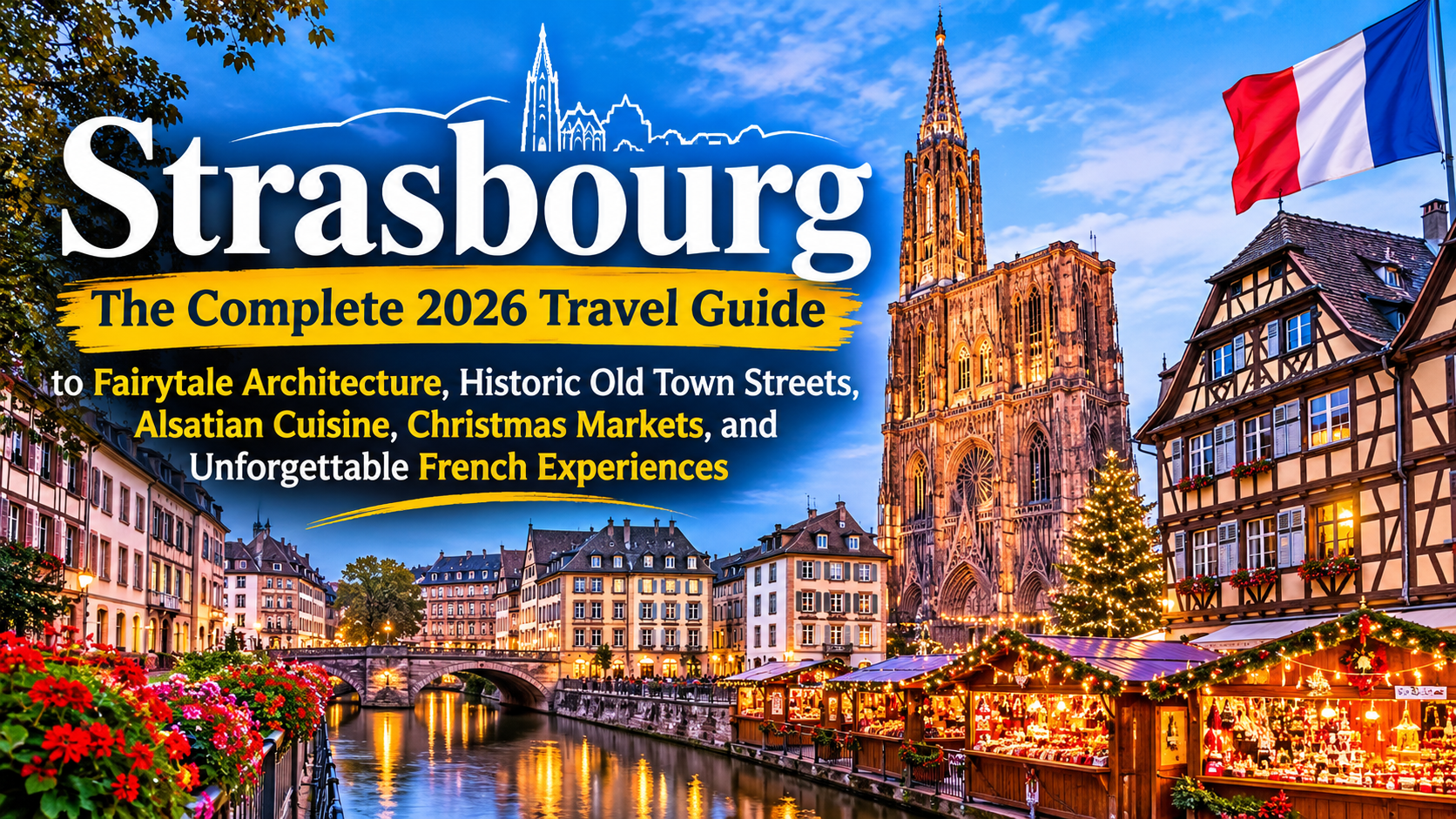
Strasbourg is one of France’s most enchanting cities, combining medieval architecture, elegant canals, historic squares, and a distinctive blend of French and German influences. Located in the Alsace region near the German border, it has a character shaped by centuries of cultural exchange, changing political boundaries, and a strong regional identity.
The city is particularly famous for its picturesque half-timbered houses, the magnificent Strasbourg Cathedral, and the charming canals of Petite France. It is also an important European centre, home to major institutions including the European Parliament and the Council of Europe.
Whether you are planning a romantic weekend, a cultural city break, or a longer journey through eastern France, Strasbourg offers an appealing combination of history, architecture, food, and memorable seasonal experiences.
Where Is Strasbourg and What Makes It Special?
Strasbourg is situated in northeastern France, close to the German border, in the historic region of Alsace. Its location along the River Ill and its position within the Rhine valley helped make it an important centre for trade, transport, and cultural exchange over many centuries.
Its identity is particularly interesting because French and German traditions coexist throughout the city. This influence can be seen in the architecture, local dialect, food, festivals, and even the names of historic streets. Alsatian culture has its own distinctive character, making the city feel different from many other French destinations.
The historic centre, known as the Grande Île, is surrounded by branches of the River Ill and recognised as a UNESCO World Heritage Site. Its preserved streets, churches, and historic buildings create an atmosphere that feels almost like an open-air museum, while modern shops, restaurants, and public spaces keep the area lively.
Explore Petite France and Its Fairytale Canals

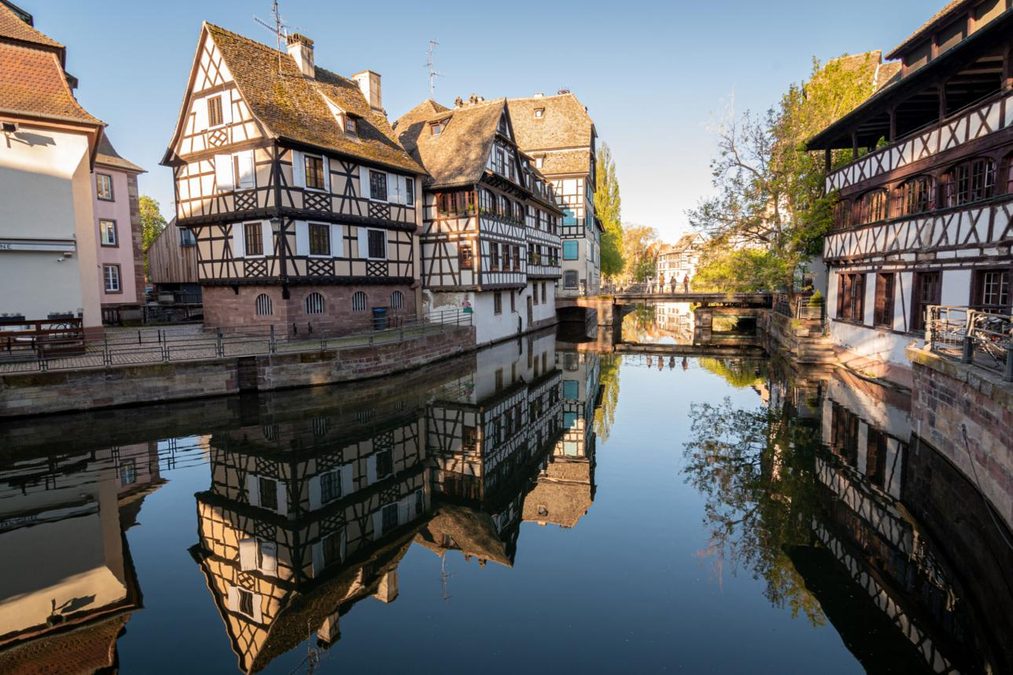
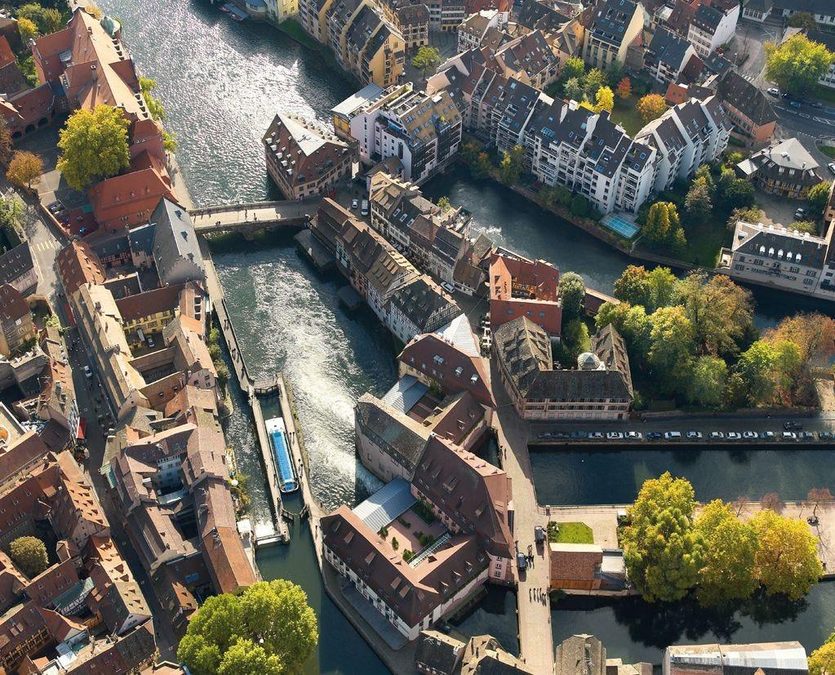
Petite France is arguably the most picturesque neighbourhood in the city. Located on the western side of the Grande Île, this historic district is known for its narrow cobbled streets, timber-framed houses, flower-covered bridges, and peaceful waterways.
Many of the buildings date from the medieval and Renaissance periods. Historically, the neighbourhood was associated with millers, fishermen, and tanners, whose livelihoods depended on the River Ill. The distinctive architecture reflects the practical needs of these trades, with some houses featuring steep roofs and upper floors designed for drying materials.
Today, the district is one of the best places for photography and relaxed exploration. Walking beside the canals offers constantly changing views of historic façades, small bridges, and riverside restaurants. Early mornings are particularly rewarding because the streets are generally quieter and the soft light creates beautiful reflections across the water.
Visit Strasbourg Cathedral: A Masterpiece of Gothic Architecture
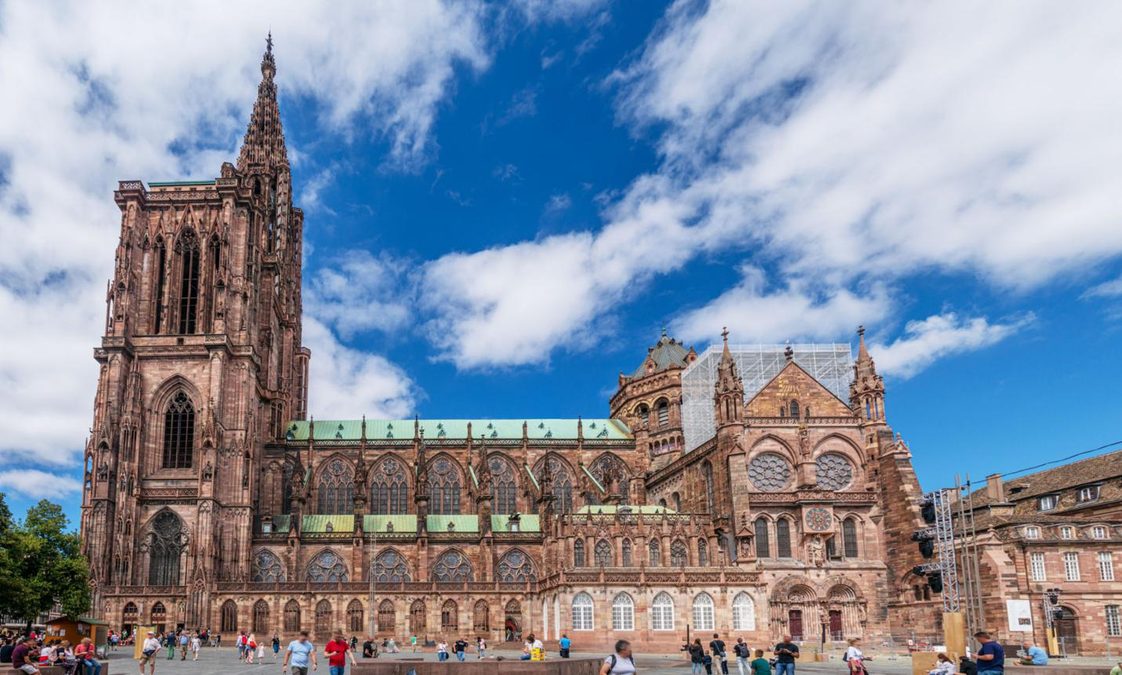
The Strasbourg Cathedral is the city’s most recognisable landmark and one of Europe’s outstanding examples of Gothic architecture. Built primarily from pink Vosges sandstone, its intricate façade features detailed sculptures, elaborate stonework, and a remarkable single spire rising above the surrounding rooftops.
Construction began in the 11th century, with major Gothic additions developing over subsequent centuries. The cathedral was once the tallest building in the world, and its impressive proportions remain striking when viewed from the surrounding historic square.
Inside, visitors can admire stained-glass windows, detailed religious artwork, and the famous astronomical clock. The clock is particularly fascinating because it combines artistic craftsmanship with complex astronomical calculations. Its animated figures and mechanical displays attract visitors throughout the year, although access and viewing arrangements should be checked in advance.
For an especially memorable experience, consider climbing the cathedral platform when it is open. The elevated viewpoint provides sweeping views over the old town, the surrounding Alsatian landscape, and, on clear days, the distant Vosges Mountains and Black Forest.
Discover the Historic Grande Île and Its Cultural Landmarks

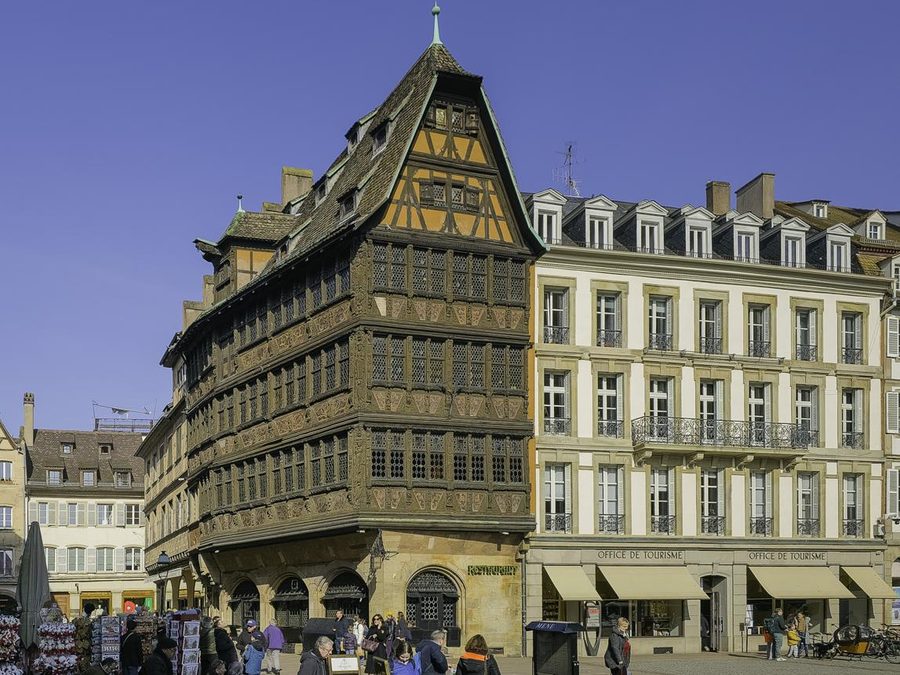
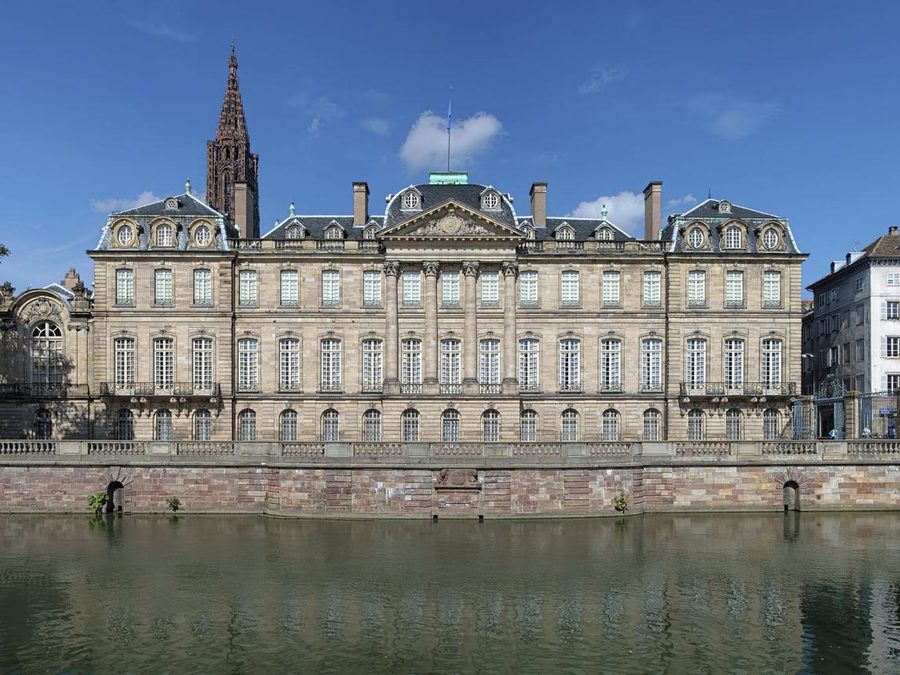
Beyond Petite France and the cathedral, the Grande Île contains numerous landmarks that reveal the city’s architectural and political history. Place Kléber is its largest central square and an important meeting point surrounded by shops, restaurants, and historic buildings. It is also a major location for seasonal events and Christmas celebrations.
Another remarkable building is the Maison Kammerzell, a richly decorated historic house near the cathedral. Its carved timber details and elaborate façade make it one of the most distinctive examples of the city’s traditional architecture. Today, it is also associated with dining and Alsatian gastronomy.
The Palais Rohan is another major attraction. This elegant 18th-century palace houses several museums, including collections dedicated to fine arts, decorative arts, and archaeology. Its impressive interiors provide a different perspective on the city’s history, moving beyond medieval streets into the world of aristocratic European culture.
Experience Alsatian Food and Traditional Restaurants

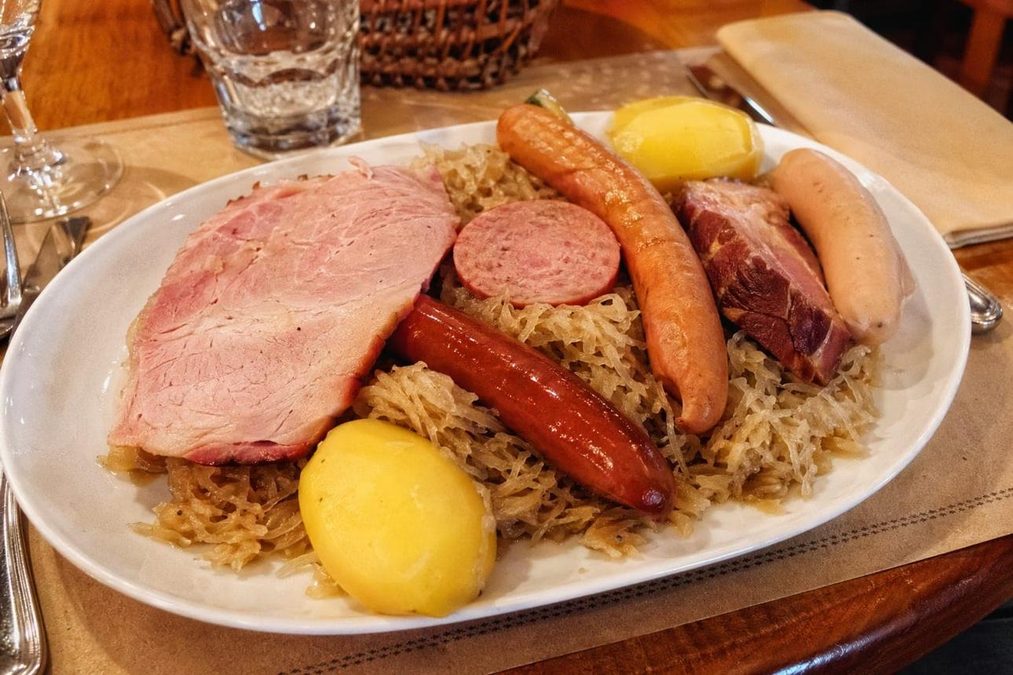
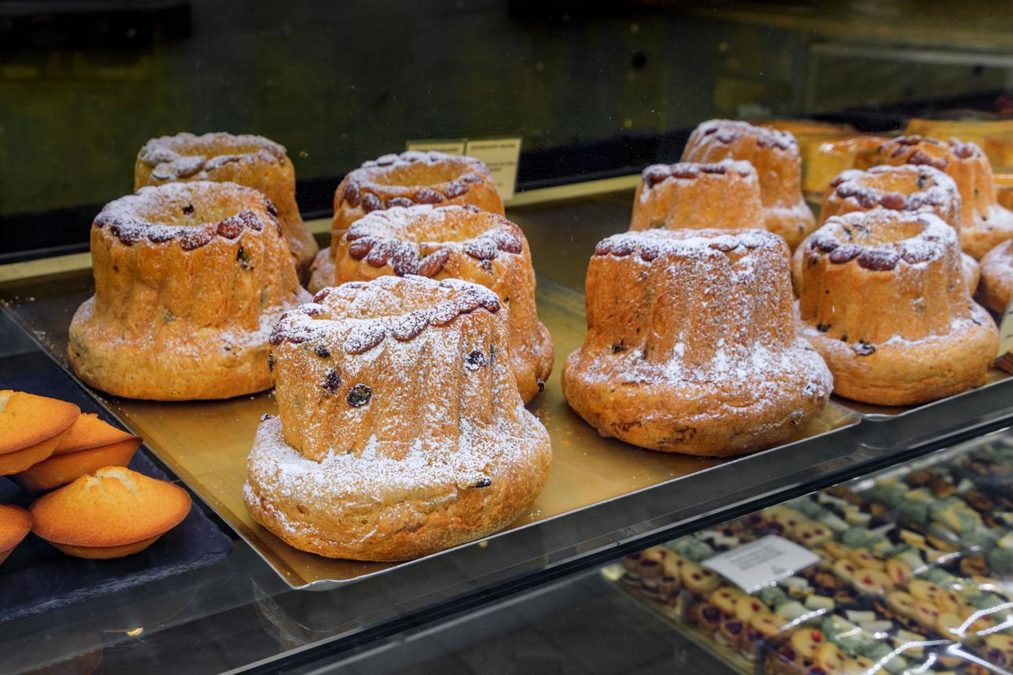
Food is one of the most enjoyable ways to understand the region’s mixed cultural heritage. Alsatian cuisine combines French cooking techniques with influences from neighbouring Germany, producing hearty dishes, distinctive pastries, and a strong tradition of local ingredients.
One of the best-known specialities is tarte flambée, also called flammekueche. This thin, crisp dough is traditionally topped with crème fraîche, onions, and bacon. It is often shared at the table, making it a popular choice for a casual meal with friends or family.
Another regional favourite is choucroute garnie, a substantial dish featuring fermented cabbage served with sausages and other meats. Visitors with a sweet tooth should look for kougelhopf, a traditional ring-shaped cake, and local bakeries also offer a variety of pastries influenced by Alsatian traditions.
Wine is another important part of the region’s food culture. Alsace is known for white wines such as Riesling, Gewürztraminer, and Pinot Gris. Visitors who do not drink alcohol can still explore the region’s culinary identity through its food markets, bakeries, and traditional restaurants.
Strasbourg Christmas Markets and Seasonal Celebrations
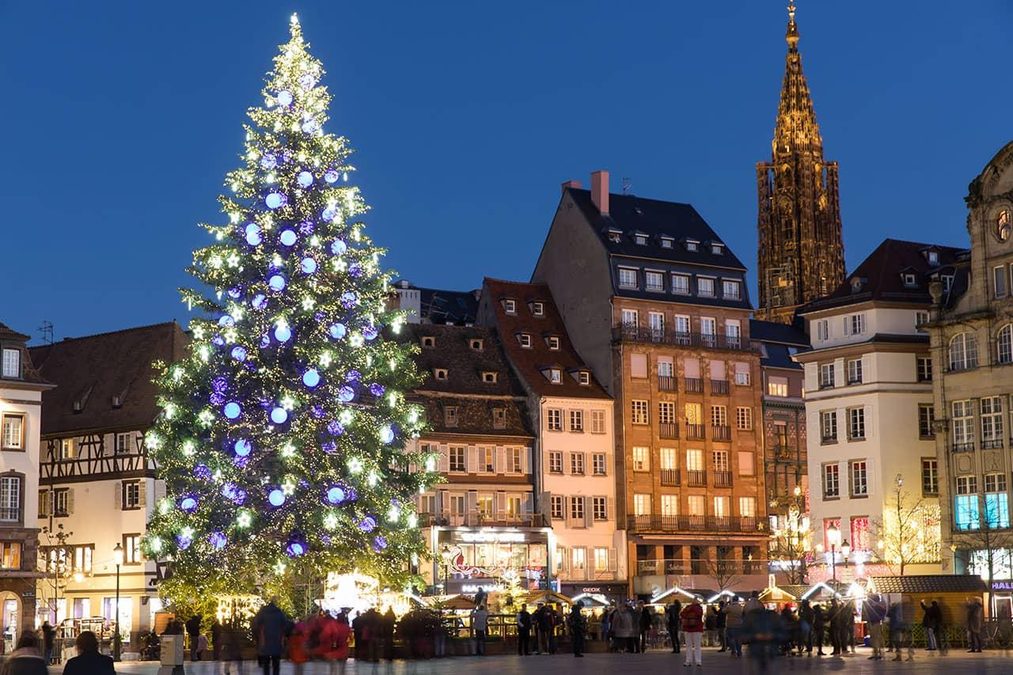


Strasbourg is internationally famous for its Christmas markets, which transform the historic centre into a festive destination during the winter season. The tradition dates back to 1570, when the Christkindelsmärik was established, making it one of Europe’s oldest Christmas markets.
During the festive period, wooden stalls appear across central squares, selling decorations, handmade gifts, seasonal food, and regional products. Illuminated streets, decorated façades, and the large Christmas tree at Place Kléber contribute to the atmosphere.
The experience is particularly appealing after sunset, when the historic buildings are illuminated and the market streets become especially atmospheric. However, the popularity of the event means the centre can become extremely crowded, particularly during weekends. Visitors should consider travelling on weekdays and booking accommodation well in advance.
European Institutions and Modern Strasbourg

Strasbourg is not only a historic tourist destination; it is also an important centre for European cooperation. The city hosts the European Parliament and the Council of Europe, giving it a significant role in European political and diplomatic life.
The European Parliament’s Louise Weiss building is an impressive modern structure in the European Quarter. Its distinctive architecture contrasts with the medieval buildings of the old town and demonstrates how the city has developed beyond its historic centre.
Visitors interested in European affairs can explore the area and check whether guided visits or parliamentary sessions are available during their stay. Access arrangements vary, so checking official institutional information before travelling is important.
Best Time to Visit and Seasonal Weather
The best time to visit depends on the type of experience you want. Spring, particularly April and May, offers mild weather, blossoming flowers, and pleasant conditions for walking through the historic centre. Outdoor cafés and riverside areas become increasingly lively as temperatures rise.
Summer brings longer days and opportunities for canal cruises, outdoor dining, and exploring nearby Alsatian villages. However, July and August can be busy, and temperatures may become uncomfortable during particularly hot periods. Autumn is attractive for its changing foliage, wine-related experiences, and generally pleasant sightseeing conditions.
Winter is especially popular because of the Christmas markets, but temperatures can be cold and accommodation demand increases significantly.
| Season | Typical atmosphere | Best experiences | Things to consider |
|---|---|---|---|
| Spring | Mild and colourful | Walking, sightseeing, canals | Changeable weather |
| Summer | Warm and lively | Boat tours, outdoor dining | Crowds and occasional heat |
| Autumn | Relaxed and scenic | Wine routes, photography | Cooler evenings |
| Winter | Festive and atmospheric | Christmas markets, seasonal food | Cold weather and busy markets |
For most first-time visitors, late spring and early autumn offer an excellent balance between comfortable weather and manageable crowds. Christmas is the exception for travellers specifically interested in festive celebrations.
Getting Around and Practical Travel Tips

The historic centre is compact and particularly enjoyable on foot. Many of the most important attractions are close together, so visitors can comfortably explore the cathedral, Petite France, Place Kléber, and nearby museums without relying heavily on transport.
Strasbourg also has an extensive tram network that connects the central districts with residential neighbourhoods and the European Quarter. The city is well known for its cycling infrastructure, and bicycle hire can be useful for visitors who want to explore beyond the main pedestrian areas.
For longer journeys, Strasbourg railway station offers connections to major French and European cities, including Paris and destinations across Germany. If arriving by air, check current airport transport connections before departure.
One common challenge is navigating busy streets during the Christmas market season. Planning visits to major attractions early in the day, reserving popular restaurants, and allowing extra time for transport can make the experience much smoother. Comfortable walking shoes are also useful because historic streets often have cobblestones.
Frequently Asked Questions
Is Strasbourg worth visiting?
Yes. The city offers an excellent combination of historic architecture, canals, museums, food, and European cultural attractions. Its compact old town makes sightseeing convenient, while nearby Alsatian villages and wine routes provide opportunities for additional excursions.
How many days are enough to explore Strasbourg?
Two to three days are suitable for most first-time visitors. This allows time to explore Petite France, visit the cathedral, enjoy Alsatian food, discover museums, and experience the European Quarter without rushing. An additional day is useful for exploring the surrounding region.
What is the best time to visit Strasbourg?
May, June, September, and early October are excellent months for comfortable sightseeing and outdoor activities. December is particularly popular for the Christmas markets, although it is generally busier and colder.
Is Strasbourg expensive for tourists?
Costs vary depending on accommodation, dining preferences, and season. Central hotels and Christmas market periods can be expensive, while public transport, bakeries, casual restaurants, and free walking routes help visitors manage their budgets.
What food should visitors try in Strasbourg?
Popular regional dishes include tarte flambée, choucroute garnie, baeckeoffe, and kougelhopf. Local Alsatian white wines are also well known, and traditional restaurants offer an excellent introduction to the area’s culinary heritage.
Can you visit Strasbourg on a day trip from Paris?
Yes. High-speed trains connect Paris and Strasbourg, making a day trip possible. However, spending at least one night is preferable because it provides more time to enjoy the historic centre, restaurants, and evening atmosphere.
Is Strasbourg walkable?
Yes. The central historic districts are compact, with many major attractions within walking distance. Trams and bicycles provide convenient alternatives for reaching more distant neighbourhoods and the European Quarter.
Conclusion
Strasbourg is a destination where history, architecture, food, and European culture come together in a remarkably attractive setting. From the fairytale canals of Petite France and the extraordinary Gothic cathedral to traditional Alsatian restaurants and internationally recognised Christmas markets, the city offers experiences that appeal to a wide range of travellers.
Its cultural identity is just as compelling as its appearance. French and German influences have shaped its buildings, cuisine, language, and traditions, giving the city a character that feels distinct within France.
For the most rewarding visit, allow enough time to explore beyond the famous landmarks. Wander through quieter streets, sample regional specialities, enjoy the canals, and discover the modern European district. Strasbourg is more than a beautiful city break; it is a memorable introduction to the history and cultural richness of Alsace.