


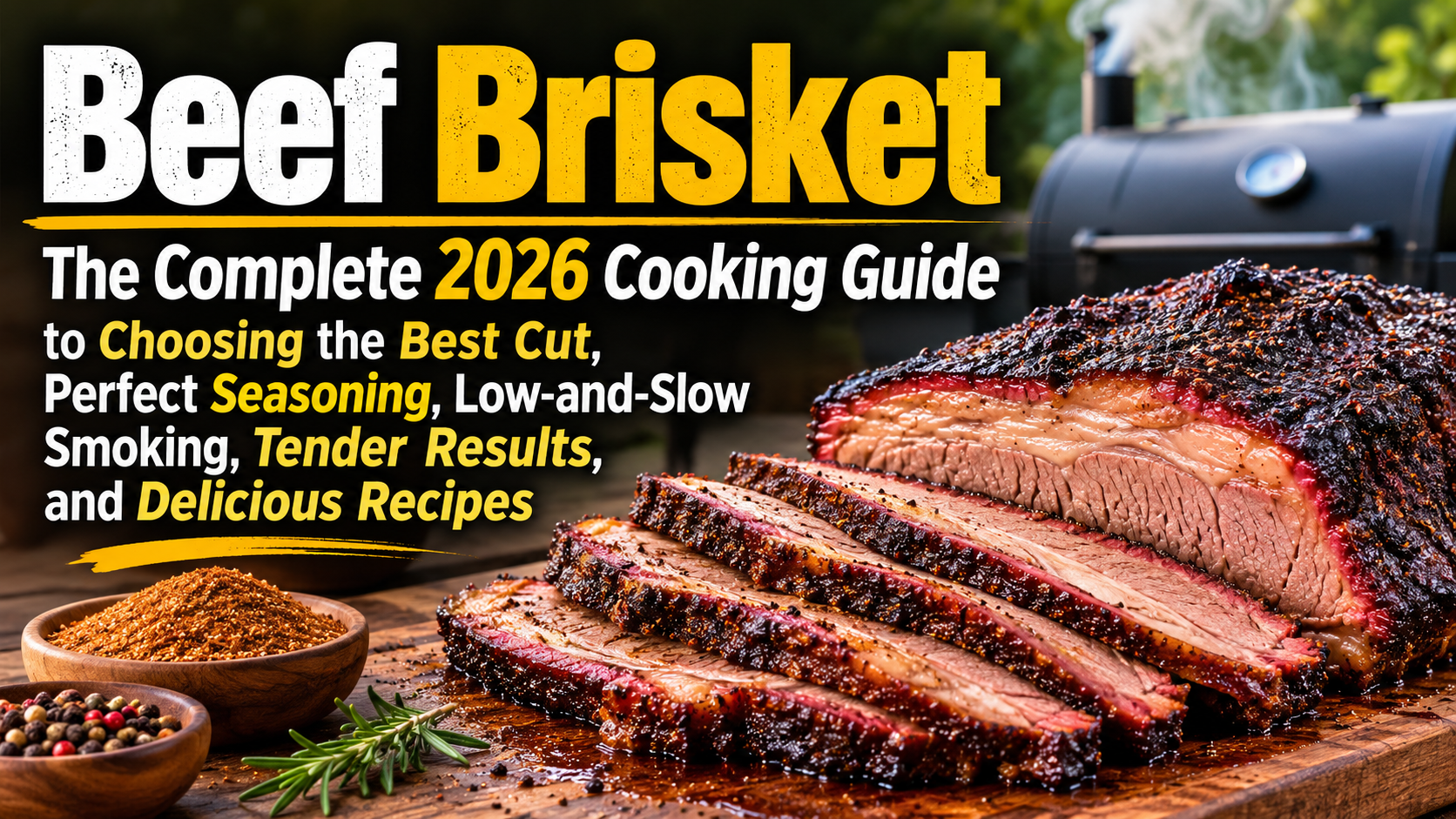
Beef brisket is one of the most rewarding cuts of meat to cook, especially for anyone who enjoys rich flavour, tender slices, and traditional barbecue. Taken from the lower chest of the animal, this hardworking muscle contains connective tissue that needs time and careful cooking to become soft and succulent. When prepared correctly, it develops a deeply savoury flavour, a beautifully textured exterior, and meat that can be sliced or pulled apart.
Popular in American barbecue, Texas-style smoking, Jewish braised dishes, and several international cuisines, brisket has earned a reputation as a centrepiece for family gatherings and special occasions. Its preparation may seem complicated, but understanding the cut, temperature, seasoning, and resting process makes it much easier to achieve consistent results.
Whether you are using a smoker, oven, slow cooker, or pressure cooker, this guide explains how to select, prepare, cook, and serve this versatile beef cut.
What Is Beef Brisket and Where Does It Come From?
Brisket comes from the breast or lower chest section of a cow, beneath the first five ribs and near the front legs. Because this area supports much of the animal’s body weight, its muscles contain substantial connective tissue, particularly collagen. This makes the cut naturally firm compared with more tender sections such as ribeye or tenderloin.
The secret to preparing it successfully is converting collagen into gelatin through prolonged cooking at relatively low temperatures. This transformation creates a moist, tender texture and gives the meat its characteristic richness. Cooking it quickly over high heat generally produces a tough result because the connective tissue does not have enough time to soften.
It is especially popular in Texas barbecue, where pitmasters traditionally smoke the meat for many hours using hardwoods such as oak or post oak. Other cooking traditions use braising liquids, onions, spices, and slow oven cooking to develop deep flavour.
Understanding the Different Brisket Cuts
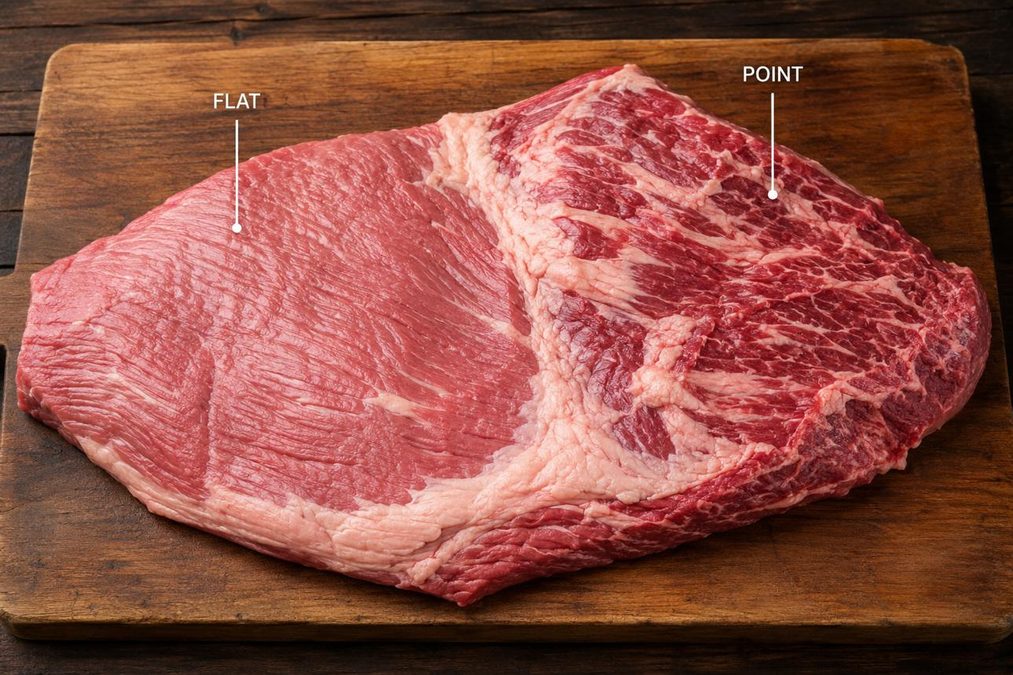


A whole packer brisket contains two main muscles: the flat and the point. Understanding their differences helps you choose the right piece for your cooking method and serving style.
The flat is the larger, relatively leaner section. It has a more uniform shape, making it suitable for neat slices and traditional presentation. However, because it contains less intramuscular fat, it can dry out if overcooked or inadequately rested.
The point is thicker, fattier, and more heavily marbled. Its richer texture makes it particularly suitable for burnt ends, shredded meat, and exceptionally juicy barbecue. A whole packer combines both muscles, offering a balance of lean slices and fatty, flavourful portions.
| Cut | Main characteristics | Best cooking uses | Key consideration |
|---|---|---|---|
| Flat | Leaner and uniform | Sliced barbecue, sandwiches | Can dry out more easily |
| Point | Fatty and well-marbled | Burnt ends, pulled beef | Needs trimming and careful rendering |
| Whole packer | Contains flat and point | Traditional smoked barbecue | Requires more cooking space and time |
When buying, look for meat with good marbling, a reasonably even thickness, and a flexible texture. A thick fat cap can protect the meat during cooking, but excessive hard surface fat should be trimmed.
How to Choose and Prepare the Meat
Choosing a suitable cut is one of the most important steps. For smoking, many barbecue enthusiasts prefer a whole packer brisket because both muscles cook together and provide different textures. If you have a smaller smoker or are preparing food for a limited number of people, a flat cut may be more practical.
Check the colour, packaging condition, and fat distribution. Fresh beef should have a natural red appearance, while the fat should generally look creamy white rather than excessively yellow or dry. USDA grading terms such as Prime, Choice, and Select can help shoppers in the United States understand differences in marbling, although grading systems vary between countries.
Preparation begins with trimming. Remove thick, hard surface fat and loose pieces of meat that could burn during cooking, but avoid removing every layer of fat. A reasonably even fat cap helps protect the surface and supports moisture management. Many pitmasters aim for approximately 6 millimetres of remaining fat, adjusting according to the individual cut.
Best Seasonings and Marinades for Rich Flavour
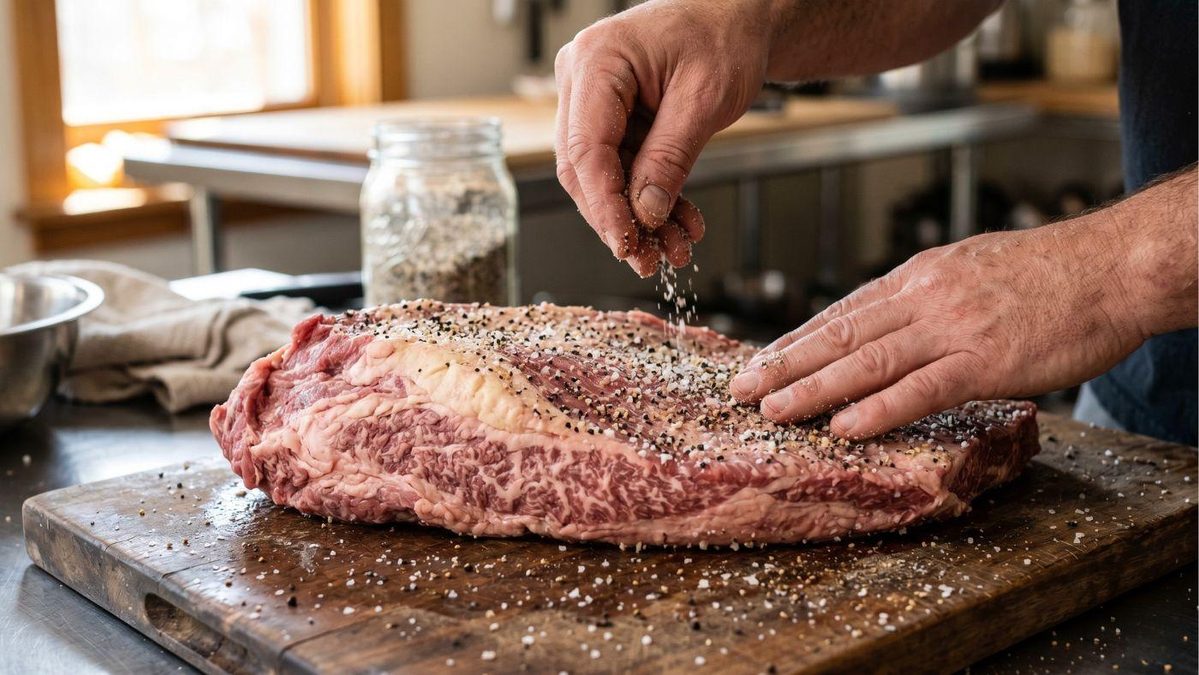
One of the most respected approaches to Texas-style barbecue is a simple seasoning blend of coarse black pepper and kosher salt. This combination allows the natural beef flavour and smoke to remain central rather than hiding them beneath complicated spice mixtures.
A basic rub can include salt, black pepper, garlic powder, and onion powder. Paprika and a small amount of chilli powder can introduce additional colour and warmth. Apply the seasoning evenly across all sides, ensuring that thicker sections receive sufficient coverage.
Marinades are useful for braised preparations, particularly when ingredients such as Worcestershire sauce, mustard, garlic, stock, or herbs are involved. However, acidic marinades do not replace slow cooking. The tenderness of this cut depends primarily on time, temperature, and collagen conversion.
For a more traditional barbecue approach, many cooks use a thin layer of mustard or another mild binder before adding the dry rub. The binder helps seasoning adhere to the surface, but it is not essential and generally does not dominate the final flavour.
How to Smoke Beef Brisket Low and Slow

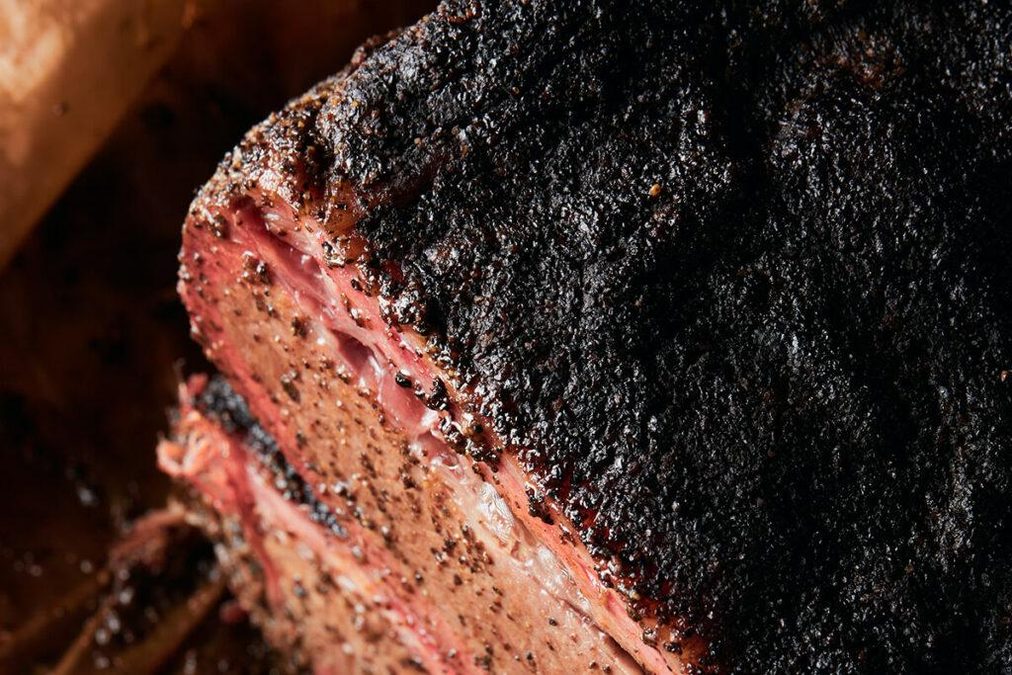
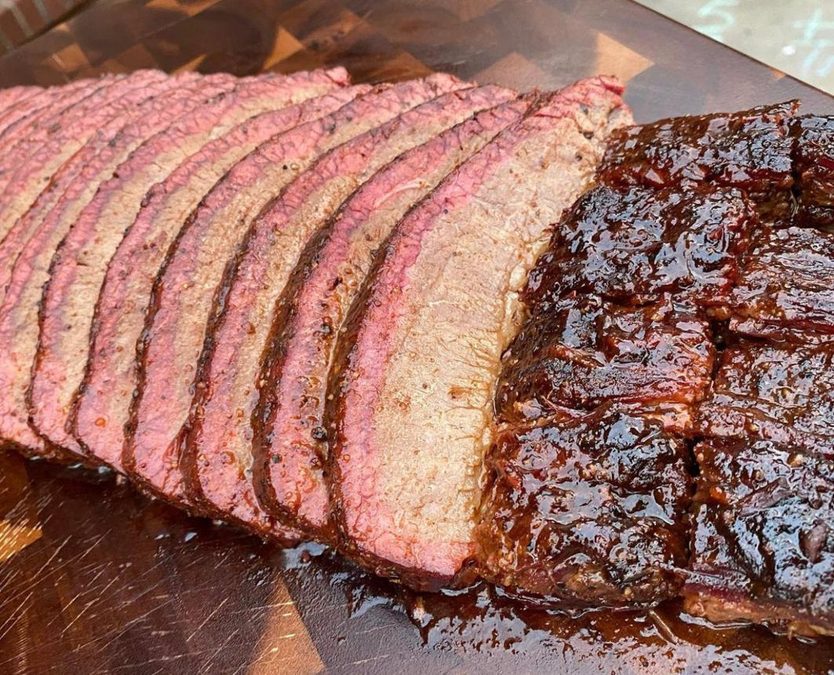
Smoking is one of the most popular methods because it combines slow heat with the aroma of burning hardwood. The meat gradually develops a dark exterior crust known as bark while the interior becomes tender.
A practical starting point is to maintain a smoker temperature of approximately 225–250°F (107–121°C). Oak, hickory, and pecan are common wood choices, although oak is particularly associated with Texas-style barbecue. Use clean-burning wood and avoid excessive smoke, which can create a bitter flavour.
During cooking, the exterior may reach a stage where the internal temperature stops rising temporarily. This is known as the barbecue stall, caused largely by evaporative cooling from the meat’s surface. Some cooks wait through the stall, while others wrap the meat in butcher paper or foil to reduce moisture loss and shorten cooking time.
Wrapping involves a trade-off. Butcher paper can help preserve a firmer bark, while foil traps more moisture and heat but may soften the crust. The right choice depends on your preferred texture and schedule.
Cooking Temperatures, Times, and Doneness
Temperature is more reliable than following a fixed cooking schedule. Thickness, fat content, smoker performance, wrapping, and the starting temperature of the meat can all influence how long cooking takes.
For many smoked preparations, the cooking process begins at around 225–250°F. The meat may take approximately 10–16 hours or longer, depending on size and conditions. However, this is only a planning estimate, not a guarantee.
| Cooking stage | Approximate temperature | What to look for |
|---|---|---|
| Smoker setting | 225–250°F (107–121°C) | Stable cooking environment |
| Early cooking | Around 150–170°F (66–77°C) internal | Bark development and possible stall |
| Wrapping stage | Often around 160–175°F (71–79°C) internal | Set bark and cooking progress |
| Final tenderness | Often around 195–205°F (91–96°C) internal | Probe slides into the meat easily |
| Resting | Keep safely hot or refrigerate promptly | Juices settle and texture stabilises |
The final internal temperature is a guide rather than an absolute target. Insert a temperature probe into several thick areas, avoiding large pockets of fat. The meat is ready when a probe enters with little resistance, similar to pushing it into softened butter.
For food safety, whole cuts of beef have a different minimum-temperature recommendation from ground beef. However, reaching a barbecue-style tenderness temperature is a separate quality goal. Use a reliable thermometer, handle raw meat hygienically, and do not leave cooked meat at room temperature for extended periods.
Oven, Slow Cooker, and Pressure Cooker Methods
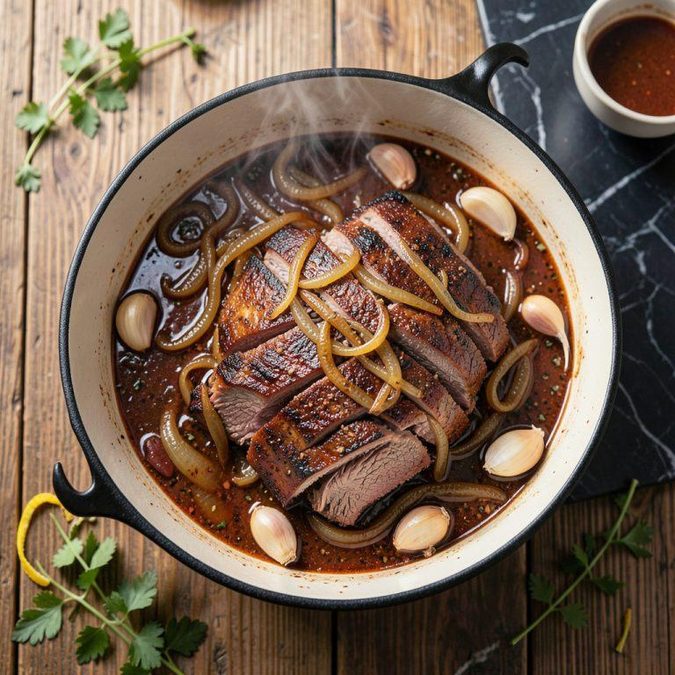
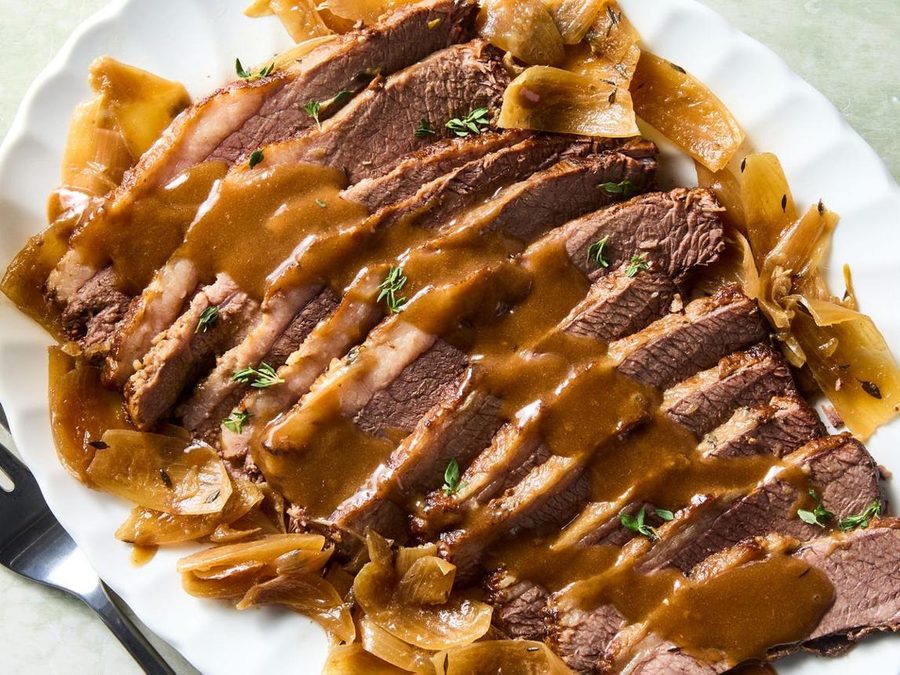
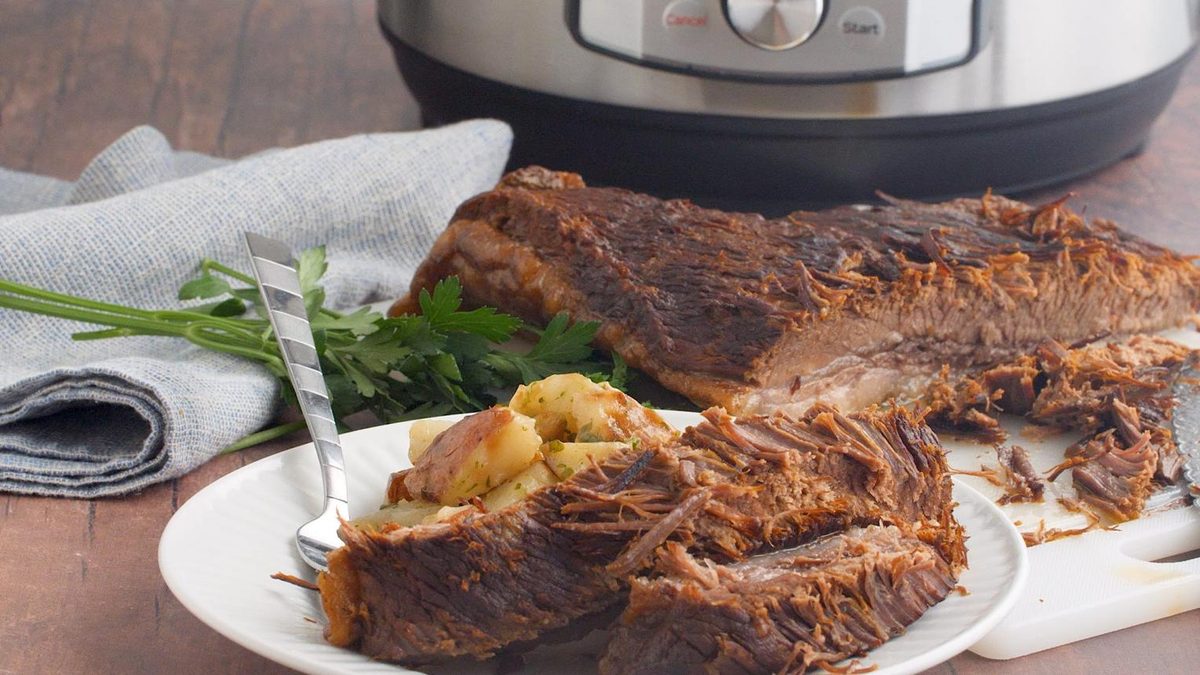
A smoker is not essential for producing excellent results. Oven braising is a dependable alternative, particularly when you want tender meat without managing a fire for an entire day. Place the seasoned cut in a covered roasting dish with beef stock, onions, garlic, and suitable herbs. Cook gently until it becomes tender, then uncover briefly if you want to develop a more concentrated exterior.
A slow cooker is convenient for busy households because it maintains a low cooking temperature over several hours. Add a modest amount of cooking liquid, vegetables, and seasoning, then cook until the meat is tender. This method produces a softer, braised texture rather than the smoky bark associated with traditional barbecue.
Pressure cooking is useful when time is limited. The higher cooking pressure speeds up the breakdown of connective tissue, although the result will not have the same smoke flavour or crust. You can finish the meat under a grill or in a hot oven to improve its surface texture.
Common Cooking Problems and How to Fix Them
One of the most frustrating problems is tough meat after hours of cooking. This often happens because the collagen has not fully broken down. The solution is usually to continue cooking gently and test tenderness in several areas rather than relying on one temperature reading.
Dry slices are another common issue, especially with the lean flat. Avoid excessive trimming, monitor internal temperature carefully, and allow sufficient resting time. If the meat is already dry, serving it with warm cooking juices or a suitable barbecue sauce can improve the eating experience.
A soft or disappointing bark may result from wrapping too early, excessive moisture, or poor airflow. Allow the surface to develop a firm crust before wrapping, and avoid repeatedly opening the smoker. Consistent heat and clean smoke are more valuable than constantly adjusting the cooking environment.
Resting, Slicing, and Serving

Resting is an essential part of the process. After cooking, allow the meat to rest while maintaining safe food temperatures. A suitable insulated holding arrangement can help preserve warmth, but cooked meat should not be left in an uncontrolled temperature environment. For longer storage, refrigerate promptly in shallow containers.
Slicing correctly is just as important as cooking. The muscle fibres run in different directions through the flat and point, so examine the grain before cutting. Slice the flat across the grain into even pieces to shorten the muscle fibres and make each bite easier to chew. The point can be sliced separately or chopped for sandwiches and burnt ends.
Serve with classic barbecue sides such as coleslaw, baked beans, pickles, potato salad, or cornbread. For a simple meal, place sliced meat in a toasted sandwich roll with pickles and a little sauce. Its rich flavour also pairs well with sharp, acidic sides that balance the fat.
Frequently Asked Questions
What is the best temperature to cook beef brisket?
A smoker temperature of 225–250°F (107–121°C) is a popular range for traditional barbecue. The meat often becomes tender around an internal temperature of 195–205°F (91–96°C), but tenderness should be checked with a probe rather than temperature alone.
How long does it take to smoke a brisket?
A whole packer may take approximately 10–16 hours or longer at typical low-and-slow smoking temperatures. Actual cooking time depends on thickness, weight, smoker stability, wrapping, and the individual cut. Always plan extra time for resting.
Why is my brisket tough after cooking?
The most common reason is insufficient cooking time for collagen to break down. Continue cooking gently until a probe enters the thickest sections with little resistance. Toughness can also result from slicing with the grain instead of against it.
Should brisket be cooked fat side up or down?
The answer depends partly on the heat source. In a smoker where heat primarily comes from below, placing the fat side down can protect the meat from direct heat. With different smoker designs, the ideal position may change. Focus on even cooking and avoid excessive trimming.
Is it better to wrap brisket in foil or butcher paper?
Foil retains more moisture and can speed up cooking, but it may soften the exterior bark. Butcher paper allows more moisture to escape, helping preserve a firmer crust. Both methods work, so the choice depends on your preferred texture.
Can you cook brisket in an oven instead of a smoker?
Yes. Oven braising is an effective method for producing tender meat. Season the cut, add stock and aromatics, cover the roasting dish, and cook at a low temperature until tender. The result will be more braised than smoked.
How should leftover brisket be stored?
Refrigerate leftovers promptly in airtight containers, ideally with some cooking juices to help maintain moisture. Use refrigerated leftovers within three to four days, or freeze them for longer storage. Reheat thoroughly and avoid repeated temperature changes.
Conclusion
Beef brisket rewards patience, preparation, and attention to detail. Understanding the difference between the flat and point, choosing well-marbled meat, applying balanced seasoning, and cooking slowly are the foundations of a successful result.
Smoking creates the traditional barbecue flavour and bark, while oven braising, slow cooking, and pressure cooking offer practical alternatives for different kitchens and schedules. Regardless of the method, temperature monitoring, proper resting, and slicing against the grain make a significant difference.
The most important lesson is that tenderness cannot be rushed. Give the connective tissue enough time to break down, avoid unnecessary heat fluctuations, and judge doneness by feel as well as temperature. With these techniques, this hardworking cut can become a deeply flavourful centrepiece for family meals, weekend barbecues, and special gatherings.