


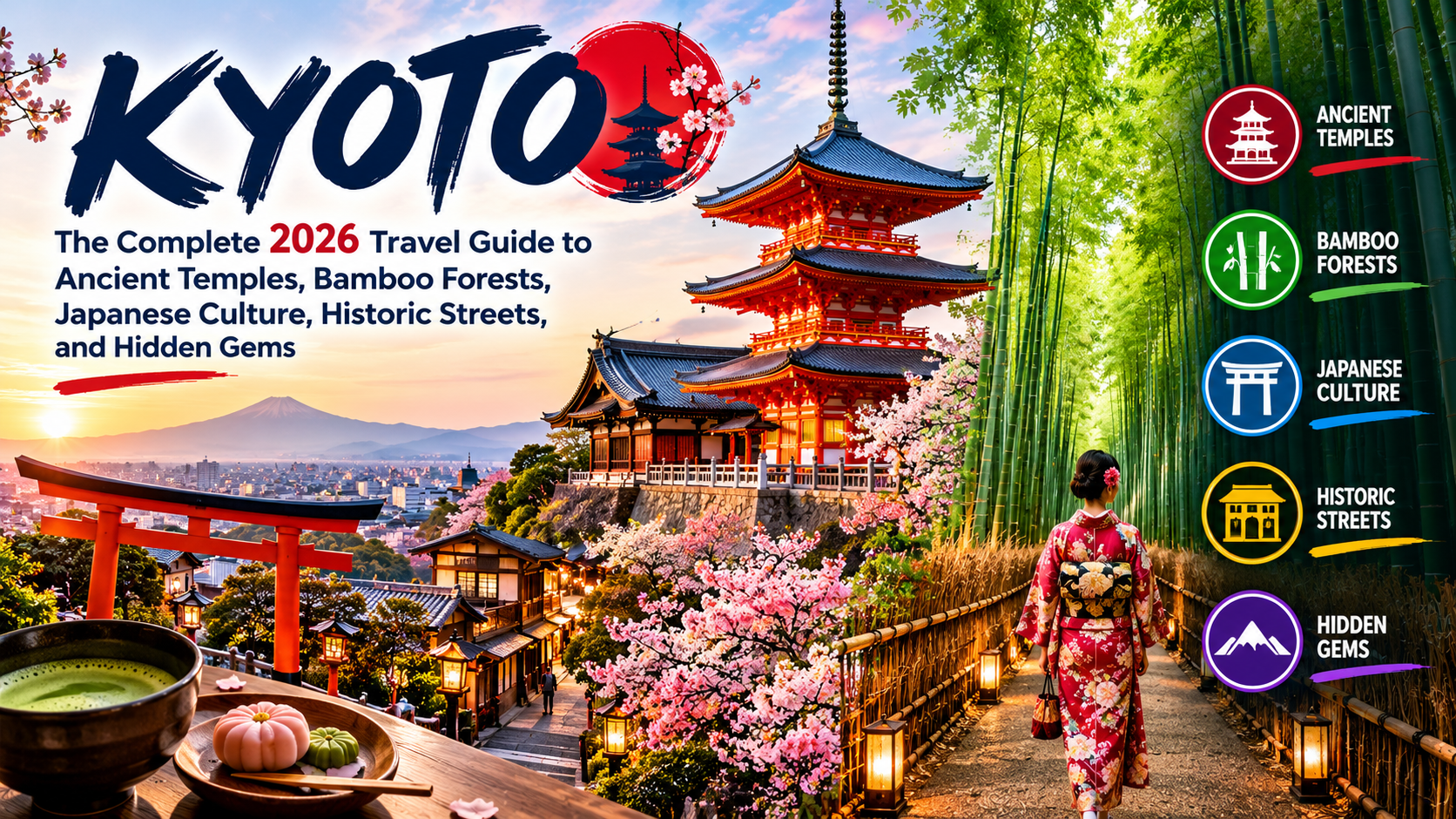
Kyoto is one of Japan’s most captivating destinations, where centuries-old temples, traditional wooden houses, peaceful gardens, and vibrant food markets reveal a different side of modern Japan. Once the imperial capital, this historic city remains deeply connected to Japanese art, architecture, spirituality, seasonal celebrations, and traditional craftsmanship.
From the famous torii gates of Fushimi Inari Taisha to the bamboo groves of Arashiyama, the city offers experiences that feel worlds away from Tokyo’s fast-paced streets. Visitors can explore Buddhist temples in the morning, wander through historic neighborhoods in the afternoon, and enjoy regional dishes at a small restaurant in the evening.
The appeal goes beyond famous landmarks. Kyoto rewards travelers who slow down, respect local customs, and explore quieter streets alongside major attractions. This complete 2026 travel guide covers the best places to visit, cultural experiences, Japanese food, transportation, accommodation, travel costs, and practical advice for planning a memorable trip.
Why Visit Kyoto in 2026?
Kyoto offers an exceptional concentration of cultural landmarks within a relatively manageable urban area. Its historic temples, Shinto shrines, landscaped gardens, imperial heritage, and traditional neighborhoods provide insight into Japanese history across different periods. Many attractions are connected to centuries-old religious practices, artistic traditions, and architectural techniques.
The city is also beautiful in different seasons. Cherry blossoms transform parks and temple grounds in spring, while autumn brings vivid red, orange, and gold foliage. Summer introduces lush greenery and traditional festivals, and winter can reveal quieter temple gardens with occasional snow.
Another reason to visit is the balance between heritage and everyday life. Beyond the major tourist routes, neighborhood markets, tea shops, family-run restaurants, and artisan workshops show how traditional practices remain part of contemporary Japanese culture. The most rewarding itinerary combines iconic sights with time to appreciate these smaller details.
Best Temples and Shrines to Explore


Fushimi Inari Taisha is one of Japan’s most recognizable Shinto shrines, famous for its thousands of vermilion torii gates that form winding paths up Mount Inari. The shrine is associated with Inari, a deity connected with rice, prosperity, and business. The lower sections are popular and often crowded, while walking farther uphill can provide a quieter experience.
Kiyomizu-dera, a historic Buddhist temple, is celebrated for its expansive wooden terrace overlooking the surrounding landscape. Its views change dramatically with the seasons, making it especially popular during cherry blossom and autumn foliage periods. Visitors should allow time to explore the nearby traditional streets rather than treating the temple as a quick photo stop.
Kinkaku-ji, the Golden Pavilion, is another essential landmark. Its gold-covered upper floors reflect beautifully in the surrounding pond, creating one of the city’s most photographed scenes. For a different atmosphere, consider Ginkaku-ji, known as the Silver Pavilion, and the carefully composed gardens that demonstrate the subtle beauty of Japanese landscape design.
These places serve different purposes, so it helps to understand their cultural context. Shinto shrines and Buddhist temples are distinct religious spaces, and observing signs, maintaining a respectful volume, and following photography rules helps preserve the experience for everyone.
Arashiyama Bamboo Grove and Natural Beauty
The Arashiyama Bamboo Grove is famous for its towering bamboo stalks, filtered sunlight, and distinctive atmosphere. Walking through the grove can be peaceful, although the busiest sections often become crowded during the middle of the day. Arriving early usually offers a better chance to appreciate the setting without large tour groups.
Arashiyama has much more to offer than bamboo. Togetsukyo Bridge crosses the Katsura River, providing scenic views of the surrounding hills, while Tenryu-ji features a celebrated Zen garden designed to integrate with the natural landscape. Small shops and traditional restaurants nearby make the district suitable for spending several hours rather than simply visiting the grove.
For travelers who enjoy walking, the area also offers riverside paths and opportunities to explore quieter lanes away from the main tourist corridor. Comfortable shoes are useful because combining the grove, temple grounds, bridge, and nearby streets can involve considerable walking.
The practical lesson is simple: plan the main bamboo path for early morning and use the rest of the visit to explore the wider district. This makes the experience feel more complete and reduces the pressure to rush between attractions.
Traditional Japanese Food and Dining Experiences


Food is an essential part of experiencing the city’s cultural identity. Kaiseki, a traditional multi-course dining style, emphasizes seasonal ingredients, careful presentation, and harmony between flavors. Depending on the restaurant, a meal may include delicate tofu dishes, grilled fish, simmered vegetables, rice, and beautifully prepared sweets.
For a more casual experience, explore Nishiki Market, often called Kyoto’s kitchen. Its narrow shopping arcade contains stalls selling pickles, seafood, Japanese sweets, tea, and regional specialties. Other dishes worth trying include yudofu, or simmered tofu, soba noodles, matcha desserts, and obanzai, a style of home cooking associated with seasonal local ingredients.
Tea culture is another highlight. Matcha and traditional sweets are often enjoyed together, and some tea houses offer introductory experiences that explain the preparation and etiquette of Japanese tea. As the saying associated with the tea ceremony goes, ichi-go ichi-e — “one time, one meeting.” The phrase encourages people to appreciate each encounter as a unique moment.
For the best dining experience, make reservations for sought-after restaurants, check menus for dietary requirements, and remember that some small establishments accept cash only. Food-focused exploration is particularly rewarding when you combine famous specialties with ordinary neighborhood cafés.
Historic Streets and Traditional Neighborhoods


Gion is one of the city’s best-known historic districts, recognized for its wooden machiya townhouses, tea houses, narrow streets, and traditional performing arts. Walking through the neighborhood offers a glimpse of an architectural style that developed around traditional commerce and entertainment. Nearby, the preserved streets of Ninenzaka and Sannenzaka provide attractive routes toward Kiyomizu-dera.
Pontocho, a narrow lane near the Kamo River, is especially appealing in the evening, when restaurants and small bars create a lively atmosphere. Some establishments overlook the river, and seasonal outdoor dining platforms may operate during warmer months. Prices vary considerably, so check menus before entering a restaurant.
These historic areas are also residential and working neighborhoods, not simply tourist attractions. Avoid blocking entrances, photographing people without permission, entering private properties, or following geiko and maiko in search of photographs. Respectful behavior protects the local culture that makes these places special.
For a quieter alternative, explore side streets in the morning, when shops are opening and the atmosphere is less hectic. A slower walk often reveals architectural details, small shrines, and traditional craft shops that visitors rushing between major attractions might miss.
Best Time to Visit and Seasonal Highlights
Spring and autumn are generally the most popular periods to visit because of cherry blossoms and colorful foliage. Cherry blossom timing varies each year, but late March and early April are common periods to watch for. Autumn colors often develop during November, with exact timing depending on weather, elevation, and the location of individual gardens.
Summer brings lush scenery and traditional events, including the famous Gion Matsuri festival in July. However, heat and humidity can make long outdoor walks demanding. Winter is generally quieter, and although temperatures can be cold, visitors may enjoy a more peaceful atmosphere at temples and gardens.
| Season | Highlights | Practical consideration |
|---|---|---|
| Spring | Cherry blossoms, temple gardens | Book accommodation early |
| Summer | Festivals, green landscapes | Plan walks for cooler hours |
| Autumn | Red maple leaves, scenic gardens | Expect popular sites to be busy |
| Winter | Quieter attractions, seasonal cuisine | Bring warm clothing |
There is no single perfect month for everyone. Nature lovers may prioritize blossoms or foliage, while travelers seeking quieter streets may prefer winter or periods outside major holidays. Check seasonal forecasts and official attraction notices before finalizing your plans.
Getting Around and Where to Stay
The city has an extensive public transportation network that includes trains, buses, and subway lines. Rail services are especially useful for reaching major stations and some outlying attractions, while buses connect many central sightseeing areas. Walking between nearby landmarks is often the easiest option, although distances can be greater than they appear on a map.
Traffic congestion can slow buses around popular tourist areas, particularly during peak seasons. Where possible, use trains for longer connections, walk between nearby attractions, and group visits by district. A rechargeable IC transport card can simplify many journeys, but check compatibility and current payment arrangements for the services you intend to use.
Accommodation near Kyoto Station is convenient for arrivals, departures, and day trips. Staying around downtown Kawaramachi offers easy access to restaurants and shopping, while Gion and nearby historic districts provide a more traditional atmosphere. The best location depends on whether you prioritize transport, nightlife, heritage, or quieter surroundings.
Suggested Itinerary and Travel Budget
A three-day visit provides enough time to experience several major attractions without rushing through every district. On the first day, explore Kiyomizu-dera, the historic streets nearby, and Gion. On the second, visit Fushimi Inari Taisha early before spending the afternoon around Nishiki Market and downtown. Reserve the third day for Arashiyama, including the bamboo grove, Tenryu-ji, and the riverside area.
If you have four or five days, add Kinkaku-ji, Ginkaku-ji, the Philosopher’s Path, or a quieter temple garden. Avoid attempting to visit every major attraction in one day. Crowds, transport connections, temple opening hours, and walking distances can make an overpacked itinerary tiring.
Travel costs depend on the season, accommodation standard, dining choices, and number of paid attractions. These approximate daily estimates are per person and exclude international flights.
| Travel style | Estimated daily budget | Typical expenses |
|---|---|---|
| Budget | ¥8,000–¥15,000 | Hostel, casual meals, public transport |
| Mid-range | ¥15,000–¥30,000 | Private room, restaurants, selected attractions |
| Premium | ¥30,000+ | Upscale hotels, fine dining, private experiences |
These are planning estimates rather than fixed prices. Accommodation can cost significantly more during blossom season, autumn foliage, and major holidays. Compare current rates, confirm attraction admission fees, and reserve popular restaurants ahead of time.
Frequently Asked Questions
How many days are enough to explore Kyoto?
Three days is a good starting point for first-time visitors, allowing time for major temples, historic neighborhoods, food markets, and Arashiyama. Four or five days provide a more relaxed pace and allow you to discover quieter gardens, smaller shrines, and additional cultural experiences.
What is Kyoto most famous for?
The city is renowned for its historic Buddhist temples, Shinto shrines, traditional architecture, Japanese gardens, tea culture, and seasonal scenery. Famous attractions include Fushimi Inari Taisha, Kiyomizu-dera, Kinkaku-ji, and the Arashiyama Bamboo Grove.
Is Kyoto expensive to visit?
It can suit a range of budgets. Travelers can save money by staying in hostels or business hotels, using public transport, eating at casual restaurants, and enjoying free walking routes. Premium accommodation, traditional multi-course dining, and private cultural experiences increase the overall cost.
What should you eat during a visit?
Try regional specialties such as yudofu, obanzai, soba noodles, matcha sweets, and seasonal Japanese dishes. Kaiseki offers a more formal dining experience, while Nishiki Market is useful for sampling smaller snacks and exploring local ingredients.
Is Kyoto easy to explore without a car?
Yes. Trains, subway lines, buses, and walking routes make most major attractions accessible without driving. Trains can be more reliable than buses for some journeys during busy periods, while walking works well for exploring nearby historic streets and temple districts.
What is the best month to visit Kyoto?
April is popular for cherry blossoms, while November often attracts visitors seeking autumn foliage. June can be rainy, summer is hot and humid, and winter is colder but often quieter. The best time depends on your weather preferences, budget, and tolerance for crowds.
Conclusion
Kyoto offers a remarkable combination of historic architecture, spiritual traditions, natural beauty, and distinctive Japanese cuisine. From the vermilion gates of Fushimi Inari Taisha to the peaceful gardens of historic temples, each district reveals a different part of Japan’s cultural heritage.
A successful visit depends on thoughtful planning rather than trying to see everything. Group nearby attractions, travel early to popular landmarks, leave time for local food, and treat residential neighborhoods with respect. These small decisions can make the journey more comfortable and meaningful.
The most important takeaway is to experience the destination at a slower pace. The famous temples and bamboo groves may draw you there, but the quiet gardens, seasonal flavors, traditional streets, and everyday cultural encounters are what can make the trip truly memorable.