


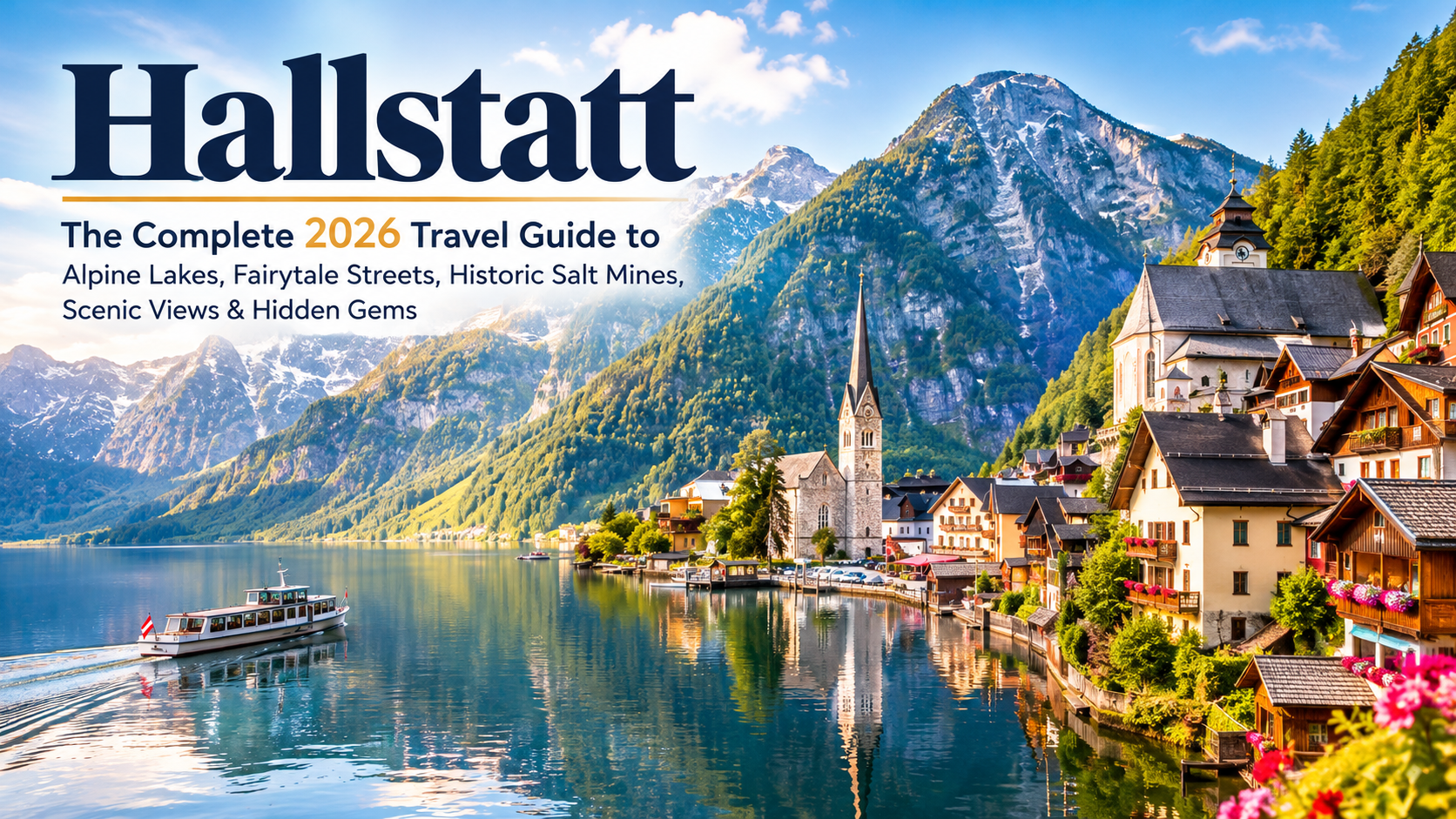
Hallstatt is one of Austria’s most picturesque destinations, a lakeside village nestled between the dramatic Dachstein Alps and the clear waters of Lake Hallstatt. Famous for its pastel-colored houses, waterfront views, historic salt mining, and peaceful mountain scenery, it attracts travelers seeking an authentic Alpine experience. Despite its small size, the village offers a remarkable combination of natural beauty, cultural heritage, outdoor activities, and traditional Austrian charm.
Located in Austria’s Salzkammergut region, Hallstatt is a popular day trip from Salzburg but deserves more time if you want to experience its quieter side. You can wander through narrow historic lanes, explore an ancient salt mine, take a boat across the lake, or watch the mountains reflect on the water in the early morning. With thoughtful planning, a visit can be more rewarding than simply arriving for a photograph and leaving with the crowds.
Where Is Hallstatt and Why Is It Famous?
Hallstatt lies in Upper Austria, beside Lake Hallstatt and beneath the steep slopes of the Dachstein mountain range. It forms part of the UNESCO-listed Hallstatt-Dachstein/Salzkammergut Cultural Landscape, recognized for its exceptional natural scenery and long history of human settlement. The surrounding region combines mountains, forests, lakes, traditional villages, and evidence of centuries of salt production.
The village’s fame comes from its distinctive setting. Historic buildings seem to rise directly from the narrow strip of land between the lake and the mountains, creating a waterfront panorama that looks especially beautiful in soft morning light. Its market square, lakeside walking paths, church towers, and traditional architecture make it instantly recognizable in travel photography.
However, the destination is more than a scenic backdrop. Salt mining shaped its development and wealth for thousands of years, while archaeological discoveries revealed important evidence of prehistoric European life. The name “Hallstatt” is also associated with the Hallstatt culture, an archaeological term used for an important early Iron Age cultural tradition in Central Europe. This combination of landscape and history gives the village significance beyond its appearance.
Best Things to Do in Hallstatt


Explore the Historic Village and Market Square
The best introduction to the village is a leisurely walk through its compact historic center. Market Square is surrounded by colorful buildings, small cafés, traditional restaurants, and shops selling local products. Its scale makes it easy to explore on foot, although narrow streets and steps can be challenging for visitors with limited mobility.
Continue toward the waterfront to enjoy views of the lake and surrounding peaks. Rather than rushing between photo locations, take time to notice the wooden balconies, flower-filled windows, and details of the traditional architecture. Early morning is generally quieter than the middle of the day, especially during the busiest travel months.
Visit the Parish Church and Historic Waterfront
The Catholic Parish Church of the Assumption is one of the village’s notable landmarks, while the nearby cemetery and chapel area offer insight into local customs and history. The village’s religious buildings also reflect its long-established community and the practical challenges of living in a narrow Alpine settlement.
The waterfront provides another memorable experience. A slow walk along the lake reveals changing views of the houses, church towers, and steep mountains rising behind the village. On calm days, reflections create striking photographs; when clouds move across the peaks, the scenery can feel entirely different. Weather and light change the atmosphere considerably, so a second walk at another time of day can be worthwhile.
Hallstatt Salt Mine and the Skywalk Viewing Platform


Salt is central to the village’s story. The nearby salt mine at Salzberg is associated with one of the world’s oldest known salt-mining traditions, and centuries of extraction helped support the region’s prosperity. Guided tours explain how salt was mined, how underground workings developed, and what archaeological discoveries reveal about earlier communities.
A visit typically involves reaching the mine access area above the village, often using a funicular when services are operating. The experience can include underground passages, mining history, and demonstrations, but conditions and tour arrangements may change seasonally. Check the official Salzwelten website for opening hours, ticket availability, age restrictions, and current access information before traveling.
Near the upper station, the Hallstatt Skywalk offers elevated views over the lake, village, and surrounding mountains when open. The platform is especially attractive to photographers because it reveals the settlement’s narrow position between the water and the steep terrain. Allow enough time for the ascent, the viewing area, and the return journey, and avoid assuming that the mine and platform will always be accessible in poor weather.
Lake Hallstatt: Boat Trips and Scenic Experiences


Lake Hallstatt is one of the region’s main attractions, offering a different perspective from the village streets. Boat trips can reveal the full lakeside settlement, forested slopes, and mountain scenery that are difficult to appreciate from land alone. Depending on the season and operating schedule, visitors may find passenger boats, ferries, or rental boats available.
For a relaxed experience, consider a boat ride after exploring the historic center. The view from the water makes the village’s geography particularly clear: buildings occupy a narrow shoreline beneath steep mountains, with very little flat land for expansion. Services can vary with weather and season, so check departure points and schedules in advance rather than relying on assumptions.
Walking beside the lake is another excellent way to enjoy the scenery without booking an activity. Bring a light jacket even during warmer months, as conditions near the water can feel cooler. If photography is your priority, early morning and late afternoon may provide softer light, though cloud cover can also produce beautiful atmospheric views.
Best Time to Visit and What the Weather Is Like
Late spring through early autumn is popular for lakeside walks, boat trips, hiking, and mountain excursions. May and June often bring fresh greenery, while July and August generally offer longer days and more outdoor opportunities. These are also busy travel periods, and accommodation can become expensive or sell out early.
Autumn brings changing foliage and a quieter atmosphere on some days, although rainfall can affect visibility and walking conditions. Winter offers a different experience, with snow-covered mountains and a peaceful Alpine setting when conditions allow. However, some outdoor attractions may have reduced schedules or closures, so winter visitors should check transport and activity availability carefully.
| Season | Typical experience | Planning advice |
|---|---|---|
| Spring | Green landscapes, waterfalls, and milder days | Pack layers and rain protection |
| Summer | Boat trips, hiking, and long daylight hours | Book accommodation and popular tours early |
| Autumn | Seasonal colors and atmospheric mountain views | Check rainfall and trail conditions |
| Winter | Snowy scenery and a quieter village atmosphere | Confirm attraction schedules and transport |
Mountain weather can change quickly, even when conditions seem pleasant beside the lake. Before hiking, check local forecasts and trail notices, wear suitable footwear, and avoid exposed routes during storms or poor visibility.
Local Food and Austrian Dining Experiences
Traditional Austrian food is a satisfying part of a visit. Look for dishes such as Wiener schnitzel, goulash, dumplings, and Käsespätzle, a comforting dish of soft egg noodles and cheese. Austrian desserts are equally appealing, with apple strudel and Kaiserschmarrn—a shredded, lightly caramelized pancake—being popular choices at cafés and mountain restaurants.
Because the village is small and attracts many visitors, lakeside restaurants may charge more than establishments farther from the waterfront. If you want to manage spending, compare menus before sitting down and consider having a substantial lunch away from the busiest viewpoints. Local bakeries and cafés can be convenient for a lighter meal between attractions.
Dining is also a chance to experience the broader Salzkammergut region. Traditional recipes, seasonal ingredients, and Alpine influences connect the village to surrounding communities. When ordering, ask about ingredients if you have allergies or dietary requirements, as recipes and preparation methods vary between restaurants.
Getting to Hallstatt, Where to Stay, and Travel Costs
The village can be reached by train and boat connections or by road, depending on your starting point. Travelers coming from Salzburg often combine rail travel with a transfer through the surrounding region, while drivers should plan for parking outside the historic center because vehicle access is limited in some areas. Check current rail timetables, ferry connections, and parking arrangements before departure, especially if arriving early or traveling in winter.
Staying overnight allows you to experience the village before day-trippers arrive and after many have departed. Accommodation ranges from guesthouses and small hotels to apartments and properties in nearby communities. If rooms in the village are beyond your budget, nearby towns around the Salzkammergut may provide alternatives, although you should factor in transport time and service schedules.
Costs vary by season, accommodation type, transport, and activities. A day trip can reduce lodging expenses, but it may involve a tight schedule and crowded sightseeing hours. An overnight stay usually costs more but gives you additional time for a boat trip, salt mine visit, and quieter walks. Compare the full cost—including transport, parking, meals, and attraction tickets—rather than judging a trip by hotel prices alone.
Responsible Tourism and Avoiding Crowds
The village’s popularity places pressure on a small residential community with limited space and infrastructure. Visitors can help by respecting private property, keeping noise down in residential lanes, using designated paths, and following local photography rules. Scenic viewpoints may be close to homes, so avoid entering private gardens or blocking doorways for pictures.
To enjoy the destination with fewer crowds, arrive early, travel outside the busiest summer periods when possible, and consider staying overnight. Explore beyond the best-known waterfront photo spots by visiting museums, taking a permitted lake walk, or discovering nearby regional attractions. These choices spread visitor activity and create a more balanced experience than spending the entire visit in one crowded area.
Frequently Asked Questions About Hallstatt
Is Hallstatt worth visiting?
Yes. Hallstatt combines spectacular Alpine scenery, historic architecture, a lakeside setting, and a fascinating salt-mining heritage. It is particularly rewarding for travelers interested in photography, culture, and nature. Visiting early or staying overnight can make the experience more relaxed than arriving during the busiest daytime hours.
How many days do you need in Hallstatt?
One full day is enough to explore the historic center, enjoy the lake, and visit a major attraction if schedules align. Two days allow a more leisurely pace, with time for a boat trip, the salt mine, scenic walks, and nearby regional destinations. An overnight stay is especially useful during busy seasons.
Can you visit Hallstatt as a day trip from Salzburg?
Yes. It is a popular day trip from Salzburg, but transport connections and transfers need to be planned carefully. Check current rail, boat, or bus schedules and allow enough time for the return journey. A guided excursion may simplify transport, while independent travel offers greater flexibility.
What is Hallstatt famous for?
The village is known for its colorful lakeside houses, dramatic mountain scenery, historic salt mine, and UNESCO-listed cultural landscape. It is also associated with important prehistoric archaeological discoveries and the Hallstatt culture, making it significant for both tourism and European history.
Is Hallstatt expensive?
It can be relatively expensive compared with less-visited Austrian villages, particularly during peak travel periods. Accommodation near the lake and meals at prominent waterfront restaurants may cost more. Booking early, staying in a nearby community, and planning activities in advance can help manage the budget.
Is Hallstatt suitable for families?
Yes, many families enjoy the lake, village walks, boat trips, and mountain views. However, narrow streets, steps, steep terrain, and the requirements of underground mine tours may affect accessibility for younger children or visitors with mobility needs. Check attraction rules and route conditions before planning the day.
Conclusion: Experience the Alpine Magic of Hallstatt
Hallstatt offers an extraordinary combination of lakeside beauty, mountain scenery, historic architecture, and cultural heritage. From wandering through the Market Square to learning about ancient salt mining and viewing the village from the lake, its experiences reveal why this small Austrian destination has become so well known.
The key to a rewarding visit is to plan thoughtfully and leave room to slow down. Check seasonal schedules, prepare for changing mountain weather, respect the local community, and consider staying overnight to enjoy quieter hours. Hallstatt is at its best when you look beyond the famous postcard view and take time to appreciate the landscape, history, and everyday life that make it distinctive.