


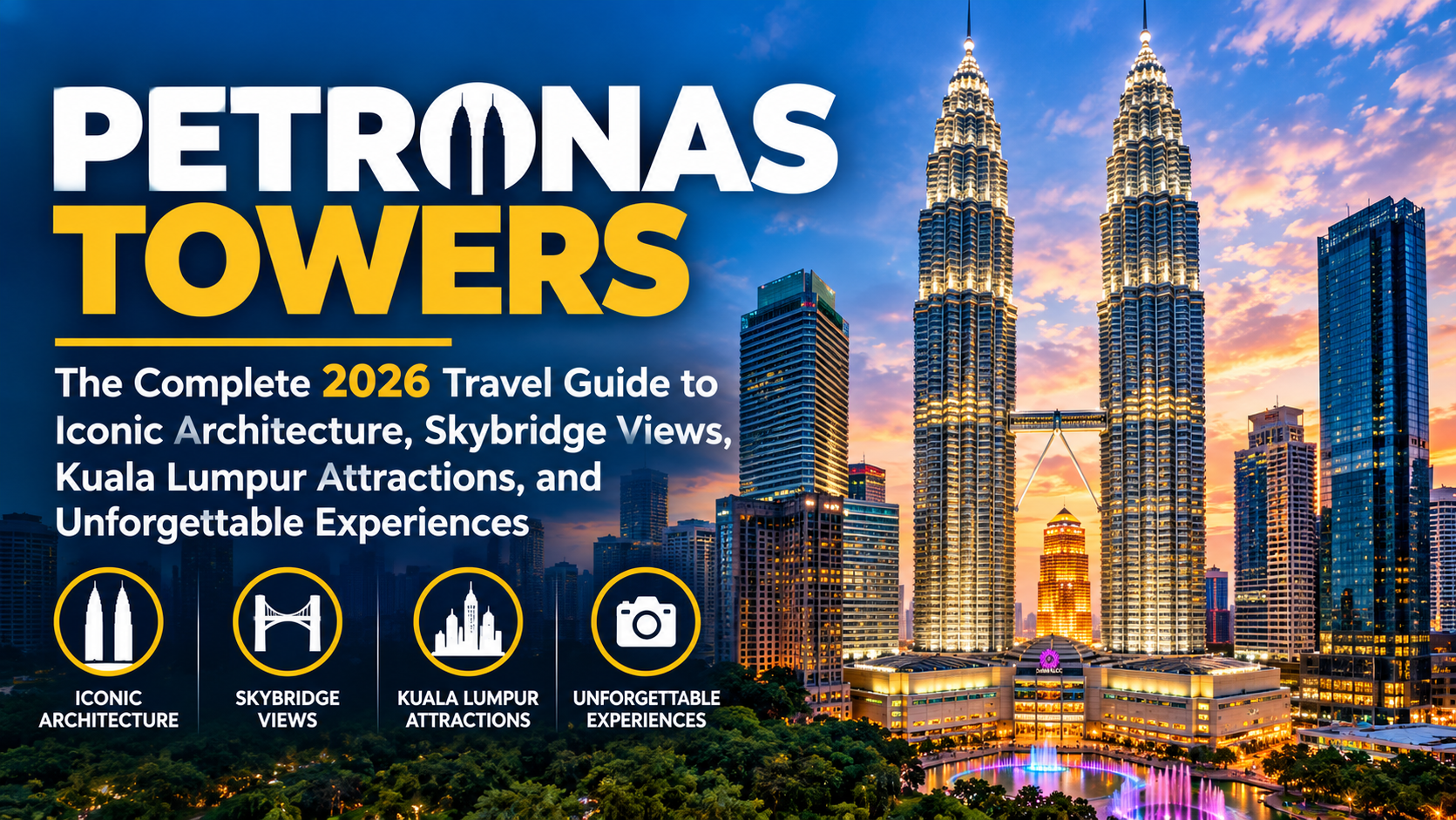
The Petronas Towers are among the most recognizable landmarks in Malaysia and a defining feature of Kuala Lumpur’s modern skyline. Their gleaming stainless-steel and glass exterior, distinctive twin-tower design, and elevated Skybridge make them an essential stop for travelers exploring Southeast Asia. Rising above the city’s busy streets, the towers represent Malaysia’s ambition, architectural innovation, and transformation into a major international business and tourism destination.
Located in the Kuala Lumpur City Centre (KLCC) district, the towers offer more than an impressive photograph. Visitors can explore the observation deck, walk across the connecting Skybridge, shop at Suria KLCC, and relax in the landscaped park surrounding the complex. The nearby neighborhood also provides easy access to restaurants, cultural attractions, and public transportation.
Whether you are planning a short stop in the Malaysian capital or a longer city break, understanding the towers’ history, architecture, ticketing arrangements, and surrounding attractions will help you make the most of your visit.
What Are the Petronas Towers?

The Petronas Towers are twin skyscrapers in Kuala Lumpur, Malaysia, developed as a landmark project for the national oil and gas company Petroliam Nasional Berhad, commonly known as PETRONAS. Completed in 1998, the towers became internationally famous for their height, innovative engineering, and striking architectural form.
Each tower rises approximately 451.9 meters, including its spires, across 88 above-ground floors. The complex was officially the world’s tallest building from 1998 until 2004, when Taipei 101 surpassed it. The towers remain among the world’s most famous twin skyscrapers and an enduring symbol of Malaysia’s modern identity.
The complex combines commercial offices, visitor attractions, retail spaces, and public areas. Its location in KLCC makes it convenient to combine a tower visit with shopping, dining, and outdoor recreation in one part of the city.
Architecture and Engineering Behind the Twin Towers


The towers were designed by Argentine-American architect César Pelli, whose approach combined contemporary skyscraper engineering with visual references to Islamic art and geometry. Their floor plans are based on interlocking geometric forms derived from an eight-pointed star, creating a distinctive outline when viewed from above.
The exterior uses stainless steel and glass, producing the towers’ characteristic silver appearance. Repeated vertical lines and geometric patterns create a sense of height while helping the buildings stand out against Kuala Lumpur’s tropical sky. The design reflects Malaysia’s cultural context without sacrificing the demands of a modern commercial skyscraper.
Engineering the towers required careful coordination of structural systems, materials, construction methods, and wind resistance. The foundations extend into challenging ground conditions, and the structural design was developed to support the immense weight of the buildings while managing movement caused by wind and other forces.
The result demonstrates how architecture can express cultural identity through modern technology. Rather than relying only on height, the towers use geometry, symmetry, and material choices to create a recognizable landmark.
The Skybridge and Observation Deck Experience


One of the most memorable parts of a visit is the Skybridge, the elevated connection between the towers on the 41st and 42nd floors. Suspended high above the city, it provides views of Kuala Lumpur and offers a closer look at the engineering that connects the two buildings.
The visitor experience also includes access to the observation deck on the 86th floor, where panoramic views reveal the city’s expanding skyline, surrounding hills, and neighboring skyscrapers. On clear days, the elevated perspective helps visitors understand Kuala Lumpur’s urban layout in a way that is difficult to appreciate from street level.
Visits operate according to scheduled entry arrangements, and the experience is generally time-limited. Availability, operating hours, and admission policies can change, so booking ahead through the official visitor website is sensible, particularly during weekends and holiday periods.
For the best views, consider weather conditions before choosing a time. Tropical rain and haze can reduce visibility, while late afternoon may offer changing light across the skyline. Arriving early enough to navigate security and entry procedures makes the visit less stressful.
KLCC Park and Nearby Attractions


KLCC Park is one of the best places to appreciate the towers from ground level. Its landscaped lawns, walking paths, shaded areas, and lake create a refreshing contrast with the surrounding skyscrapers. The park is especially popular with photographers who want to capture the towers against the greenery or reflections on the water.
Suria KLCC, the shopping and dining complex at the base of the towers, offers international brands, restaurants, cafés, and convenient indoor facilities. Nearby attractions include Aquaria KLCC, an aquarium showcasing marine life, making the area suitable for families as well as architecture enthusiasts.
For an impressive evening experience, return to the park after sunset. The illuminated towers create a dramatic skyline, and the surrounding district remains lively with visitors enjoying dinner and evening walks. Check local schedules for any fountain displays or special events, as timings can vary.
Best Time to Visit and Photography Tips
The city has a tropical climate, with warm temperatures and the possibility of rain throughout the year. Morning visits can provide comfortable conditions for walking and photography, while late afternoon offers changing light and the opportunity to see the skyline after dark.
For exterior photographs, try the open areas around KLCC Park and the nearby pedestrian spaces. A wide-angle lens can help capture both towers from closer viewpoints, while a standard lens may be more suitable for architectural details. After rain, reflections on wet surfaces can create particularly striking images.
If you plan to visit the observation deck, remember that visibility depends on weather and atmospheric conditions. Haze or heavy rain can obscure distant landmarks. Keep your itinerary flexible and allow time for an alternative indoor activity if conditions are poor.
Tickets, Opening Hours, and Visitor Tips
Visitors who want to enter the towers need an admission ticket for the Skybridge and observation deck. The official ticketing website uses scheduled entry times, and availability can be limited, particularly on weekends and during busy travel periods. Booking directly through the official ticketing website helps you check current availability and prices.
The official visitor information currently lists Tuesday through Sunday as regular visiting days, with Monday closures subject to specified exceptions. Hours and ticket prices can change, so verify the latest details before your trip. Visitors should arrive at least 15 minutes before their scheduled entry time; late arrivals may not be accommodated.
For transportation, the KLCC LRT station provides convenient access to the complex, and nearby rail connections make it possible to travel from other parts of Kuala Lumpur without renting a car. Wear comfortable clothing, keep your ticket details accessible, and allow additional time for security screening.
Frequently Asked Questions
How tall are the Petronas Towers?
Each tower stands approximately 451.9 meters (1,483 feet) tall, including its spire, and contains 88 above-ground floors. Their height and distinctive twin design helped establish them as one of the world’s most recognizable skyscraper complexes.
Can visitors go inside the towers?
Yes. Visitors can purchase tickets for the Skybridge and the observation deck on the 86th floor. The towers also contain commercial offices and retail facilities, but public access to the visitor areas operates through scheduled admission arrangements.
How much time should you spend at the towers?
Allow approximately two to three hours for a tower visit, including arrival procedures, the Skybridge, the observation deck, and time for photographs. If you also want to explore Suria KLCC and KLCC Park, consider setting aside half a day.
What is the best time to photograph the towers?
Late afternoon and evening are excellent for capturing different lighting conditions, while morning can be useful for quieter surroundings. KLCC Park offers popular exterior viewpoints, and clear weather improves visibility from the observation deck.
Are the towers worth visiting at night?
Yes. Their illuminated exterior makes them especially impressive after dark, and the surrounding park provides excellent viewing opportunities. Even if you do not purchase an observation deck ticket, you can enjoy the exterior architecture and nearby public spaces.
What is the best way to reach the towers?
The KLCC LRT station is a convenient option for visitors using public transportation. Taxis and ride-hailing services are also available, although traffic can be heavy during peak hours. Walking through the KLCC district is practical if you are staying nearby.
Conclusion
The Petronas Towers combine remarkable engineering, culturally inspired architecture, and memorable city views in one of Kuala Lumpur’s most important landmarks. From the elevated Skybridge and observation deck to the surrounding park, shopping complex, and evening skyline, the experience offers much more than a quick photo opportunity.
For the best visit, reserve tickets in advance, arrive early for your time slot, check the weather, and leave enough time to explore the surrounding attractions. Even travelers with only a day in Kuala Lumpur can comfortably include the towers in a well-planned itinerary.
The final takeaway: the towers are more than a pair of skyscrapers. They represent Malaysia’s architectural ambition and offer a unique perspective on Kuala Lumpur, making them a worthwhile highlight of any first visit to the Malaysian capital.