


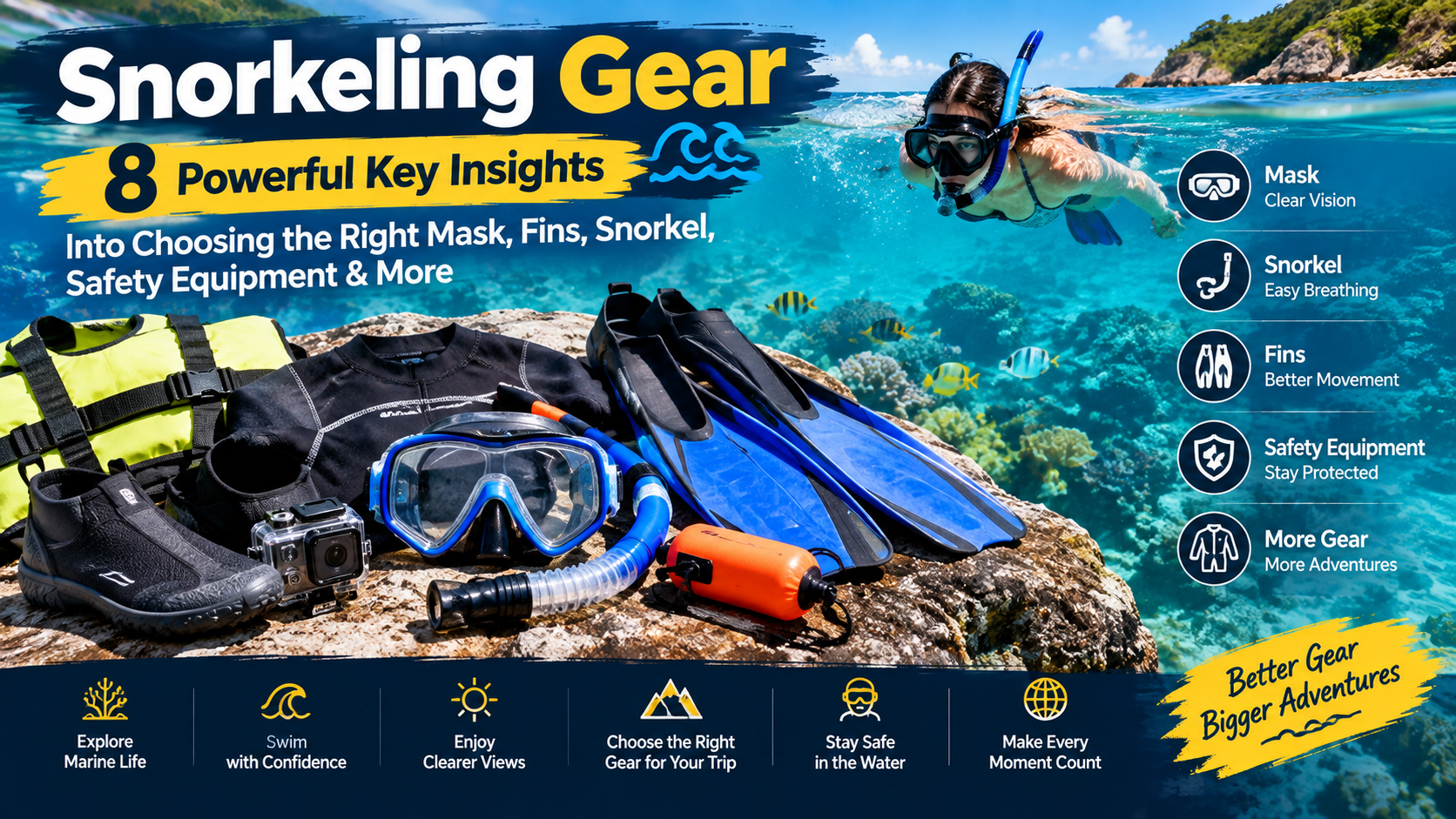
Snorkeling is one of the easiest ways to explore the underwater world, but the quality of your equipment can make a huge difference. The right snorkeling gear improves visibility, breathing comfort, propulsion, temperature control, and overall confidence in the water.
A beginner heading to a tropical beach may only need a mask, snorkel, and fins, while someone exploring cold water, rocky coastlines, or longer offshore routes may require additional protection and safety equipment. Good equipment should fit properly, match the environment, and allow you to concentrate on the experience rather than constantly adjusting your gear.
The key is not buying the most expensive equipment. It is choosing equipment that works reliably for your face, swimming ability, destination, and planned activities.
What Is Snorkeling Gear and Why Does It Matter?
Snorkeling equipment is designed to make surface swimming and underwater observation more comfortable and practical. The basic setup typically includes a mask for underwater vision, a snorkel for breathing while the face is submerged, and fins for more efficient movement through the water.
Additional equipment can include rash guards, wetsuits, flotation devices, reef-safe accessories, waterproof bags, anti-fog solutions, dive watches, surface markers, and personal safety equipment. The right combination depends heavily on water temperature, currents, visibility, distance from shore, and local regulations.
Think of the equipment as a system rather than a collection of separate products. A high-quality mask will not help much if it leaks, while excellent fins can become uncomfortable if they are the wrong size. As experienced snorkelers often discover, “fit matters more than fancy features.”
Choosing the Right Snorkeling Mask
The mask is arguably the most important part of your snorkeling gear because clear vision depends on creating a reliable seal around your face. A properly fitted mask should sit comfortably against the skin without requiring excessive strap tension. Pressing the mask gently against your face and inhaling slightly through your nose can provide a basic indication of whether the skirt creates a seal.
Look for tempered glass lenses when available, as they are designed for underwater use and are generally more durable than ordinary glass. Silicone skirts are also common because they can provide flexibility and a comfortable seal. Single-lens, dual-lens, and multi-lens designs each have different characteristics, but personal fit is more important than lens configuration alone.
A common beginner mistake is tightening the strap excessively to stop leaks. This can actually distort the silicone skirt and make sealing worse. If water repeatedly enters around the edges, the issue may be facial fit, hair caught under the skirt, or an unsuitable mask shape rather than insufficient strap tension.
Selecting a Snorkel for Comfortable Breathing
A snorkel allows you to breathe while keeping your face in the water, but not all snorkels feel the same. Diameter, mouthpiece design, length, purge valves, and splash protection can influence breathing comfort and usability.
Modern snorkels may include a purge valve that helps remove water from the tube, while some designs use splash guards or dry-top mechanisms intended to reduce water entering from above. These features can be convenient, particularly for beginners, although no snorkel eliminates the need to understand basic water-management techniques.
The mouthpiece deserves particular attention. If it causes jaw fatigue or feels uncomfortable after several minutes, the rest of the snorkel’s features become less important. A comfortable mouthpiece encourages relaxed breathing, which can make a noticeable difference during longer sessions.
Understanding Fins and Underwater Propulsion
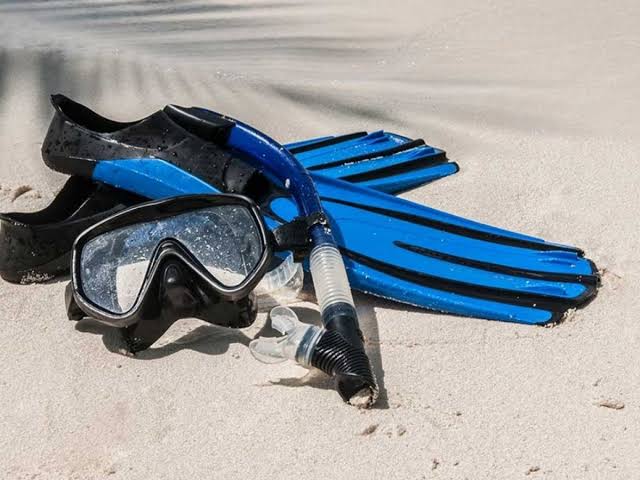
Fins increase the surface area of your feet, allowing your leg movements to move more water and produce forward propulsion. This makes swimming more efficient and can be particularly helpful when dealing with mild currents.
Full-foot fins are commonly used in warm water and are worn directly on bare feet or thin socks. Open-heel fins use an adjustable strap and can accommodate neoprene boots, making them useful in colder water or rocky environments. Short fins are compact and convenient for travel, while longer fins can provide greater propulsion but may require more leg strength and technique.
The ideal fin should feel secure without causing painful pressure. Beginners sometimes choose fins that are excessively stiff because they appear more powerful. In practice, very stiff fins can cause fatigue if the swimmer lacks the leg strength or technique to use them efficiently.
| Equipment | Main purpose | What to prioritize |
|---|---|---|
| Mask | Underwater vision and eye protection | Fit, seal, tempered glass |
| Snorkel | Surface breathing | Comfortable mouthpiece, appropriate design |
| Fins | Efficient propulsion | Correct size, comfort, flexibility |
| Rash guard | Sun and abrasion protection | Fit, coverage, quick-drying fabric |
| Wetsuit | Thermal protection | Correct thickness and fit |
| Water shoes | Foot protection | Grip and comfortable fit |
| Dry bag | Protecting belongings | Waterproof construction and closure |
| Safety equipment | Visibility and assistance | Destination-appropriate design |
Wetsuits, Rash Guards, and Thermal Protection
Water temperature has a major influence on comfort and safety. Even in warm destinations, extended exposure can gradually reduce body temperature, particularly when swimming continuously or spending long periods in the water.
A rash guard can provide useful protection against sunlight, minor abrasion, and contact with equipment. In cooler conditions, a wetsuit provides greater thermal insulation. Thickness varies according to water temperature, with thicker suits generally providing more insulation but also potentially restricting movement if poorly fitted.
The best snorkeling gear for a tropical holiday may therefore look very different from equipment used in temperate or cold-water locations. Checking local water conditions before the trip is more useful than relying solely on the air temperature reported in a weather forecast.
Snorkeling Gear for Safety and Visibility
Safety equipment should reflect the environment rather than being treated as an afterthought. In calm, shallow water close to shore, basic awareness and appropriate flotation may be sufficient for some swimmers. Offshore snorkeling, strong currents, boat traffic, remote coastlines, and low visibility require greater preparation.
A brightly visible rash guard or flotation aid can help make a swimmer easier to identify from a distance. Waterproof communication devices or surface signaling equipment may also be appropriate in certain environments. When snorkeling from a boat, following the operator’s safety briefing and using any required personal flotation equipment is especially important.
One of the most important safety principles is staying within your ability. Equipment cannot compensate for poor judgment, exhaustion, panic, or unfamiliar currents. If conditions deteriorate, returning toward a safe exit point is usually more valuable than attempting to continue the planned route.
Anti-Fog Solutions and Mask Care
Fogging is one of the most common frustrations for snorkelers. It occurs when moisture condenses on the inside of the lens, reducing visibility and encouraging swimmers to repeatedly remove or adjust the mask.
A purpose-designed anti-fog solution can help reduce this problem when used according to its instructions. Thoroughly cleaning a new mask before its first use can also be important because manufacturing residues may interfere with proper anti-fog performance. Avoid using unsuitable household chemicals or abrasive materials that could damage the lens or silicone components.
After snorkeling, rinse equipment with fresh water to remove salt, sand, and chlorine. Allow it to dry away from excessive heat and direct sunlight when appropriate, and store the mask so the silicone skirt is not compressed or distorted.
Snorkeling Gear for Beginners
Beginners generally benefit from keeping their initial setup simple. A comfortable mask, properly fitted snorkel, suitable fins, sun protection, and appropriate flotation or thermal protection can cover most basic needs.
The biggest beginner problem is often equipment adjustment rather than equipment quality. A mask that leaks, fins that rub, or a mouthpiece that causes discomfort can quickly turn a relaxing activity into a frustrating one. Testing equipment in controlled shallow water before attempting a longer excursion provides an opportunity to identify these issues.
Beginners should also learn basic skills before venturing into unfamiliar water. Clearing a partially flooded snorkel, removing water from a mask, adjusting fins, and maintaining calm breathing are simple skills that can increase confidence significantly.
Snorkeling Equipment for Travel
Travel adds another consideration: portability. Bulky equipment can take up valuable luggage space, so compact designs can be attractive for travelers who plan to snorkel regularly.
A mask should be protected from crushing or scratching during transport. Fins can sometimes be packed around softer clothing, while smaller accessories can be placed inside the fins or snorkel bag to save space. A mesh equipment bag can also make it easier to carry wet equipment after leaving the water.
Your snorkeling gear should be selected according to how often you expect to use it. Someone who snorkels once during a resort vacation may reasonably rely on rental equipment, while frequent travelers may find personal equipment worthwhile because they already know how it fits and performs.
Common Equipment Problems and Practical Solutions
Mask leakage is usually a fit problem rather than a sign that the mask needs to be tightened dramatically. Check for hair beneath the skirt, confirm that the mask sits correctly, and test whether the skirt seals comfortably without excessive pressure.
Fins that cause blisters often indicate an unsuitable size, poor fit, or inappropriate footwear combination. Wearing properly matched neoprene socks can help in some environments, while changing fin styles may be necessary if discomfort continues.
Another common issue is overpacking. Travelers sometimes bring multiple accessories that receive little use while overlooking practical basics such as sun protection, water, and a way to safely store valuables. A focused equipment setup is usually easier to manage than a collection of gadgets.
Choosing Equipment for Different Water Conditions
Calm tropical lagoons usually require less protective equipment than exposed coastlines with waves, currents, or colder water. In shallow rocky areas, footwear can help protect feet from sharp surfaces, while stronger fins may be useful when swimming against moderate water movement.
Visibility also affects equipment choices. Clear water with abundant marine life may encourage longer observation sessions, making comfort particularly important. Murky water or changing conditions require greater attention to navigation and safety rather than simply adding more equipment.
Before entering unfamiliar water, learn about tides, currents, marine hazards, local regulations, boat traffic, weather, and recommended snorkeling areas. Organizations such as PADI and NOAA provide educational resources relevant to aquatic safety and marine environments.
How to Build a Practical Snorkeling Setup
A practical snorkeling gear setup starts with the essentials and adds equipment according to actual conditions. For a warm-water beginner, the foundation may consist of a well-fitting mask, comfortable snorkel, suitable fins, sun protection, and appropriate flotation or exposure protection.
From there, equipment can be adapted for the destination. Cold water may require a wetsuit and boots, while rocky shorelines may make protective footwear useful. Boat-based excursions may require equipment specified by the operator, and remote locations may justify additional signaling or emergency equipment.
The best setup is therefore not the one with the most accessories. It is the one that allows you to see clearly, breathe comfortably, move efficiently, remain appropriately protected, and respond sensibly if conditions change.
Read More: uncovertravel.co.uk
Frequently Asked Questions
What snorkeling gear do beginners need?
Beginners generally need a properly fitting mask, a comfortable snorkel, and appropriately sized fins. Depending on the destination, additional essentials can include sun protection, a rash guard, flotation equipment, water shoes, or a wetsuit. The equipment should be tested and adjusted before attempting longer or more challenging swims.
How should a snorkeling mask fit?
A good mask should create a comfortable seal around the face without excessive strap pressure. It should remain stable when you move your head and should not cause painful pressure around the nose or eyes. Facial shape varies considerably, so trying different masks can be more useful than selecting equipment based solely on appearance or price.
Are full-foot or open-heel fins better?
Neither design is universally better because each serves different situations. Full-foot fins work well in warm water and are convenient for travel, while open-heel fins provide adjustability and can accommodate neoprene boots. Comfort, fit, water temperature, and intended use should guide the choice.
Is expensive snorkeling gear worth it?
Higher price does not automatically mean better performance. Spending more can provide improved materials, durability, comfort, or design, but fit remains critical. A moderately priced mask that seals correctly can be more useful than an expensive mask that does not match the user’s face.
Do I need a wetsuit for snorkeling?
A wetsuit is not necessary in every environment. Its usefulness depends mainly on water temperature, exposure duration, personal cold tolerance, and local conditions. In warm tropical water, a rash guard may provide sufficient protection for some swimmers, while cooler environments can require greater thermal insulation.
How do I stop my snorkeling mask from fogging?
Cleaning the mask properly before use and applying a suitable anti-fog product can help reduce fogging. Avoid touching the inside of the lens unnecessarily, as oils from the skin can contribute to fogging. If the problem persists, inspect the mask for residue, fit issues, or damage.
Conclusion
Choosing the right snorkeling gear is ultimately about matching equipment to your body and environment. A well-fitting mask provides clear vision, a comfortable snorkel supports relaxed breathing, and properly selected fins make movement more efficient. Exposure protection, safety equipment, and accessories then fill in the needs created by temperature, distance, terrain, and local conditions.
The most reliable approach is to prioritize fit, comfort, durability, and practical function instead of buying equipment simply because it has more features. Test your equipment before heading into unfamiliar water, learn basic snorkeling skills, and pay attention to weather and water conditions.
The final takeaway is simple: good equipment should disappear into the experience. When your mask stays clear, your fins feel natural, your breathing is comfortable, and your protection matches the environment, you can spend less time thinking about equipment and more time appreciating the underwater world.