



Packing for an international trip is less about squeezing everything into a suitcase and more about making smart decisions before you leave home. A well-planned international travel packing list helps you prepare for passports, clothing, electronics, medications, toiletries, documents, weather changes, and unexpected travel situations without overpacking.
The best approach is to think in terms of essentials, destination needs, personal comfort, and contingency planning. A beach holiday in Thailand, a business trip to London, and a two-week European backpacking adventure require very different luggage strategies. The goal is not to pack for every possible scenario but to bring versatile items that solve several problems at once.
Why a Good International Travel Packing List Matters
International travel introduces more variables than domestic trips. You may cross borders, change climates, use different electrical outlets, encounter unfamiliar transportation systems, or spend long periods away from convenient stores. Missing a passport, required medication, or essential charging equipment can create far more trouble than forgetting an extra shirt.
A practical international travel packing list reduces this risk by separating genuinely essential items from things that are merely convenient. Experienced travelers often follow a simple principle: pack for the trip you are actually taking, not every trip you can imagine. For example, a lightweight jacket may be useful in multiple climates, while three pairs of bulky shoes may only create extra weight.
The strongest packing system also leaves some space in the suitcase. That empty space can accommodate souvenirs, purchases, or clothing that becomes difficult to organize after several days. Good packing is therefore partly about preparation and partly about maintaining flexibility.
Essential Travel Documents and Money
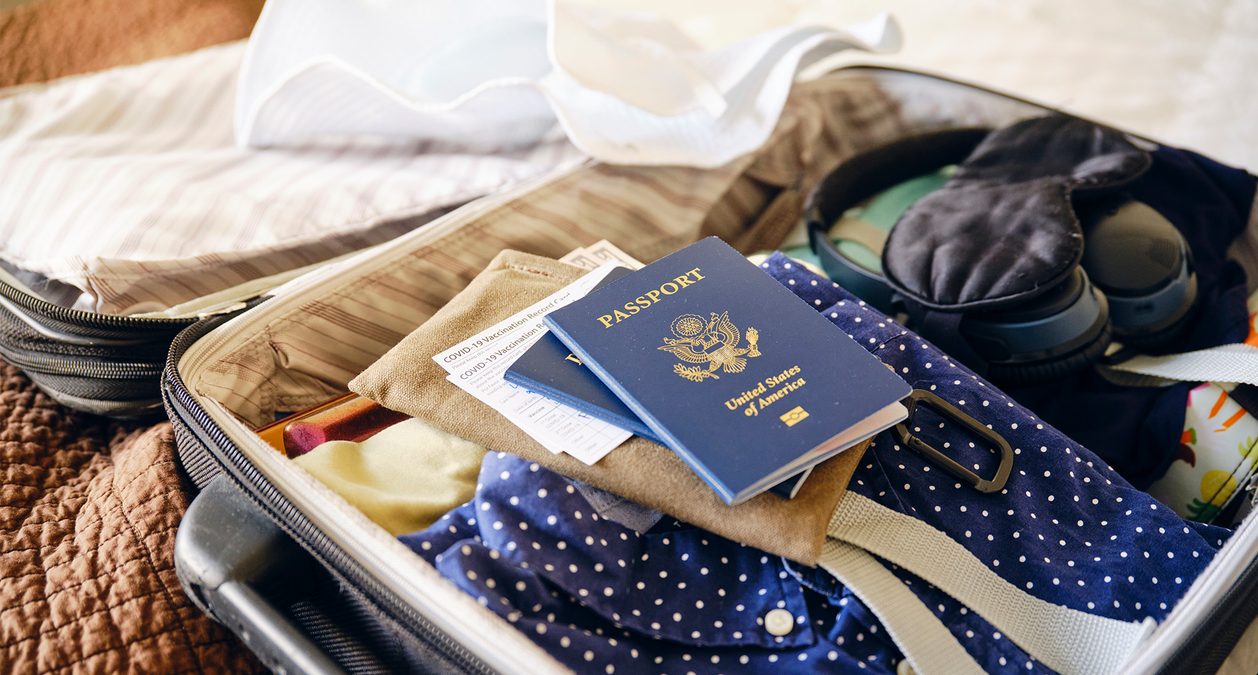
Travel documents should be treated differently from ordinary luggage because replacing them abroad can be difficult and time-consuming. Your passport should generally have sufficient validity for your destination, while visa requirements, entry permits, transit rules, travel insurance documents, hotel confirmations, and onward-travel requirements should be checked before departure. Requirements can vary by nationality and destination, so official government and embassy sources are the most reliable references.
Keep physical copies of important documents separately from the originals, and maintain secure digital copies when appropriate. Your international travel packing list should include your passport, visas if required, travel insurance information, flight details, accommodation information, emergency contacts, and relevant identification. A small document organizer can prevent the frustrating situation of searching through multiple pockets at an airport immigration counter.
Money preparation deserves similar attention. Carry a practical combination of payment cards and some local currency rather than relying entirely on one payment method. Informing your bank about international travel may also help prevent legitimate transactions from being unexpectedly declined. A discreet wallet or money belt can be useful in crowded transportation hubs, although basic situational awareness remains more important than any travel accessory.
Clothing for Different Climates and Activities
Clothing is usually where travelers overpack. Instead of selecting a separate outfit for every day, build a compact wardrobe around neutral, interchangeable pieces. Shirts, trousers, lightweight layers, underwear, socks, sleepwear, and one adaptable outer layer can cover a surprising range of situations.
For a warm destination, breathable fabrics and comfortable walking shoes may matter more than formal clothing. For colder destinations, layering is usually more efficient than packing one enormous coat. A base layer, insulating layer, and weather-resistant outer layer can adapt to changing temperatures while taking less space than several specialized garments.
Your international travel packing list should also reflect cultural expectations. Some destinations require visitors to cover shoulders, knees, or other areas when entering religious or traditional sites. Comfortable walking shoes are particularly valuable for city trips because sightseeing often involves considerably more walking than travelers expect.
| Travel need | Practical items | Packing strategy |
|---|---|---|
| Everyday clothing | T-shirts, trousers, underwear, socks | Choose mix-and-match pieces |
| Cold weather | Base layers, sweater, jacket | Layer instead of overpacking |
| Rain | Compact rain jacket or umbrella | Check seasonal conditions |
| Beach | Swimwear, sandals, cover-up | Keep lightweight and quick-drying |
| Formal occasions | One versatile outfit | Avoid multiple specialty outfits |
| Long walking days | Comfortable shoes | Break them in before departure |
Toiletries, Medication, and Personal Care
Toiletries should be compact and practical. Travel-sized containers can reduce bulk, while solid alternatives such as shampoo bars can sometimes save space and avoid liquid restrictions. Essential items may include toothbrush and toothpaste, deodorant, skincare products, shaving supplies, hair-care products, and any personal hygiene products you regularly use.
Medication deserves special attention. Prescription medicines should remain clearly identified and, where appropriate, accompanied by supporting documentation. Travelers should also check whether specific medications are restricted or regulated in their destination country before departure. A basic personal health kit might include commonly needed over-the-counter products, bandages, blister protection, and other personal necessities.
A useful rule is to keep essential medication and critical health items in your carry-on rather than checked luggage. If a checked suitcase is delayed, losing access to an essential prescription can become a serious problem. This is one area where careful preparation is far more valuable than trying to solve the problem after arrival.
Electronics, Connectivity, and Travel Gear
Modern travel often depends on electronics, but carrying every device you own defeats the purpose of traveling light. For many travelers, a smartphone, charging cable, power adapter, and power bank provide most of the necessary functionality. A laptop may be essential for business travel but unnecessary for a short leisure trip.
Electrical standards vary around the world, making a universal travel adapter one of the more useful items for international travelers. Before departure, check the destination’s plug type and voltage requirements, particularly if you plan to use hair dryers, electric shavers, cameras, or other equipment that may not support different voltage systems.
Your international travel packing list can also include practical accessories such as noise-canceling headphones, an e-reader, luggage tags, a reusable water bottle, packing cubes, and a compact daypack. These are not universally necessary, but they can improve convenience when they match the way you travel. The key is avoiding gadgets that solve problems you are unlikely to encounter.
Carry-On Essentials for the Flight
Your carry-on should function as a small emergency kit for the first several hours of your journey. It should contain everything you would reasonably need during the flight and the basic essentials required if checked baggage arrives late.
A sensible carry-on may include your passport and travel documents, medication, wallet, phone, chargers, headphones, a change of clothes, essential toiletries within applicable airline limits, and valuable electronics. For long-haul flights, an eye mask, neck pillow, compression socks, entertainment, and an empty reusable water bottle can make the journey more comfortable.
The smartest international travel packing list separates critical items from convenience items. If an item is expensive, irreplaceable, medically important, or necessary for your first day, it generally deserves consideration for your carry-on rather than your checked suitcase.
How to Pack Efficiently Without Overpacking
Packing cubes can make luggage easier to organize, but they do not magically reduce the weight of a suitcase. Their real advantage is organization: clothing can be separated by category, making it easier to locate items without unpacking everything. Rolling softer clothing can also help use available space efficiently, while heavier objects should generally be positioned thoughtfully to maintain suitcase balance.
A particularly effective strategy is to create a temporary packing area before placing everything into the suitcase. Put out everything you think you need, then remove obvious duplicates. If you have three similar shirts, two may be enough. If you have packed shoes for hypothetical occasions rather than actual plans, reconsider them.
The most useful international travel packing list is therefore not necessarily the longest one. It is the one that helps you distinguish between essential, useful, and optional. That distinction can transform a heavy, stressful suitcase into a manageable travel bag.
Destination-Specific Packing Considerations
Destination research should influence packing more than generic travel advice. Climate, local customs, planned activities, transportation, accommodation, and trip length all change what belongs in your luggage. A hiking holiday requires different footwear and clothing from a resort vacation, while a business conference may require professional attire that would be unnecessary on a backpacking trip.
Seasonal weather also deserves attention. Weather averages can provide useful context, but travelers should check the forecast closer to departure. Sudden temperature changes, rain, heat waves, or colder evenings can make a carefully selected layer more valuable than several extra outfits.
Your international travel packing list should also account for the actual itinerary. Someone staying in one hotel for ten days can pack differently from someone changing cities every two nights. Frequent transfers make lightweight luggage particularly valuable because every additional kilogram must be moved repeatedly.
Common Packing Problems and Practical Solutions
One of the most common problems is packing too much. The solution is not simply to buy a larger suitcase. Instead, reduce duplicates, choose versatile clothing, limit footwear, and reconsider items that can easily be purchased or accessed at the destination.
Another problem is forgetting small but important items. Travelers often remember clothing while overlooking charging cables, prescription documentation, adapters, travel insurance details, or comfortable footwear. A final review of your international travel packing list 24 to 48 hours before departure can catch these omissions while there is still time to fix them.
Baggage restrictions are another potential source of problems. Airlines differ in weight limits, dimensions, cabin baggage policies, and restrictions on liquids or specific equipment. Always check the airline’s current baggage rules rather than assuming that a previous trip used the same requirements.
A Final Pre-Departure Packing Check
Before leaving for the airport, perform one final check based on categories rather than individual objects. Confirm identity and travel documents first, followed by money and payment methods, medication and health essentials, electronics, clothing, toiletries, and destination-specific equipment.
Your international travel packing list should be considered complete when you can comfortably answer a simple practical test: Can you reach your destination, get through immigration, access essential medication, communicate, pay for necessities, and function for the first day if your checked luggage is delayed? If the answer is yes, you have covered the most important risks.
This final check is also the right time to weigh your luggage. A suitcase that feels manageable at home can become frustrating after several airport transfers, train journeys, or hotel changes. Leaving a small weight margin gives you room to handle unexpected purchases without immediately exceeding the baggage allowance.
Read More: uncovertravel.co.uk
Frequently Asked Questions
What should I pack first for international travel?
Start with documents, medication, money, and essential electronics because these items are harder to replace or go without. After that, pack clothing based on the destination’s weather and your planned activities. Building the international travel packing list in this order helps ensure that critical items receive priority over less important accessories.
How many clothes should I pack for an international trip?
The appropriate amount depends on trip length, laundry access, climate, and activities. For many trips, a small collection of interchangeable outfits is more practical than packing one outfit for every day. If laundry is available, travelers can often reduce clothing considerably without sacrificing comfort.
Should medication go in checked luggage?
Essential medication is generally better kept in your carry-on so that you can access it during travel and if checked baggage is delayed. Keep medicines in their original packaging when appropriate and research destination-specific rules for prescription or controlled medicines before departure.
What electronics are essential for international travel?
For many travelers, a smartphone, charging cable, power adapter, and power bank are sufficient. Business travelers may also need a laptop, while photographers may require dedicated camera equipment. The best approach is to bring devices that serve a genuine purpose rather than filling luggage with rarely used technology.
How can I avoid overpacking for an international trip?
Choose versatile clothing, limit shoes, avoid duplicate toiletries, use layers for variable weather, and review every item before packing it. A useful test is whether an item serves a realistic need on the itinerary. If it exists mainly for an unlikely scenario, it may not deserve valuable luggage space.
Is a packing list different for international and domestic travel?
Yes, because international travel can involve passports, visas, customs requirements, foreign currency, electrical differences, travel insurance, language barriers, and destination-specific regulations. A detailed international travel packing list accounts for these additional considerations while still focusing on the practical needs of the individual trip.
Conclusion
A successful packing strategy is ultimately about preparation rather than perfection. The right international travel packing list gives priority to documents, health essentials, versatile clothing, appropriate electronics, and destination-specific needs while eliminating unnecessary weight.
Think of your suitcase as a carefully selected toolkit rather than a storage box. Every item should have a practical reason for being there, and the most valuable things should remain accessible when you need them. When you combine destination research, smart organization, airline baggage awareness, and a final essentials check, packing becomes simpler and international travel becomes considerably less stressful.
The final takeaway is straightforward: pack for your actual journey, prepare for realistic problems, and leave room for flexibility. A lighter, better-organized bag often gives you something more valuable than extra possessions—it gives you freedom to enjoy the trip.