

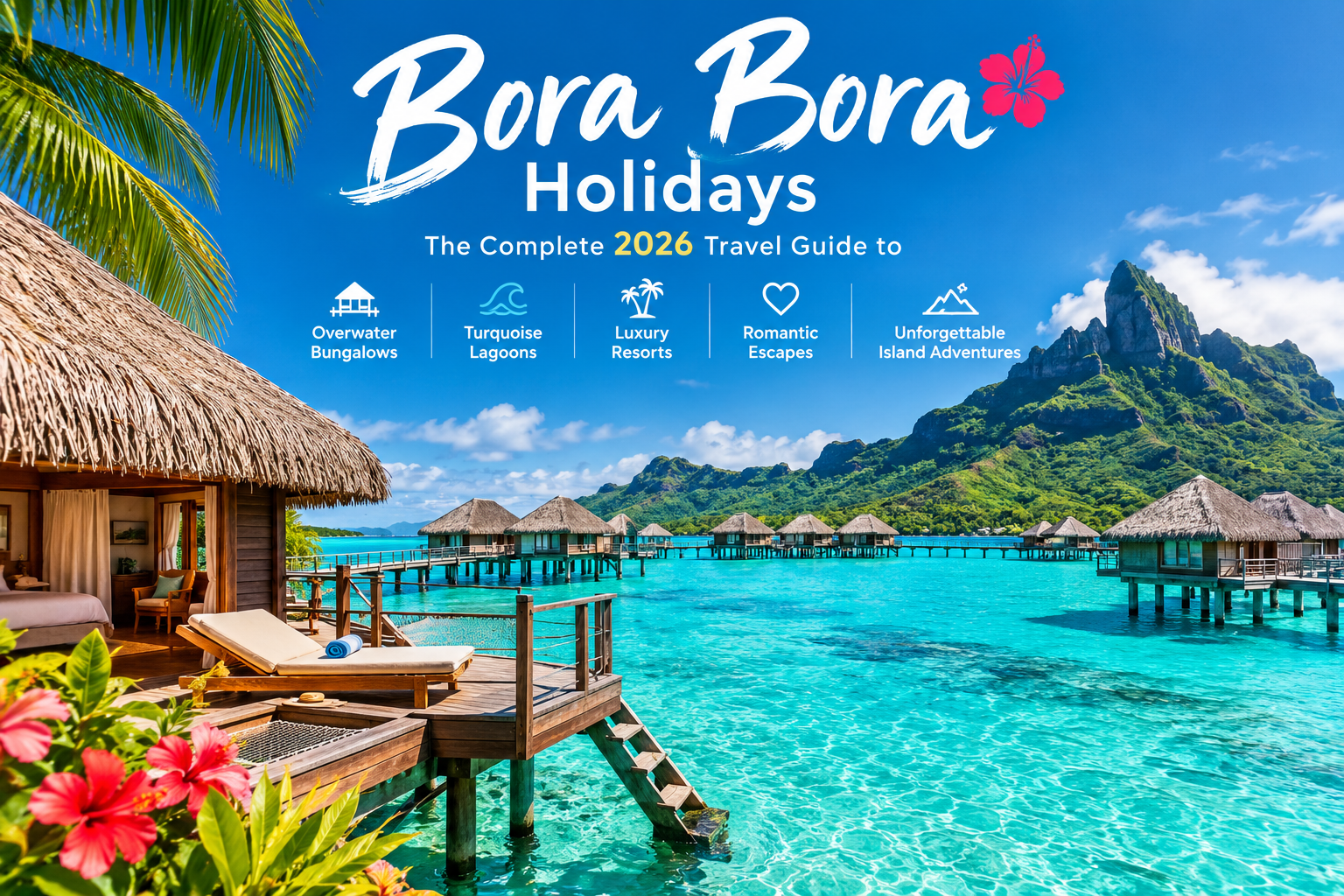
Bora Bora is one of the most spectacular island destinations in the world, celebrated for its turquoise lagoon, white-sand beaches, lush volcanic peaks, and luxurious overwater bungalows. Located in French Polynesia in the South Pacific, this small island offers a remarkable combination of natural beauty, Polynesian culture, marine adventures, and peaceful tropical scenery.
Whether you are planning a honeymoon, a romantic anniversary, a family escape, or a once-in-a-lifetime luxury trip, Bora Bora holidays can deliver an extraordinary experience. Days here might include snorkelling over coral gardens, taking a boat across the lagoon, enjoying fresh seafood beside the water, or watching Mount Otemanu glow in the evening light.
However, the destination also requires careful planning. Flights involve long journeys, accommodation can be expensive, and the choice between a luxury resort and a locally operated guesthouse can significantly affect your budget. This guide explains how to plan a memorable visit, choose the right accommodation, explore the island, and make the most of your time in paradise.
Where Is Bora Bora and What Makes It Special?
Bora Bora is part of the Society Islands in French Polynesia, an overseas collectivity of France in the South Pacific Ocean. The island lies northwest of Tahiti and is surrounded by a shallow lagoon and a protective coral reef. Its dramatic central peaks, especially Mount Otemanu, are remnants of an ancient volcano that shaped the island’s distinctive landscape.
What makes Bora Bora different from many other tropical destinations is the contrast between its mountainous interior and luminous blue lagoon. Different water depths create shades ranging from pale turquoise to deep sapphire, while small coral islands known as motu fringe sections of the reef. These natural features provide the setting for snorkelling, boat excursions, beach relaxation, and some of the world’s most recognisable overwater accommodation.
The main settlement, Vaitape, is the island’s principal commercial centre. Visitors can find shops, restaurants, local services, and transport connections here, while many major resorts occupy separate motu around the lagoon. This layout means that choosing where to stay influences not only your room and views but also how easily you can access restaurants, excursions, and everyday essentials.
Best Time to Visit Bora Bora
The best time for Bora Bora holidays depends on your priorities, including weather, accommodation prices, and preferred activities. The climate is tropical throughout the year, with warm temperatures and relatively small seasonal variations. However, rainfall, humidity, and visitor numbers change between seasons.
The drier period generally runs from May to October, making it popular for outdoor activities, lagoon excursions, and romantic trips. The wetter season typically extends from November to April, bringing greater humidity and a higher chance of heavy rain. Showers do not necessarily last all day, but unsettled weather can affect visibility, boat tours, and beach plans.
| Travel period | Typical conditions | Best suited for | Considerations |
|---|---|---|---|
| May–June | Generally drier, comfortable conditions | Couples, sightseeing, outdoor activities | Popular dates may require early booking |
| July–August | Dry-season travel and busy holiday periods | Families, lagoon trips, European summer holidays | Higher demand and potentially higher prices |
| September–October | Often pleasant with fewer peak-season crowds | Honeymoons, snorkelling, relaxed stays | Availability varies by resort |
| November–December | Warmer, more humid, increasing rainfall | Flexible travellers and tropical escapes | Weather can be less predictable |
| January–April | Wetter, humid conditions | Travellers seeking seasonal deals | Rain may disrupt some activities |
For many visitors, May, June, September, and October offer a useful balance of weather and travel demand. Still, tropical conditions are never guaranteed. Check the forecast before booking non-refundable excursions, and consider travel insurance that covers relevant disruptions.
Where to Stay: Overwater Bungalows, Beach Resorts and Guesthouses


Overwater bungalows are among Bora Bora’s most famous accommodation options. Built above the lagoon, these villas often feature private decks, direct water access, and expansive views of the surrounding landscape. Some have glass floor panels that offer glimpses of marine life below. For honeymooners and travellers celebrating a special occasion, the experience can feel wonderfully private, particularly when the lagoon is calm and the mountains are visible in the distance.
However, not every traveller needs an overwater villa to enjoy the island. Beachfront rooms provide easy access to the sand, while garden villas can offer more space and privacy at a lower price than premium lagoon accommodation. Luxury resorts such as the Four Seasons Resort Bora Bora, The St. Regis Bora Bora Resort, and Conrad Bora Bora Nui are known for upscale facilities, although inclusions and prices vary by property and season.
Locally operated guesthouses and smaller hotels are worth considering for visitors who value cultural interaction and a more independent style of travel. Staying near Vaitape or on the main island can make it easier to visit local shops and restaurants without relying exclusively on resort dining. Before booking, compare boat-transfer costs, meal plans, air-conditioning, cancellation conditions, and the distance to activities. A room with a lower nightly rate may not represent the best overall value if transfers and meals add substantially to the bill.
Best Things to Do in Bora Bora


Explore the Lagoon by Boat
A lagoon excursion is one of the most rewarding ways to appreciate Bora Bora’s landscape. Guided trips commonly include scenic cruising, snorkelling stops, and views of the motu surrounding the main island. Some tours provide lunch on a small island, while others focus on photography, marine life, or a more intimate private-boat experience.
Choose an operator that explains its wildlife practices and follows local environmental guidance. If a tour includes encounters with rays or sharks, observe animals from a respectful distance and avoid touching or feeding them unless the activity is explicitly managed under appropriate local rules. Conditions can change with wind and weather, so confirm what happens if a trip must be cancelled.
Snorkel and Discover Marine Life
The lagoon offers opportunities to see tropical fish, coral formations, rays, and other marine life. Snorkelling excursions can suit beginners as well as experienced swimmers, but the right location depends on water conditions, currents, and the participant’s ability. Guided trips are useful for travellers unfamiliar with the reef environment.
For a safer and more responsible experience, use reef-safe practices, avoid standing on coral, and follow your guide’s instructions. Coral reefs are delicate ecosystems, and even brief contact can cause damage. Visitors who are not confident swimmers should use appropriate flotation equipment and choose sheltered locations with qualified supervision.
Enjoy Beaches and Sunset Cruises
Matira Beach is one of Bora Bora’s best-known public beaches, with soft sand and shallow water in many areas. It is an appealing place to relax, swim when conditions are safe, or watch the changing colours of the lagoon. Bringing water, sun protection, and a light snack can make a beach visit more comfortable, especially during the hottest part of the day.
A sunset cruise offers a different atmosphere, with views of the mountains and motu under changing evening light. Depending on the operator, trips may include refreshments, sailing, or a private experience for couples. If you are planning a proposal or anniversary celebration, reserve ahead and clarify what the package includes rather than assuming every cruise provides food, drinks, or exclusive seating.
Discover Polynesian Culture and Island Life
Bora Bora is more than a luxury resort destination. Polynesian heritage is reflected in local food, dance, music, crafts, and community traditions. Cultural performances at selected venues can provide an introduction to traditional rhythms and storytelling, while local shops and markets offer opportunities to discover crafts and regional products.
Visitors can also learn about the island’s history, including its role in the Pacific during the Second World War, when American forces established a military supply base there in 1942. Respect local customs, ask permission before photographing people, and purchase crafts from local makers when possible. These small choices help make a holiday more meaningful while supporting the island’s community.
Food to Try During Your Stay
French Polynesian cuisine combines fresh seafood, tropical fruit, root vegetables, and French culinary influences. Poisson cru, often prepared with raw fish marinated in lime juice and mixed with coconut milk, is one of the region’s best-known dishes. Other popular ingredients include tuna, mahi-mahi, breadfruit, taro, pineapple, papaya, and coconut.
Resort restaurants may offer international menus and fine dining, while local eateries provide a more casual way to experience island flavours. Try a roulotte, a mobile food stall or food truck commonly found in French Polynesia, for a relaxed meal when available. Local dishes can be a welcome change from expensive resort dining, although operating hours and locations vary.
Food costs deserve attention when planning Bora Bora holidays. Some remote resorts have limited dining choices nearby, making meal plans convenient but potentially expensive. If you stay on the main island, compare restaurant prices and transport arrangements before deciding whether to eat out every evening or prepare some meals independently.
How Much Do Bora Bora Holidays Cost?
Bora Bora is generally considered a premium travel destination because of its remote location, imported supplies, resort accommodation, and boat transfers. Total costs depend on your departure country, travel dates, room type, meal arrangements, and activities. A luxury overwater bungalow combined with private excursions can cost considerably more than a guesthouse stay with selected guided tours.
The following figures are broad planning estimates in US dollars, not live quotes. Actual rates may be higher or lower depending on availability, exchange rates, and what is included.
| Expense | Indicative budget per person or room |
|---|---|
| Return international flights | $1,000–$2,500+ per person |
| Accommodation | $150–$500+ per room per night |
| Luxury overwater bungalow | $800–$2,000+ per room per night |
| Meals and drinks | $40–$120+ per person per day |
| Group lagoon excursion | $100–$250 per person |
| Local transport and transfers | Varies by route and provider |
These estimates exclude some taxes, insurance, premium activities, and unexpected expenses. Check whether quoted resort rates include breakfast, airport transfers, taxes, and service charges. Airfare can also vary sharply depending on the departure airport and connections.
To control costs, travel outside the busiest periods where practical, book flights and accommodation early, and mix paid excursions with beach time and independent exploration. Staying on the main island may reduce accommodation costs, while a shorter stay in an overwater bungalow can provide the experience without requiring you to spend the entire trip at a luxury resort.
Getting to Bora Bora and Travelling Around
Most international visitors reach Bora Bora through Tahiti’s Faa’a International Airport near Papeete, then take a domestic flight to Bora Bora Airport on Motu Mute. From there, onward boat transfers connect travellers with Vaitape or individual resorts. Because many luxury properties sit on separate motu, transfer arrangements are an important part of the itinerary.
When booking, check baggage allowances on the domestic flight and confirm your transfer with your accommodation provider. If your international and domestic flights are on separate bookings, leave enough time to manage delays and baggage collection. A missed connection can be especially inconvenient when onward transport depends on a scheduled boat.
On the main island, visitors can use taxis, rental cars, bicycles, scooters where appropriate, and local transport services. Some resort guests rarely need to leave their property, but independent travellers may prefer a location that offers easier access to shops and restaurants. Plan transport before booking excursions, and confirm the return arrangements rather than assuming a taxi or boat will be available whenever needed.
Practical Tips for a Smooth Island Holiday
Pack lightweight clothing, swimwear, reef-conscious sun protection, insect repellent, comfortable sandals, and any personal medicines you may need. A waterproof bag is useful for boat trips, while a light rain jacket can help during tropical showers. If you plan to snorkel regularly, you may prefer to bring a well-fitting mask, although equipment rentals are available through many operators.
French is the official language, and Tahitian is an important part of local cultural life. Learning a few simple greetings and polite expressions can make interactions more welcoming. The local currency is the CFP franc (XPF), so check card acceptance and cash requirements before arrival, particularly if you plan to visit smaller businesses.
Responsible travel is particularly important in a small island environment. Avoid leaving rubbish on beaches, minimise single-use plastics, respect marine wildlife, and follow marked access rules around private properties. The island’s beauty depends on healthy reefs, clean water, and a community that can benefit from tourism without losing control of its own traditions and resources.
Frequently Asked Questions About Bora Bora Holidays
How many days should you spend in Bora Bora?
A stay of four to seven days gives most visitors enough time to enjoy the lagoon, take a boat excursion, relax on the beach, and explore the main island. Couples seeking a slow-paced honeymoon may prefer a longer visit, while travellers combining Bora Bora with Tahiti or other islands can still enjoy a rewarding three- or four-night stay.
Are Bora Bora holidays suitable for families?
Yes, Bora Bora can be suitable for families, especially those who enjoy beaches, boat trips, and water activities. The key is to choose accommodation with suitable room arrangements, family-friendly facilities, and safe swimming options. Check age restrictions for excursions and consider transfer times, since some resorts are accessible only by boat.
Is Bora Bora worth the high cost?
For travellers who value extraordinary lagoon scenery, marine experiences, and a distinctive island atmosphere, Bora Bora can be worth the expense. However, it is not necessary to choose the most expensive resort to enjoy the destination. A carefully planned stay on the main island, combined with a few well-chosen excursions, can deliver many of the same natural highlights at a lower overall cost.
Can you visit Bora Bora on a budget?
Yes, although it is difficult to make the trip genuinely inexpensive because of long-distance flights and island logistics. Choosing a guesthouse, eating at local establishments, travelling outside peak periods, and limiting private excursions can help. Budget travellers should compare the full cost of accommodation, meals, and transport instead of focusing only on the nightly room rate.
Is Bora Bora good for a honeymoon?
Bora Bora is a popular honeymoon destination because of its romantic scenery, private villas, sunset cruises, and luxury resorts. Couples can plan a mix of special experiences and unstructured time, such as a lagoon tour followed by a quiet beach afternoon. Booking early helps secure preferred room categories and anniversary or honeymoon arrangements.
Do you need to know French to visit Bora Bora?
No, knowing French is not essential for most resort-based visits, as staff at many tourism businesses communicate with international guests in English. However, French is the official language, and learning basic greetings can be helpful when visiting local shops or restaurants. Translation tools and a few prepared phrases can also make independent travel easier.
What should you book in advance?
Reserve flights, accommodation, and important airport or resort transfers as early as practical, particularly for peak-season travel. Popular lagoon excursions, private cruises, and special dining experiences may also require advance booking. Leave some flexibility in your schedule for weather changes and confirm cancellation policies before paying for non-refundable activities.
Conclusion: Planning an Unforgettable Bora Bora Escape
Bora Bora combines extraordinary natural scenery with a distinctive Polynesian identity, making it one of the South Pacific’s most memorable destinations. Its turquoise lagoon, volcanic mountains, coral reefs, white-sand beaches, and overwater villas offer experiences that range from adventurous to deeply relaxing.
The best Bora Bora holidays are not necessarily the most expensive ones. A thoughtful itinerary, suitable accommodation, a few worthwhile excursions, and time to enjoy the island at a slower pace can be more rewarding than trying to fill every day with activities. Consider your budget, the season, your preferred style of travel, and how much independence you want before choosing where to stay.
The final takeaway is simple: plan carefully for the practical details, but leave room for the moments that cannot be scheduled. A quiet morning beside the lagoon, a conversation with a local host, or a sunset behind Mount Otemanu may become the most memorable part of your journey.