


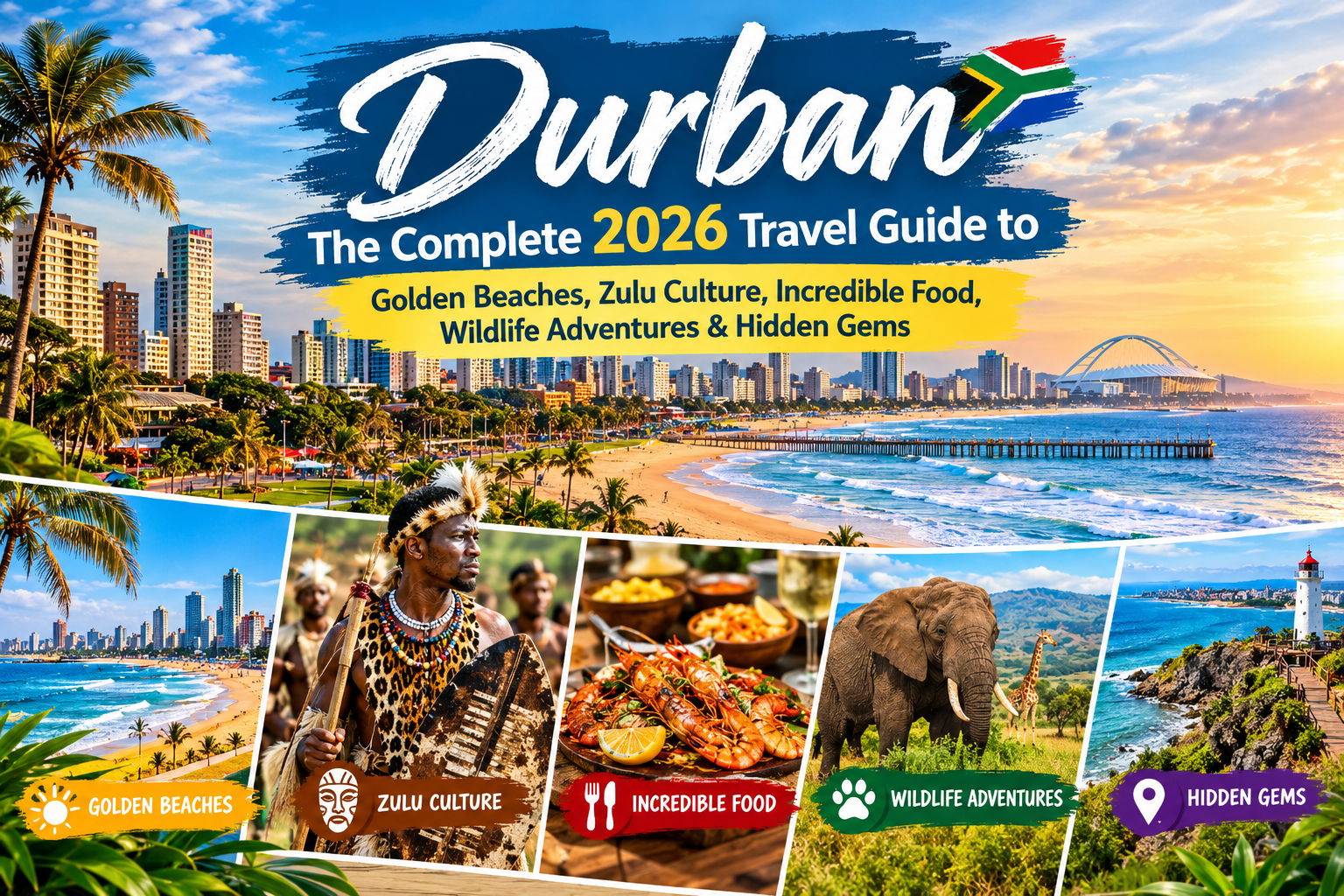
Durban is one of South Africa’s most distinctive coastal cities, known for its warm Indian Ocean waters, golden beaches, vibrant cultural heritage, and flavorful food scene. Located in KwaZulu-Natal, it combines relaxed seaside living with urban energy, traditional Zulu culture, Indian influences, and access to some of the country’s most rewarding nature experiences. Whether you are planning a beach holiday, a family trip, or a cultural adventure, this destination offers much more than a few days beside the ocean.
Often called eThekwini, the city has a subtropical climate, a busy harbor, a famous beachfront promenade, and a food culture shaped by generations of migration and exchange. Visitors can surf along the Golden Mile, explore local markets, discover the history of the Zulu kingdom, or take day trips to wildlife reserves and the scenic landscapes of the Drakensberg. Understanding the city’s neighborhoods, seasonal weather, transport, and local customs makes it easier to plan a memorable visit.
Where Is Durban and What Makes It Special?
Durban lies on South Africa’s eastern coastline along the Indian Ocean. It is the largest city in KwaZulu-Natal and one of the country’s important commercial ports. Its location gives it a distinctive character: warm coastal weather, beaches close to the city center, and cultural influences that reflect South Africa’s complex history.
The city is especially known for its blend of Zulu heritage, Indian South African traditions, and broader African and international influences. This diversity is visible in its markets, religious buildings, music, architecture, festivals, and restaurants. Durban’s large Indian community has helped shape its famous curry culture, while Zulu history remains deeply connected to the surrounding province.
For travelers, the appeal lies in the variety of experiences within reach. A morning can begin with a beach walk, continue with a spicy local lunch, and end with a sunset beside the harbor. With wildlife reserves, coastal towns, and mountain landscapes accessible on longer excursions, the city also makes a useful base for exploring KwaZulu-Natal.
Best Beaches and Coastal Attractions


Explore the Golden Mile
The Golden Mile is the city’s best-known beachfront, stretching along a series of sandy beaches, promenades, and recreational areas. It attracts surfers, joggers, families, cyclists, and visitors who simply want to enjoy the ocean atmosphere. The promenade is ideal for a leisurely walk, especially in the morning when temperatures are often more comfortable.
Beach conditions vary by location and weather. Some areas have designated swimming zones and lifeguards, while others are better suited to walking or surfing. Follow beach flags and lifeguard instructions, avoid swimming during rough seas, and check local water-quality notices. These precautions are particularly important after heavy rainfall, when runoff can affect coastal water conditions.
Visit uShaka Marine World
uShaka Marine World combines marine-themed attractions, aquariums, entertainment, and family activities near the waterfront. It is a popular choice for travelers with children or anyone looking to add an indoor or structured activity to a beach-focused itinerary. Check the official schedule for current opening hours, ticket prices, and attraction availability before visiting.
The surrounding beachfront is also worth exploring. You can combine a visit with a coastal walk, a meal at a nearby restaurant, or time relaxing by the sea. During busy holiday periods, arriving early can help reduce queues and make it easier to organize the day.
Discover Umhlanga
North of the city center, Umhlanga is known for its attractive beaches, coastal promenade, restaurants, and recognizable lighthouse. The area offers a polished resort atmosphere and a range of accommodation options, from hotels to self-catering apartments. It can suit travelers who prefer a quieter base while remaining close to urban amenities.
The Umhlanga Lagoon Nature Reserve provides a contrasting experience, with coastal forest and walking trails near the beach. Stay on marked paths, respect wildlife, and avoid entering sensitive dune areas. Combining the reserve with a promenade walk is an easy way to experience the coast beyond the busiest swimming beaches.
Zulu Culture, History, and Local Heritage


The region’s cultural history is closely connected to the Zulu kingdom, which became a major political power in southern Africa during the nineteenth century. Visitors interested in this history can explore museums, cultural centers, and guided experiences that explain Zulu traditions, leadership, music, beadwork, and community life. Choose reputable local guides who present the culture respectfully rather than reducing it to a performance for tourists.
Durban also played an important role in the history of Indian migration to South Africa. Mahatma Gandhi lived and worked in the region during the early part of his political life, and the broader area contains sites connected to his experiences and the development of nonviolent resistance. These locations provide context for understanding the history of racial discrimination and the struggle for civil rights in South Africa.
The city’s heritage is visible in everyday life as well as formal attractions. Markets, places of worship, food traditions, and neighborhood festivals reflect communities that have influenced the region for generations. When visiting religious or cultural sites, follow photography rules, dress appropriately where requested, and ask before photographing individuals.
Durban Food: Curries, Bunny Chow, and Coastal Flavors


Food is one of the most rewarding ways to understand the city’s cultural identity. The signature dish is bunny chow, a hollowed-out loaf of bread filled with curry. It developed within Durban’s Indian South African community and has become one of the city’s most recognizable foods. Fillings vary, with chicken, lamb, and bean curries among common choices. The bread absorbs the sauce, making the dish filling, flavorful, and easy to share.
Other local favorites include spicy curries, roti, samoosas, grilled seafood, and traditional South African dishes. The city’s coastal location also makes fish and shellfish popular menu items, although availability depends on season and restaurant sourcing. Local markets and casual eateries can provide a more informal introduction to regional cooking than formal waterfront restaurants.
| Food to try | What it is | Where to look |
|---|---|---|
| Bunny chow | Curry served inside a hollowed loaf of bread | Local curry restaurants and casual eateries |
| Roti and curry | Flatbread served with richly spiced curry | Indian South African restaurants |
| Samoosas | Crisp pastries filled with savory ingredients | Bakeries, markets, and snack shops |
| Grilled seafood | Fish or shellfish prepared with local seasonings | Coastal restaurants |
| Boerewors | Traditional South African sausage | Markets and braai restaurants |
| Milk tart | Creamy custard tart dusted with cinnamon | Bakeries and cafés |
A useful tip is to ask about spice levels before ordering. Durban-style curries can be hot, and dishes described as mild may still carry considerable flavor. If you have dietary restrictions, check ingredients carefully because sauces and fillings can contain dairy, nuts, or other allergens.
Wildlife Adventures and Day Trips From the City


KwaZulu-Natal offers access to wildlife reserves, wetlands, and dramatic mountain scenery. Hluhluwe-iMfolozi Park is renowned for its conservation history and opportunities to see animals such as rhinoceroses, elephants, giraffes, and antelope. Because it is several hours from the city by road, it is best planned as a dedicated excursion rather than squeezed into a short afternoon.
The iSimangaliso Wetland Park, a UNESCO World Heritage Site, features diverse ecosystems including lakes, coastal dunes, wetlands, and beaches. It supports an impressive variety of birdlife and other wildlife, with experiences depending on the specific section of the park visited. The Drakensberg Mountains offer another option for travelers who prefer hiking, waterfalls, and panoramic landscapes to game drives.
Choose activities based on travel time, weather, and the amount of time available. A guided excursion can simplify transport and provide valuable ecological context, while self-driving offers more flexibility. For wildlife viewing, keep a respectful distance, follow park rules, and never feed or approach wild animals.
Best Time to Visit and What the Weather Is Like
The city has a subtropical climate, with warm summers and generally mild winters. Summer, roughly from November to March, is popular for swimming and beach holidays, but it can also bring humidity, heavy rain, and thunderstorms. During this period, check beach conditions regularly and keep flexible plans for outdoor activities.
Winter, from June to August, is often drier and pleasantly mild, making it suitable for walking, sightseeing, and exploring the surrounding province. Ocean temperatures can be cooler than in summer, but sunny days remain common. Spring and autumn can offer a useful balance between warm weather and fewer holiday crowds, although conditions still vary.
| Season | Typical conditions | Travel advice |
|---|---|---|
| Summer | Hot, humid, and sometimes rainy | Pack light clothing and rain protection |
| Autumn | Warm days with changing rainfall | Plan flexible outdoor activities |
| Winter | Mild, often drier weather | Bring a light jacket for evenings |
| Spring | Increasing warmth and seasonal showers | Check forecasts before beach trips |
Weather is only one factor when planning. School holidays, major events, and accommodation demand can affect prices and crowd levels. Book popular stays early if visiting during peak holiday periods.
Where to Stay, Transport, and Practical Travel Tips
Accommodation ranges from beachfront hotels and guesthouses to self-catering apartments and luxury properties in Umhlanga. Staying near the Golden Mile can be convenient for beach activities and central attractions, while Umhlanga may appeal to visitors seeking a resort-style atmosphere. Compare location, parking, transport access, and recent reviews rather than choosing solely by price.
Transport requires some planning. Rental cars are useful for day trips and exploring the wider province, while ride-hailing services and local transport can help with shorter journeys. Traffic and travel times vary, so allow extra time when heading to the airport or joining a scheduled tour. For rural excursions, confirm road conditions and return arrangements in advance.
As in any large city, remain aware of your surroundings. Use reputable transport, keep valuables out of sight, avoid displaying expensive equipment unnecessarily, and seek current local advice about areas and times to visit. Beach safety also matters: obey lifeguards, observe warning signs, and avoid isolated swimming areas.
Frequently Asked Questions About Durban
Is Durban worth visiting?
Yes. The city offers warm coastal weather, sandy beaches, distinctive Indian South African cuisine, Zulu cultural heritage, and access to wildlife reserves. It is particularly appealing to travelers who want a mix of seaside relaxation and cultural exploration rather than a holiday focused on only one type of attraction.
What is Durban famous for?
It is best known for its Indian Ocean beaches, the Golden Mile, bunny chow, its busy harbor, and its diverse cultural heritage. It is also a gateway to KwaZulu-Natal’s wildlife reserves, coastal wetlands, and mountain landscapes.
How many days should you spend in Durban?
Three to four days is a useful starting point for exploring the main beaches, cultural attractions, and food scene. Five to seven days allows time for a wildlife excursion or a trip to nearby coastal areas. Longer stays provide greater flexibility for exploring the wider province.
Is Durban suitable for a family holiday?
Yes. Families can enjoy the beachfront promenade, marine attractions, selected nature reserves, and family-friendly accommodation. Choose activities based on children’s ages and swimming ability, check attraction schedules, and prioritize beaches with lifeguards and clearly marked swimming zones.
What is the best time to visit Durban?
For beach-focused holidays, summer offers warm conditions but also higher humidity and a greater chance of rain. Winter is often drier and comfortable for sightseeing. Spring and autumn can provide a good balance, depending on your preferred activities and travel dates.
What is bunny chow?
Bunny chow is a local specialty consisting of curry served inside a hollowed-out loaf of bread. It originated within Durban’s Indian South African community and is available with various fillings and spice levels. Trying it at a well-regarded local restaurant is an easy way to experience the city’s distinctive food culture.
Conclusion: Experience the Coastal Energy of Durban
Durban brings together golden beaches, warm Indian Ocean waters, Zulu heritage, Indian-inspired cuisine, and access to some of South Africa’s most diverse natural landscapes. From walking the Golden Mile and tasting bunny chow to learning about local history or planning a wildlife excursion, the city offers experiences that reach far beyond its coastline.
The most rewarding visit balances beach time with cultural exploration and careful planning. Choose accommodation that suits your itinerary, check weather and swimming conditions, and leave time to discover local restaurants and markets. Durban is at its best when its coastal beauty is experienced alongside the people, food, and cultural traditions that give the city its distinctive character.