

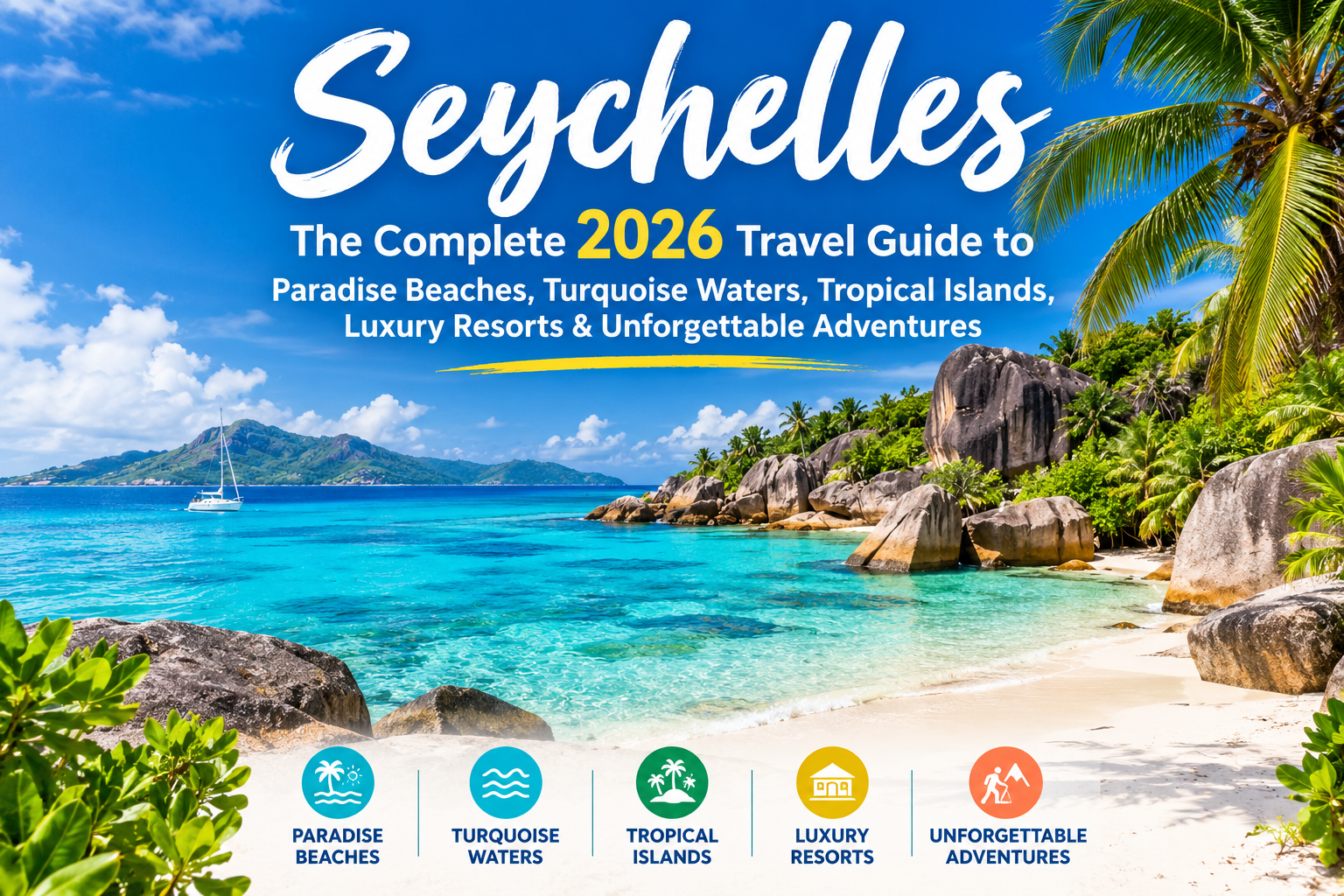
Seychelles is an extraordinary Indian Ocean destination known for its powder-white beaches, granite rock formations, turquoise lagoons, and lush tropical forests. Located northeast of Madagascar off the eastern coast of Africa, this island nation combines spectacular natural scenery with Creole culture, rare wildlife, and a relaxed atmosphere that appeals to honeymooners, families, nature lovers, and adventure travellers.
From the famous beaches of Mahé and Praslin to the quieter beauty of La Digue, the islands offer far more than a traditional beach holiday. Visitors can hike through tropical forests, snorkel around coral reefs, discover giant tortoises, explore local markets, and enjoy freshly prepared Creole cuisine.
Planning a trip requires some thought because the islands differ in atmosphere, transport connections, accommodation, and cost. This guide covers the best islands to visit, the most rewarding activities, seasonal conditions, travel expenses, and practical advice for making the most of your stay in 2026.
Where Is Seychelles and What Makes It Special?
Seychelles is an archipelago of 115 islands in the western Indian Ocean. Its capital, Victoria, is located on Mahé, the largest and most populated island. The country is known for its combination of ancient granite islands, coral islands, marine habitats, and remarkable biodiversity.
Unlike destinations where every island offers a similar experience, Seychelles has considerable variety. Mahé provides the main international airport, bustling local communities, mountain trails, and a broad selection of accommodation. Praslin is famous for its beaches and Vallée de Mai nature reserve, while La Digue is celebrated for its relaxed pace and dramatic granite shoreline.
The country’s natural environment is one of its greatest attractions. Protected areas preserve important habitats for endemic plants, seabirds, reptiles, and marine species. The Seychelles black parrot, for example, is found only on Praslin, while Aldabra giant tortoises are among the archipelago’s most recognisable wildlife. Responsible tourism helps protect these environments while supporting local communities.
Best Islands to Visit in Seychelles


Mahé: Beaches, Mountains and Local Culture
Mahé is the best starting point for many visitors because it hosts Seychelles International Airport and offers the widest range of services. The island’s coastline includes beautiful beaches such as Beau Vallon and Anse Intendance, while the interior rises into green mountains covered with tropical vegetation. This combination makes Mahé suitable for travellers who want to balance beach time with hiking, sightseeing, and cultural experiences.
Victoria provides an introduction to everyday island life. Visitors can explore the Sir Selwyn Selwyn-Clarke Market, browse local produce and spices, and discover the small shops and restaurants around the town centre. For panoramic scenery, Morne Seychellois National Park contains walking routes through forested terrain, although trail difficulty and conditions vary. Staying on Mahé also makes it easier to find accommodation across different price ranges.
Praslin: Famous Beaches and Rare Wildlife
Praslin is often considered one of the most rewarding islands for travellers seeking spectacular beaches and natural attractions. Anse Lazio is particularly well known for its clear water, pale sand, and granite boulders. The beach is excellent for relaxing and photography, although swimming conditions can vary with currents and seasonal weather.
The island is also home to Vallée de Mai, a UNESCO World Heritage Site famous for its native palm forest and the remarkable coco de mer palm. Its enormous seeds are among the largest in the plant kingdom. Guided walks help visitors understand the forest’s ecological importance and spot native species. Praslin works well as a base for exploring nearby islands by organised boat excursion.
La Digue: Slow Living and Granite Beaches
La Digue offers a quieter atmosphere, with small settlements, scenic coastal paths, and a strong connection to traditional island life. Bicycles are a popular way to get around, allowing visitors to travel between beaches and villages at a relaxed pace. Motorised transport is more limited than on Mahé, which contributes to the island’s slower rhythm.
Anse Source d’Argent is La Digue’s signature beach, recognised for its huge granite formations, shallow turquoise water, and palm-fringed coastline. Access arrangements and entrance fees may apply depending on the route and facilities used, so check current local guidance. Arriving early can provide a more peaceful experience and better opportunities for photographs before the busiest visitor periods.
Best Things to Do in Seychelles


Explore Beaches and Swim in Clear Waters
Beach hopping is one of the most enjoyable ways to experience the archipelago. Beau Vallon on Mahé has restaurants and water-based activities, while Anse Lazio on Praslin and Anse Source d’Argent on La Digue are celebrated for their scenery. Each beach has its own character, so visiting several is more rewarding than spending the entire holiday in one location.
However, tropical beaches are not always safe for swimming. Currents, waves, submerged rocks, and seasonal sea conditions can change quickly. Follow local warning signs, check conditions before entering the water, and avoid swimming alone in unfamiliar areas. A beautiful beach is best enjoyed when visitors respect its natural hazards as well as its scenery.
Snorkelling, Diving and Island Hopping
The waters around Seychelles support coral reefs, tropical fish, sea turtles, and other marine life. Snorkelling trips are available around selected islands, while certified divers can explore reefs, underwater rock formations, and other sites chosen according to weather and visibility. Boat excursions may also include beach stops, swimming breaks, or wildlife observation.
Conditions vary throughout the year, and some sites are more suitable for experienced swimmers or divers than beginners. Choose reputable operators, check equipment standards, and ask about safety procedures before booking. Avoid touching coral or pursuing marine animals for photographs. These simple precautions reduce disturbance to delicate ecosystems and help preserve the experience for future visitors.
Hike Through Tropical Forests
Seychelles is not just a beach destination. Trails through Morne Seychellois National Park on Mahé reveal forested slopes, native vegetation, and occasional viewpoints over the coastline. Hiking offers a different perspective on the islands, especially for travellers who want to understand the landscapes beyond the resorts.
Choose routes according to your fitness and experience, and check current trail conditions before setting out. Tropical heat and humidity can make even moderate walks tiring, so carry drinking water, wear suitable footwear, and allow enough time to return before dark. A local guide can be particularly useful on unfamiliar or more challenging routes.
Discover Wildlife and Conservation Areas
Wildlife experiences are a major highlight for nature enthusiasts. On Praslin, Vallée de Mai protects a distinctive palm forest, while Curieuse Island is known for its population of Aldabra giant tortoises. Birdwatchers may also be interested in protected islands that provide habitats for seabirds and rare endemic species, although access can be restricted to protect sensitive environments.
Wildlife tourism should prioritise animal welfare and habitat conservation. Follow instructions from guides, avoid feeding animals, and never remove shells, plants, or other natural materials from protected areas. Choosing operators that explain conservation rules and support responsible practices helps ensure that tourism benefits the environment rather than damaging it.
Creole Cuisine and Local Food to Try
Seychellois Creole cuisine reflects African, French, Indian, and Chinese influences. Fresh fish, seafood, coconut, rice, chillies, and aromatic spices feature prominently, creating dishes that are flavourful without always being complicated. Local cooking is an important part of the destination’s identity, and trying it provides a connection to daily life beyond the beaches.
Look for grilled fish with rice, octopus curry cooked with coconut milk, lentil dishes, chutneys, and fresh tropical fruit. Seafood is widely available, but menus depend on the season and location. Local takeaway counters and small restaurants can offer excellent value compared with resort dining, particularly for lunch.
Markets are another good place to discover island ingredients and food traditions. Victoria’s market is a useful stop for fruit, spices, and locally sold products. If you have allergies or dietary restrictions, explain them clearly when ordering, as sauces and marinades may contain ingredients that are not obvious from the menu.
Best Time to Visit Seychelles
Seychelles has a warm tropical climate throughout the year, so there is no single month that suits every traveller. Seasonal trade winds influence rainfall, sea conditions, and which activities are most comfortable. April and October are often considered useful transition periods, when winds may be lighter and conditions can suit a range of outdoor activities.
| Period | Typical conditions | Best for | Considerations |
|---|---|---|---|
| April | Often lighter winds and warm weather | Snorkelling, swimming, boat trips | Conditions can still vary |
| May–September | Generally drier, with stronger southeast trade winds | Hiking, sightseeing, cooler-feeling days | Some beaches may have rougher seas |
| October | Transitional conditions and potentially lighter winds | Island hopping, beach time, photography | Rainfall and sea conditions are variable |
| November–March | Warmer, more humid, with increased rainfall | Tropical scenery, flexible itineraries | Showers and changing sea conditions |
Weather differs between islands and can change from day to day. Rather than choosing travel dates based on climate averages alone, consider the activities you value most and remain flexible with boat trips and outdoor plans. Check local forecasts and operator updates close to departure.
How Much Does a Seychelles Holiday Cost?
Seychelles can be expensive, especially for visitors choosing luxury resorts, private transfers, and multiple guided excursions. However, the total cost depends heavily on accommodation, island choices, meal arrangements, and transport. Guesthouses and self-catering apartments can make a meaningful difference to the overall budget.
The following figures are broad estimates in US dollars, not live prices. Actual rates vary by season, booking date, property, and exchange rate.
| Expense | Indicative cost |
|---|---|
| Guesthouse or budget accommodation | $70–$180 per room per night |
| Mid-range hotel | $180–$400 per room per night |
| Luxury resort | $450–$1,500+ per room per night |
| Casual meal | $10–$25 per person |
| Restaurant dinner | $25–$60+ per person |
| Ferry between main islands | Varies by route and fare class |
| Guided boat excursion | $60–$180+ per person |
International flights are an additional major expense and depend on your departure city and connections. Compare the complete cost of accommodation, meals, airport transfers, ferries, and excursions before booking. A cheaper room may not be the best value if it is far from transport or restaurants.
For a more affordable trip, consider staying in a guesthouse, buying some groceries, using public buses where practical, and booking only the excursions that matter most to you. You can still enjoy remarkable beaches, walking routes, and local culture without paying for a luxury resort throughout your stay.
Getting Around and Planning Your Island Itinerary
Travel between Mahé, Praslin, and La Digue is usually arranged by domestic flight or ferry, depending on the route. The ferry is a popular connection between the main inhabited islands, while flights can reduce travel time on selected journeys. Check schedules and luggage conditions in advance, especially if your international arrival and onward transfer are booked separately.
On Mahé and Praslin, rental cars offer flexibility for exploring beaches and attractions at your own pace. Public buses can be a practical alternative, although routes and schedules may not suit every itinerary. On La Digue, bicycles are particularly useful for reaching beaches and exploring the island without rushing.
For a first visit, spending several nights on Mahé, followed by time on Praslin and a shorter stay on La Digue, provides a balanced introduction to the archipelago. Travellers with limited time may prefer two islands rather than attempting to visit too many places. Allow a buffer around ferry or flight connections, since delays can affect onward plans.
Practical Tips for a Smooth Visit
Pack lightweight clothing, comfortable walking shoes, swimwear, sun protection, insect repellent, and a reusable water bottle. A waterproof bag is useful for boat trips, while a light rain jacket helps during tropical showers. Bring any essential prescription medicines with you and check entry requirements and travel documentation before departure.
The country has three official languages: Seychellois Creole, English, and French. English is widely used in tourism, but learning a few local greetings can make everyday interactions more enjoyable. The local currency is the Seychellois rupee, although some hotels and tourism businesses also quote prices in foreign currencies. Confirm accepted payment methods before travelling to smaller islands or businesses.
Respecting local communities and natural environments is essential. Use designated trails, avoid disturbing wildlife, take rubbish with you, and follow rules in marine parks. When booking tours, ask how operators minimise environmental impacts and whether their activities support local guides and businesses.
Frequently Asked Questions About Seychelles
Is Seychelles worth visiting?
Yes, Seychelles is worth visiting for its distinctive granite beaches, turquoise waters, tropical forests, wildlife, and Creole culture. It suits travellers seeking relaxation as well as those interested in hiking, snorkelling, diving, and island hopping. The experience can be expensive, but careful accommodation and transport choices help make the trip more manageable.
How many days are enough for Seychelles?
Seven to ten days is a useful timeframe for visiting two or three islands without rushing. A week can accommodate Mahé and Praslin, with a day trip or short stay on La Digue if transport connections fit. A longer trip allows more time for hiking, marine excursions, and quieter beaches.
Which island is best for a first visit?
Mahé is a practical starting point because it has the international airport, the capital, transport services, and a wide range of accommodation. Praslin is ideal for famous beaches and nature, while La Digue appeals to travellers who enjoy cycling and a slower pace. Combining two or three islands offers a broader introduction to the country.
Is Seychelles suitable for families?
Yes, families can enjoy the beaches, wildlife, boat trips, and outdoor experiences. Choose accommodation with suitable facilities, check swimming conditions carefully, and confirm age limits for excursions. Some beaches have strong currents or rough seas at particular times, so supervised and appropriately sheltered swimming areas are preferable for children.
Is Seychelles expensive for tourists?
Seychelles can be costly because many goods are imported and some resorts rely on boat transfers. Accommodation and dining are usually the biggest expenses. Guesthouses, self-catering options, local takeaway meals, and public transport can reduce spending while still allowing visitors to enjoy the islands’ main natural attractions.
What is the best month to visit Seychelles?
April and October are often attractive because they fall between the main trade-wind seasons and may offer lighter winds. However, conditions vary by year and island. Travellers should choose dates based on their preferred activities, check seasonal weather information, and remain flexible if wind or rainfall affects excursions.
Do visitors need a visa for Seychelles?
Seychelles generally operates a visa-free entry policy, but visitors must meet the country’s entry conditions. These commonly include a valid passport, confirmed accommodation, a return or onward ticket, and sufficient funds. A travel authorisation may be required before departure, so check the latest official immigration requirements for your nationality and travel dates.
Conclusion: Why Seychelles Belongs on Your Travel List
Seychelles brings together remarkable beaches, rare wildlife, dramatic granite landscapes, welcoming island communities, and a rich Creole food culture. From Mahé’s mountain trails to Praslin’s palm forests and La Digue’s famous shoreline, each island offers a different reason to slow down and explore.
The most rewarding itinerary balances relaxation with discovery. Spend time on the beaches, sample local food, explore a nature reserve, and leave space for unexpected moments rather than filling every day with excursions. Planning transport and accommodation carefully will help you manage costs and make the most of your time.
Ultimately, the appeal of Seychelles lies in the connection between its natural beauty and island life. Choose your destinations thoughtfully, travel responsibly, and look beyond the postcard views to discover an archipelago whose wildlife, landscapes, and culture make it truly memorable.