


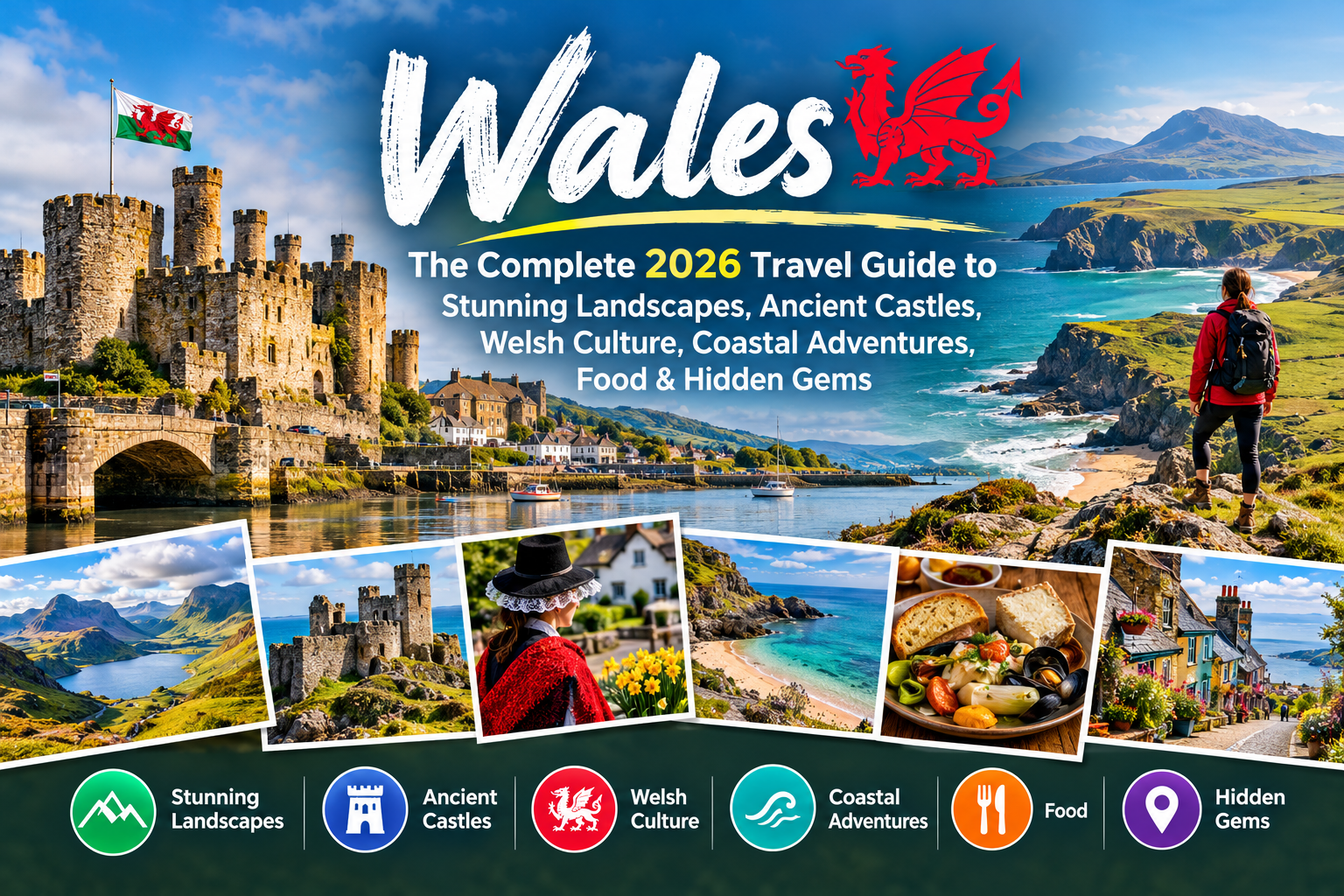
Wales is a captivating destination in the United Kingdom, celebrated for its dramatic mountains, medieval castles, rugged coastlines, welcoming communities, and distinctive Celtic heritage. From the towering peaks of Eryri (Snowdonia) to the colourful seaside villages of Pembrokeshire, this small nation offers an extraordinary variety of experiences for travellers, history enthusiasts, outdoor adventurers, and food lovers.
Despite its relatively compact size, Wales combines ancient traditions with modern cities, peaceful countryside, and some of Britain’s most beautiful coastal scenery. Visitors can explore centuries-old fortresses in the morning, walk along sandy beaches in the afternoon, and enjoy traditional Welsh dishes in a local pub by evening.
Understanding the country’s geography, culture, transport, and regional differences helps travellers plan a more rewarding visit. Whether you’re arranging a weekend break or an extended road trip, this guide covers the essential information needed to experience the destination with confidence.
Where Is Wales and What Makes It Special?
Wales occupies the western part of Great Britain and shares its only land border with England. The Irish Sea lies to the north and west, while the Bristol Channel separates southern Wales from parts of south-west England. Cardiff, the capital, is the country’s largest city and an important centre for government, business, culture, and entertainment.
What distinguishes this destination is the way natural beauty and cultural identity intersect. Mountains, valleys, historic industrial communities, agricultural landscapes, and coastal settlements all contribute to its character. Unlike destinations known primarily for one attraction, Wales offers a varied experience within relatively short travel distances.
The country is also one of the UK’s devolved nations, with its own parliament, the Senedd, and responsibility for several areas of domestic policy. Its national identity is closely connected to the Welsh language, traditional music, literature, rugby, and a long history of resistance, political change, and cultural revival.
The Best Places to Visit in Wales


The country’s attractions range from spectacular national parks to historic towns and lively urban centres. Choosing destinations that complement one another makes it easier to experience different sides of Welsh life without spending too much time travelling.
Eryri National Park, often known by its English name, Snowdonia, is a highlight for walkers, climbers, and landscape photographers. Its mountains, glacial lakes, woodland trails, and traditional villages provide opportunities for everything from gentle countryside strolls to challenging summit hikes. Yr Wyddfa, also known as Snowdon, is the park’s best-known mountain, although conditions can change rapidly at higher elevations.
Conwy and Caernarfon are excellent choices for visitors interested in medieval history. Their impressive castles reflect the military campaigns and political struggles that shaped the region. Further south, Cardiff combines historical landmarks with museums, shopping, nightlife, and a lively waterfront at Cardiff Bay. Tenby, meanwhile, attracts visitors with its pastel-coloured buildings, sandy beaches, harbour views, and access to the Pembrokeshire Coast.
| Destination | Main attraction | Best suited to |
|---|---|---|
| Eryri National Park | Mountains, lakes and hiking | Outdoor adventures |
| Cardiff | Museums, shopping and nightlife | City breaks |
| Conwy | Medieval castle and town walls | History enthusiasts |
| Pembrokeshire Coast | Coastal paths and beaches | Nature lovers |
| Brecon Beacons (Bannau Brycheiniog) | Waterfalls and mountain scenery | Walkers and photographers |
| Anglesey | Beaches, wildlife and coastal villages | Relaxing escapes |
| Portmeirion | Distinctive Italianate architecture | Photography and architecture |
Each destination has a different atmosphere, so travellers should select places according to their interests, available time, and preferred pace.
Welsh History, Castles and Cultural Heritage
The country’s history stretches from prehistoric settlements and ancient monuments to medieval kingdoms, industrial expansion, and modern devolution. Stone circles, burial chambers, Roman remains, and historic religious sites provide evidence of communities that lived here long before the modern nation took shape.
During the medieval period, Welsh princes and English rulers fought over territory and political authority. The impressive castles at Conwy, Harlech, Beaumaris, and Caernarfon illustrate this turbulent history. Several form part of a UNESCO World Heritage Site recognised for the exceptional military architecture associated with Edward I’s campaigns in north Wales.
Industrial heritage is equally significant. During the nineteenth century, south Wales became a major centre for coal mining and iron production, transforming communities and helping fuel industrial development. Today, museums, restored industrial sites, and former mining landscapes explain the opportunities and hardships associated with this era.
For a deeper understanding of local identity, visitors can explore cultural institutions, attend traditional music performances, and learn about the country’s literary heritage. Welsh culture is not simply preserved in museums; it remains part of everyday life through festivals, community events, sport, and the continued use of the Welsh language.
The Welsh Language and Local Traditions
Welsh, or Cymraeg, is a living Celtic language spoken throughout the country, with particularly strong communities in parts of north and west Wales. English is also widely spoken, and both languages have official status in Wales. Road signs, public services, schools, and cultural events often reflect this bilingual identity.
Learning a few basic expressions can add meaning to a visit. “Bore da” means good morning, “Diolch” means thank you, and “Croeso” means welcome. Even a simple greeting can demonstrate appreciation for local culture, particularly in communities where Welsh is commonly used in everyday conversation.
Traditions also include the Eisteddfod, a festival celebrating literature, music, performance, and the Welsh language. Rugby is another important part of national life, bringing communities together during international matches and major tournaments.
A useful way to experience these traditions is to visit a local market, attend a community festival, or spend time in a smaller town rather than limiting a trip to major tourist attractions. These everyday encounters often reveal the strongest connections between place, language, and identity.
Outdoor Adventures, National Parks and Coastal Beauty


Outdoor activities are among the country’s biggest attractions. Its three national parks—Eryri, Bannau Brycheiniog, and the Pembrokeshire Coast—protect distinctive landscapes and offer opportunities for hiking, cycling, wildlife watching, kayaking, and photography.
The Pembrokeshire Coast National Park is particularly appealing to visitors who enjoy walking beside the sea. The Pembrokeshire Coast Path follows cliffs, beaches, headlands, and coastal villages, offering routes of different lengths and difficulty levels. Travellers who prefer shorter walks can explore individual sections instead of attempting long-distance routes.
Mountain enthusiasts can head towards Eryri or Bannau Brycheiniog, where marked trails pass through open moorland, valleys, and mountain scenery. However, poor visibility, rain, strong winds, and rapidly changing temperatures can make even familiar routes difficult. Checking weather forecasts, carrying suitable clothing, and choosing a route that matches your fitness level are essential precautions.
Coastal adventures also require awareness of tides, currents, and changing sea conditions. For families or less experienced swimmers, supervised beaches and local safety guidance are preferable to unfamiliar remote locations. Responsible visitors should follow marked paths, respect wildlife, and avoid leaving litter behind.
Traditional Welsh Food and Local Specialities
Welsh cuisine reflects agricultural traditions, coastal resources, and the country’s changing cultural influences. Lamb, beef, seafood, cheese, vegetables, and locally produced ingredients feature prominently across regional menus.
Cawl, a traditional soup or stew often prepared with meat and vegetables, is a familiar comfort food. Recipes vary by household and region, making it a good example of how culinary traditions evolve while retaining a recognisable identity. Welsh rarebit, made with a rich cheese-based topping served over toasted bread, is another well-known speciality.
Other foods worth exploring include Glamorgan sausages, traditionally made with cheese and leeks rather than meat, and bara brith, a fruit loaf often served sliced with butter. Welsh cakes, cooked on a griddle, are popular treats that pair well with tea or coffee.
Coastal towns offer seafood, while rural markets and farm shops provide opportunities to discover local cheeses, preserves, and seasonal produce. Instead of relying entirely on familiar restaurant chains, visitors can sample independent cafés, traditional pubs, and local food markets to gain a better understanding of regional flavours.
The Best Time to Visit and How to Get Around
The ideal time to visit depends on your plans. Late spring and summer generally offer longer daylight hours and favourable conditions for sightseeing and outdoor activities, although rainfall remains possible throughout the year. Autumn brings colourful landscapes and often quieter attractions, while winter can be appealing for city breaks and atmospheric coastal visits.
| Season | Typical advantages | Important considerations |
|---|---|---|
| Spring | Blossoming countryside and fewer crowds | Unpredictable weather |
| Summer | Longer days and beach activities | Busy attractions and higher accommodation demand |
| Autumn | Changing foliage and quieter trails | Shorter daylight hours |
| Winter | Peaceful towns and indoor cultural attractions | Cold weather and limited rural services |
Rail services connect Cardiff with major British cities and link several Welsh towns, while buses serve many communities. However, rural connections may be infrequent, especially in the evenings and on Sundays. Checking timetables in advance is important when visiting remote areas.
A hire car offers flexibility for exploring national parks, small villages, and secluded coastal locations, although narrow country roads require careful driving. In cities, walking and public transport can be more practical than driving and paying for parking.
For a short trip, concentrating on one region is often more enjoyable than attempting to cover the entire country. A longer holiday allows visitors to combine city experiences, mountain landscapes, historic towns, and coastal scenery without rushing.
Travel Costs, Accommodation and Practical Tips
Travel expenses vary according to the season, location, accommodation type, and transport arrangements. Cardiff and other popular destinations can become more expensive during major events or school holidays, while rural guesthouses and self-catering accommodation may offer better value when booked early.
Budget-conscious travellers can reduce costs by using public transport where practical, visiting free museums, walking independently on permitted trails, and preparing some meals themselves. Accommodation in a nearby town may also cost less than staying immediately beside a major attraction.
One common planning problem is underestimating travel time. Distances can look short on a map, but winding mountain roads, narrow lanes, and stops for scenic views can make journeys slower than expected. Allowing extra time creates a more relaxed experience and leaves room for unexpected discoveries.
Visitors should also check opening times, seasonal transport schedules, parking arrangements, and local weather forecasts before setting out. Mountain walkers should carry appropriate footwear, water, food, navigation equipment, and waterproof layers. Travel insurance and awareness of local emergency guidance provide additional reassurance.
Frequently Asked Questions About Wales
Is Wales a country or part of England?
Wales is a country within the United Kingdom, not part of England. It has its own national identity, language, devolved parliament, and distinctive cultural traditions, while sharing the wider UK state with England, Scotland, and Northern Ireland.
What is Wales most famous for?
The country is best known for its medieval castles, dramatic mountains, beautiful coastline, Welsh language, rugby culture, and rich musical heritage. Its national parks and historic landmarks make it a popular destination for outdoor adventures and cultural tourism.
What is the best time to visit Wales?
Late spring and summer are popular because they offer longer daylight hours and more opportunities for hiking, sightseeing, and coastal activities. Spring and autumn can provide quieter experiences, while winter suits visitors who prefer peaceful towns and indoor attractions.
How many days are enough to explore Wales?
Three to four days can provide a rewarding introduction to one region, such as Cardiff and the south coast or north Wales and its castles. A week allows a more varied itinerary, while ten days or longer provides greater flexibility for combining mountains, countryside, cities, and coastal destinations.
Do people speak English in Wales?
Yes. English is widely spoken throughout the country. Welsh is also an official language and is used in education, public services, media, and everyday conversation, particularly in some communities in the north and west.
Is Wales suitable for family holidays?
Yes. Families can enjoy sandy beaches, castles, heritage railways, wildlife attractions, museums, nature trails, and outdoor activity centres. Choosing age-appropriate walks, checking weather conditions, and planning manageable travel days helps make family holidays more comfortable.
Is Wales expensive to visit?
Costs depend on when and where you travel. Popular destinations and summer accommodation can be expensive, but budget-friendly options include campsites, guesthouses, free outdoor attractions, public transport, and self-catering stays booked in advance.
Conclusion: Discover the Remarkable Diversity of Wales
Wales offers an impressive combination of natural beauty, ancient history, vibrant traditions, and modern attractions. From the mountain landscapes of Eryri to the beaches of Pembrokeshire and the cultural energy of Cardiff, its regions provide distinct experiences within a relatively compact destination.
The most rewarding journeys balance famous landmarks with slower exploration. A castle visit can reveal centuries of political history, a coastal walk can showcase remarkable scenery, and a conversation in a local café can offer insight into contemporary Welsh life.
Ultimately, the best way to experience the country is to travel thoughtfully, respect its landscapes and communities, and leave enough time to explore beyond the obvious highlights. With sensible planning and an open mind, Wales can deliver a memorable holiday filled with history, adventure, culture, and unexpected discoveries.