


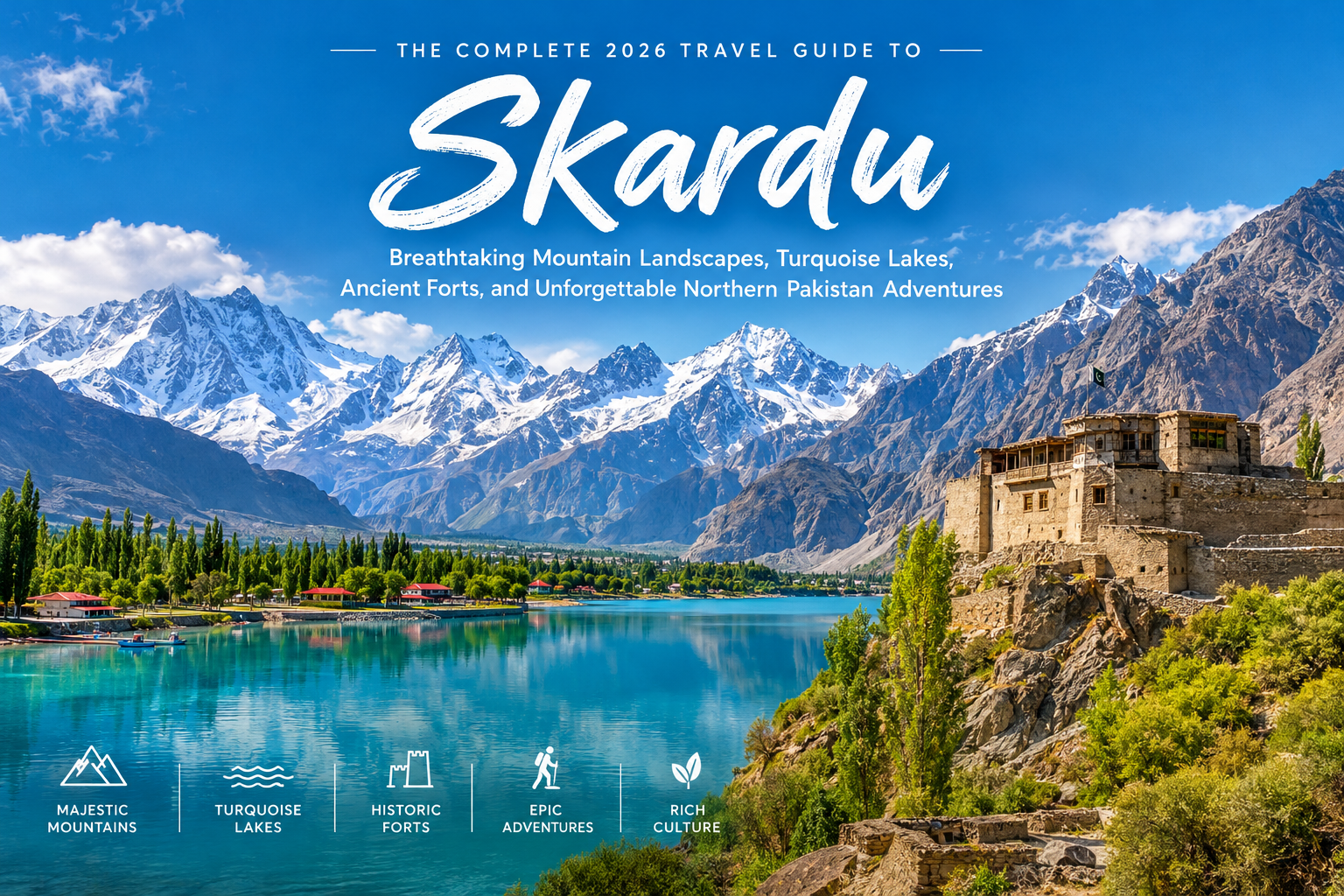
Nestled among the towering mountains of Gilgit-Baltistan, Skardu is one of Pakistan’s most spectacular destinations for travelers seeking alpine scenery, peaceful lakes, dramatic valleys, and authentic mountain culture. Surrounded by the Karakoram range, the region offers a remarkable combination of snow-covered peaks, cold deserts, clear rivers, traditional villages, and historic forts overlooking the Indus Valley.
For adventure seekers, it serves as an important gateway to some of the world’s highest mountains, including routes toward K2 and other legendary peaks. For families and leisure travelers, its lakes, viewpoints, gardens, and cultural attractions offer memorable experiences without requiring a technical mountain expedition.
Yet the region is more than a collection of scenic photo spots. Its high altitude, changing weather, remote roads, and limited services in some areas mean that thoughtful planning matters. Understanding when to visit, how to travel, where to explore, and what to expect from local life can turn a beautiful trip into a comfortable and rewarding adventure.


Where Is Skardu and What Makes It Special?
Skardu is a town in Gilgit-Baltistan, northern Pakistan, situated near the confluence of the Indus and Shigar rivers and surrounded by the rugged landscapes of the Karakoram and western Himalayan mountain systems. It is the principal urban center of the wider Skardu region and an important starting point for journeys into high mountain valleys.
Its geography is unusually diverse. Travelers can see barren, sculpted rock formations, sandy stretches of cold desert, green agricultural settlements, glacial rivers, and deep blue lakes within the same journey. The contrast between dry mountain terrain and water-fed valleys gives the area a distinctive character.
The region is also known internationally among mountaineers because it provides access to major trekking and climbing routes in the Karakoram. However, visitors do not need to be experienced climbers to enjoy the scenery. Short walks, cultural visits, lakeside stops, and scenic drives make the destination accessible to travelers with different interests and fitness levels.
Best Places to Visit in the Region


Shangrila Resort and Lower Kachura Lake
Lower Kachura Lake, widely associated with Shangrila Resort, is one of the area’s best-known scenic locations. The lake’s reflective surface, mountain backdrop, and landscaped surroundings make it a popular stop for families, photographers, and visitors looking for a relaxed outing. The changing light throughout the day can transform the water from bright blue to darker shades of green and turquoise.
Facilities and visitor access depend on the property’s current rules, so confirm entry arrangements before visiting. Even if you are not staying at the resort, the surrounding Kachura area is worth including in a broader itinerary.
Upper Kachura Lake
Upper Kachura Lake offers a more natural atmosphere, with clear water surrounded by steep mountain slopes and trees. The journey and walking conditions may vary by season, and visitors should allow enough time to explore without rushing. It is particularly appealing to people who enjoy landscape photography and quieter outdoor experiences.
The lake is also a reminder that mountain environments require care. Avoid leaving litter, stay on suitable paths, and follow local guidance around the water. Conditions can change with weather, so choose activities that match your experience and the time available.
Shigar Fort
Shigar Fort, located in the Shigar Valley, is an important heritage site that reflects the region’s historical links with local rulers, trade routes, and mountain communities. Its traditional architecture, timber details, and stone construction provide a contrast to the dramatic landscape outside. Restoration and heritage preservation have helped make the fort a notable cultural attraction.
A visit offers more than an architectural photo opportunity. It gives travelers a chance to understand how people historically adapted buildings to local materials, climate, and social needs. Check current visitor access and any restrictions before planning a meal, tour, or overnight stay at the property.
Katpana Cold Desert
Katpana Cold Desert is famous for its pale sand dunes set against a high-altitude mountain landscape. The contrast feels almost surreal: a desert-like environment surrounded by rugged peaks rather than vast lowland plains. It is especially photogenic in the early morning and late afternoon, when low-angle sunlight highlights the shape of the dunes.
Temperatures can fall sharply after sunset, even when daytime weather feels pleasant. Wear layers, protect your camera from blowing sand, and avoid driving onto fragile terrain unless local authorities explicitly permit it. Respecting the environment helps preserve the landscape for future visitors.
Deosai National Park and the Great Outdoors


Deosai National Park is one of the region’s most extraordinary natural attractions. This high-altitude plateau sits at an average elevation of approximately 4,114 metres (13,497 feet), with vast grasslands, seasonal wildflowers, mountain streams, and wide-open horizons. The landscape feels almost otherworldly, especially when clouds cast moving shadows across the plains.
Sheosar Lake is a major highlight, while wildlife enthusiasts may spot marmots and, more rarely, other native animals from a safe distance. Deosai was designated a national park in 1993, with conservation of the Himalayan brown bear among its important objectives. Visitors should never approach or feed wildlife, and should follow park rules to protect this fragile ecosystem.
Access is seasonal because snow and harsh weather can make the plateau dangerous or impassable. A suitable four-wheel-drive vehicle, warm clothing, food, drinking water, and an early start are essential. Altitude can affect even fit travelers, so allow time to acclimatize and avoid strenuous activity if symptoms develop.
Best Time to Visit
The best time to visit depends on the scenery and activities you want to experience. Late spring brings blossoms to some lower valleys, summer generally offers the broadest access to lakes and mountain routes, and early autumn can provide crisp air and attractive golden foliage. Conditions vary each year, so seasonal guidance should be treated as a planning aid rather than a guarantee.
| Season | What to expect | Best suited for |
|---|---|---|
| April–May | Blossom in lower valleys; colder conditions at altitude | Gardens, photography, quieter trips |
| June–August | More routes accessible; green valleys and summer activities | Lakes, sightseeing, Deosai trips |
| September–October | Autumn colours and potentially clearer skies | Photography, scenic drives |
| November–March | Cold weather, snowfall, and possible travel disruption | Winter scenery with careful planning |
Summer is popular, which can mean higher accommodation demand and busy roads. Book transport and hotels early if traveling during school holidays or major public holidays. In winter, flights and road journeys may be disrupted by weather, while remote attractions can become inaccessible. Always check current forecasts and road conditions before leaving town.
How to Reach the Region
The two main ways to reach the area are by air and by road. Flights from Islamabad to Skardu can save considerable travel time, and the mountain scenery during the journey can be spectacular when visibility is good. However, flights are weather-dependent, and delays or cancellations can affect tightly scheduled itineraries. Allow a buffer day if you have an onward international flight or another important commitment.
Traveling by road provides a longer overland experience through northern Pakistan, but journey times depend on the route, traffic, roadworks, and weather. Mountain roads can include narrow sections, sharp bends, and landslide-prone areas. Use a reliable driver familiar with local conditions, avoid unnecessary night driving on unfamiliar routes, and follow official travel advisories.
Within the region, private cars and locally operated jeeps are useful for reaching lakes, valleys, and remote viewpoints. Some destinations require more ground clearance than a standard car can provide. Confirm the vehicle type with your tour operator rather than assuming every attraction is accessible on the same road.
Local Culture, Food, and Hospitality
Baltistan has a distinctive cultural identity shaped by the Balti language, mountain agriculture, regional trade, and centuries of interaction across the Karakoram. Traditional settlements, mosques, historic forts, and local markets provide insight into daily life beyond the famous scenery. Visitors can learn more by taking time to speak respectfully with local residents and choosing guides who understand the area’s history and environment.
Food is another important part of the experience. Depending on the restaurant or household, you may encounter regional dishes such as mamtu, steamed dumplings often filled with meat, and balay, a traditional noodle soup. Chapshuro, a meat-filled pastry associated with northern Pakistan, may also appear on menus. Availability and preparation vary, so asking about ingredients is useful for anyone with dietary requirements.
Modest clothing is generally appreciated, particularly in villages and religious places. Ask permission before photographing people, remove shoes where requested, and support local businesses when purchasing handicrafts or arranging tours. A useful principle for responsible travel is simple: leave the place as you found it and ensure your visit benefits the people who live there.
Where to Stay and How to Plan Your Budget
The main town offers the widest choice of accommodation, from simple guesthouses to more comfortable hotels and resorts. Staying centrally can make it easier to access restaurants, shops, transport, and tour operators. Travelers who prefer a quieter setting can consider accommodation near the lakes or in nearby valleys, keeping in mind that remote properties may have fewer facilities.
Costs depend on season, group size, hotel standards, transport arrangements, and whether you book a guided package. Instead of relying on a single estimated trip price, compare what each quote includes: airport transfers, fuel, meals, entrance fees, guide services, and any additional charges for remote excursions. Keep some cash available because card payments and banking services can be less dependable outside larger settlements.
A balanced itinerary usually allows several days for the main sights and additional time for longer excursions. Trying to visit every valley in a short trip can lead to hours in vehicles and little time to appreciate the landscape. It is often better to explore fewer places properly than to rush through a long checklist.
Essential Travel Tips and Safety
Mountain travel requires flexibility. Weather can change quickly, road conditions may deteriorate, and high-altitude excursions can be physically demanding. Keep warm layers and rain protection available, carry water and snacks, download offline maps, and share your itinerary with someone you trust. Mobile coverage can be inconsistent outside populated areas, so do not depend entirely on an internet connection for navigation.
Altitude deserves particular attention, especially on excursions to Deosai. Headache, nausea, dizziness, unusual tiredness, and shortness of breath can indicate altitude illness. Ascend gradually where possible, avoid pushing through symptoms, and seek medical help if symptoms worsen. Severe breathlessness at rest, confusion, or difficulty walking normally requires urgent assistance.
Responsible behavior is equally important. Do not leave rubbish behind, disturb wildlife, damage historic structures, or light fires where they are prohibited. Use local guides for unfamiliar routes and check current access restrictions before entering protected areas. Preparation is not about eliminating adventure; it helps make sure that the adventure remains safe and enjoyable.
Frequently Asked Questions
How many days are enough for a trip?
Four to five days can cover the main lakes, the cold desert, local viewpoints, and a cultural excursion. A longer stay allows more time for Deosai, Shigar Valley, or other remote destinations, while also providing flexibility if weather or transport delays disrupt the schedule.
Is Skardu suitable for families?
Yes, many of the main attractions are suitable for families, including lakes, scenic drives, heritage sites, and accessible viewpoints. Families should plan around driving times, cold evenings, restroom availability, and children’s comfort at high elevations. Remote excursions require more preparation than visits within the town.
Can Deosai National Park be visited throughout the year?
No. Heavy snow generally limits access during the colder months, and opening dates depend on snow conditions and road safety. Summer is the usual visiting season, but travelers should confirm current access with local authorities or experienced operators before departing.
Is air travel better than traveling by road?
Flying is much faster when flights operate as scheduled, while road travel offers an overland journey through northern Pakistan. Neither option is completely free from weather-related disruption. The best choice depends on your schedule, budget, comfort with long drives, and willingness to build flexibility into the trip.
What should visitors pack?
Pack comfortable walking shoes, warm layers, a waterproof outer layer, sun protection, personal medication, reusable water bottles, and power banks. Even in summer, temperatures can drop sharply at high elevations. For remote excursions, bring extra food and water and check what your guide or driver will provide.
Is the region good for photography?
Yes. Lakes, dunes, historic buildings, mountain panoramas, and seasonal colours offer diverse photographic subjects. Early morning and late afternoon often provide softer light, although weather determines visibility. Protect equipment from dust and cold, and ask permission before taking close-up photographs of residents.
Conclusion
From reflective alpine lakes and historic forts to the sweeping plains of Deosai, Skardu offers an exceptional introduction to the landscapes and culture of northern Pakistan. Its appeal lies in the variety: a single journey can include quiet lakeside moments, dramatic mountain drives, regional food, heritage architecture, and encounters with a distinctive local culture.
The key to a successful trip is thoughtful planning. Choose a season that matches your interests, allow extra time for mountain travel, prepare for cold and changing weather, and respect the communities and ecosystems that make the region special.
Ultimately, the most rewarding visit is not the one that covers the greatest number of attractions. It is the one that leaves enough time to appreciate the mountains, understand the local heritage, and experience the calm, expansive beauty of Baltistan.