

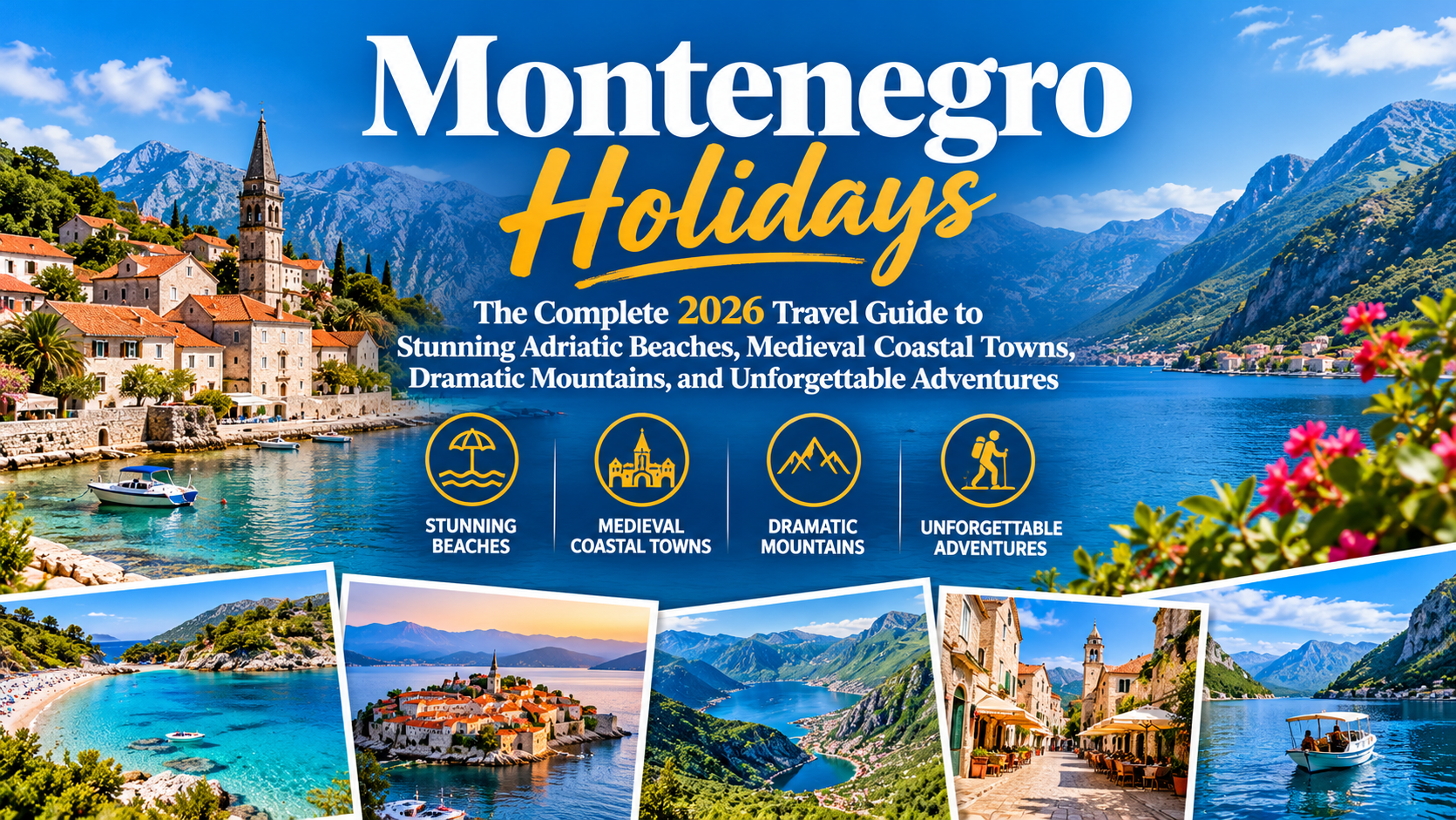
Montenegro is a small Balkan country with an extraordinary variety of landscapes. Along the Adriatic coast, medieval towns, turquoise coves, and waterfront restaurants create the atmosphere of a classic Mediterranean escape. Inland, rugged mountains, glacial lakes, forested valleys, and traditional villages offer a completely different experience within a few hours of the sea.
For travelers planning Montenegro holidays, this contrast is one of the country’s greatest advantages. You can spend the morning wandering the stone lanes of Kotor, enjoy a seafood lunch beside the water, and then travel toward mountain scenery that feels far removed from the busy coastline. The country suits couples, families, road-trippers, outdoor enthusiasts, and visitors who want a mix of relaxation and exploration.
Montenegro is compact, but its winding roads, seasonal crowds, and varied terrain mean that planning still matters. Choosing the right base, traveling at a suitable time of year, and allowing realistic journey times can make the difference between a rushed checklist and a genuinely memorable trip.


Why Visit Montenegro?
Montenegro sits in southeastern Europe, along the Adriatic Sea, bordering Croatia, Bosnia and Herzegovina, Serbia, Kosovo, and Albania. Its geography brings together Mediterranean beaches, dramatic limestone mountains, historic settlements, and protected natural landscapes. This combination makes it possible to enjoy several types of holiday without crossing a large country.
The Bay of Kotor is one of the region’s signature sights, with steep mountains rising around a winding inlet dotted with waterfront villages. Elsewhere, Budva attracts beach lovers and nightlife seekers, while Durmitor National Park appeals to hikers and nature enthusiasts. Historic architecture, Orthodox monasteries, local markets, and traditional Balkan food add cultural depth beyond the scenery.
Another attraction is the variety of travel styles available. Visitors can book a resort stay, explore the coast by car, spend several nights in a historic guesthouse, or build a more adventurous itinerary around hiking and rafting. The best approach depends on whether your priority is swimming, sightseeing, outdoor activity, or a balanced mix.
Best Places to Visit


Kotor and the Bay of Kotor
Kotor is one of Montenegro’s most famous destinations, known for its walled Old Town, narrow stone streets, historic squares, and mountain-backed waterfront. Its Venetian-influenced architecture reflects centuries of maritime trade and cultural exchange. Visitors can explore churches, small museums, cafés, and local shops before walking along the waterfront to appreciate the bay’s scenery.
Nearby Perast is smaller and quieter, with elegant historic buildings and views toward the islets of Our Lady of the Rocks and St George. A boat trip can add a memorable perspective, although services and prices vary by season. Staying in or near the bay is ideal for travelers who want scenic surroundings and cultural sightseeing, but parking and traffic can become challenging during busy summer days.
Budva and the Adriatic Coast
Budva combines sandy and pebbled beaches, a historic walled center, waterfront promenades, restaurants, and a lively summer atmosphere. The Old Town is compact enough to explore on foot, while nearby beaches provide opportunities for swimming, sunbathing, and boat excursions. Visitors looking for nightlife often find Budva more energetic than the quieter settlements around the bay.
The surrounding coast includes smaller coves and viewpoints, but not every beach offers the same facilities or atmosphere. Some are busy and organized with sun loungers, cafés, and water sports, while others feel more natural. Check beach access and transport before setting out, particularly if you are traveling with young children or prefer quieter swimming spots.
Sveti Stefan and the Budva Riviera
Sveti Stefan is one of Montenegro’s most recognizable coastal scenes: a small fortified settlement on an islet connected to the mainland by a narrow causeway. Its stone buildings and surrounding blue water create a distinctive photograph, especially from elevated viewpoints along the coast.
Access to the islet itself can be restricted because parts of the site operate as private hospitality facilities. Travelers should not assume that the village can be entered freely. Even without going inside, nearby viewpoints and beaches may provide impressive views, subject to local access rules and seasonal arrangements.
Durmitor National Park
For a dramatic change of scenery, head inland to Durmitor National Park, a protected mountain region known for rugged peaks, alpine meadows, glacial lakes, and hiking trails. Black Lake, near Žabljak, is a popular starting point for a relatively accessible nature outing, while experienced hikers can explore more demanding routes when conditions allow.
The mountain environment requires more preparation than a beach day. Weather can change quickly, trails may be steep or exposed, and temperatures are often cooler than on the coast. Bring appropriate footwear, water, warm layers, and offline navigation, and check local trail conditions before attempting longer hikes.
Best Time to Plan Your Trip
The best time for Montenegro holidays depends on whether you want warm swimming weather, quieter historic towns, or outdoor adventures in the mountains. Late spring and early autumn are particularly appealing for travelers who want comfortable temperatures and fewer crowds than during the height of summer. May and June are good for hiking and sightseeing, while September often combines warm coastal conditions with a more relaxed atmosphere.
July and August bring the busiest beach season, lively nightlife, and long sunny days, but accommodation prices and road congestion usually rise. Winter is quieter along the coast, while inland mountain resorts such as Žabljak and Kolašin attract visitors for snow sports when conditions permit. Some coastal hotels, restaurants, and tours operate on reduced schedules outside the main season, so confirm availability before booking.
| Season | Typical experience | Best for |
|---|---|---|
| April–May | Spring scenery and milder weather | Sightseeing, walking, cultural trips |
| June | Warm coast and active outdoor season | Beaches, road trips, hiking |
| July–August | Hot weather, busy resorts, higher prices | Swimming, nightlife, festivals |
| September–October | Quieter coast and comfortable days | Couples, photography, mixed itineraries |
| November–March | Quiet coastal towns; snow possible inland | Mountain winter breaks and off-season travel |
The table is a general guide, not a forecast. Coastal and mountain conditions can differ considerably on the same day, so check local weather and road information before arranging outdoor activities.
Local Food and Cultural Experiences
Montenegrin cuisine reflects its coastal Mediterranean influences and inland Balkan traditions. Along the Adriatic, menus commonly feature grilled fish, squid, mussels, olive oil, and fresh vegetables. Inland, meals often include grilled meats, hearty stews, cheeses, potatoes, and traditional breads. Trying regional dishes can be as rewarding as visiting another viewpoint, particularly in family-run restaurants away from the busiest tourist streets.
Njeguški pršut, a dry-cured ham associated with the mountain village of Njeguši, is a well-known local speciality. Other foods to look for include kačamak, a filling dish made with potatoes, cornmeal, and dairy products, and cicvara, a rich traditional dish prepared with cornmeal and dairy. Recipes vary by region and household, so a local menu may offer a slightly different version from another restaurant.
Culture is visible in everyday life as well as historic monuments. Explore the old streets of Kotor, visit traditional settlements in the mountains, or spend time in Cetinje, the country’s historic royal capital. When visiting religious buildings, dress respectfully and follow posted rules. Learning a few local greetings and supporting independent businesses can also make interactions more welcoming.
Where to Stay and How to Get Around
Your accommodation base can shape the entire trip. Kotor or nearby towns around the bay work well for historic scenery, waterfront walks, and day trips. Budva suits travelers who want beach access, restaurants, and nightlife, while Žabljak is a practical base for exploring Durmitor National Park. Podgorica, the capital, can be useful for transport connections and exploring inland areas, although it has a different atmosphere from the coastal resorts.
A rental car provides flexibility for reaching smaller beaches, viewpoints, and mountain villages, but driving distances can be misleading. Roads around the Bay of Kotor are winding, and traffic can slow considerably in summer. If you would rather avoid driving, buses connect major towns, while organized excursions can simplify trips to national parks. Check seasonal timetables in advance because services may be less frequent outside peak months.
For a first visit, a combination of coastal and inland stays offers a balanced introduction. Spending every night in one beach resort can mean missing the mountains, while changing hotels daily can waste time packing and traveling. A few nights in one coastal base followed by a shorter mountain stay is often a more comfortable arrangement.
Budgeting, Entry Requirements, and Essential Tips
Montenegro uses the euro (€) as its official means of payment, even though it is not a member of the European Union. Cards are widely accepted in hotels, restaurants, shops, and other businesses, but carrying some cash is sensible for smaller purchases and places with limited payment facilities.
Total trip costs depend on the season, accommodation type, transport, and dining choices. July and August are typically the most expensive months in popular coastal areas. To manage spending, compare accommodation outside the busiest waterfront locations, reserve transport early, and check whether boat trips or excursions include additional fees. Do not assume that a small country automatically means short travel times or low prices.
Visa requirements depend on your nationality, passport, and planned length of stay. Before departure, consult Montenegro’s official entry information or your government’s current travel advice. Some visitors must also register their accommodation with local authorities within a specified period; hotels commonly handle this for guests, but travelers staying in private accommodation should confirm their own responsibilities.
Pack comfortable walking shoes, swimwear for the coast, sun protection, and a light waterproof layer. If your itinerary includes mountain hikes, add sturdy footwear and warm clothing even when the coast is hot. For a safer and more relaxed trip, check weather forecasts, use marked trails, avoid swimming in unfamiliar conditions, and allow extra time for mountain drives.
Frequently Asked Questions
Are Montenegro holidays suitable for families?
Yes. Families can enjoy beaches, boat trips, historic towns, lakes, and easy nature walks. The most suitable base depends on children’s ages and your preferred pace: a coastal resort can reduce daily travel, while a mountain stay offers outdoor activities and cooler summer conditions. Check beach access, accommodation facilities, and driving times before finalizing your itinerary.
How many days should I spend in Montenegro?
Five to seven days can provide a good introduction to the coast and one inland destination. A shorter break can focus on Kotor and Budva, while ten days or more allows time for Durmitor National Park, Lake Skadar, and smaller towns without rushing. Build flexibility into your schedule because road journeys may take longer than expected.
Is Montenegro expensive for a holiday?
It can be affordable compared with some other European coastal destinations, but costs vary significantly by location and season. Waterfront accommodation and popular resorts generally command higher prices in July and August. Traveling in May, June, or September, booking ahead, and eating at local restaurants can help control your budget.
Do I need a car to explore Montenegro?
A car is helpful for reaching remote beaches, mountain viewpoints, and smaller villages, but it is not essential for every itinerary. Public buses connect major towns, and organized tours cover many popular attractions. If you drive, allow extra time for winding roads, seasonal traffic, and parking near historic centers.
What currency is used in Montenegro?
Montenegro uses the euro. Cards are accepted at many hotels, restaurants, and shops, while cash remains useful for small purchases and some local services. Check any foreign transaction fees with your bank before traveling and use reputable ATMs or exchange services when needed.
Is Montenegro good for a beach and mountain holiday?
Yes. One of the country’s strongest advantages is the contrast between the Adriatic coast and its rugged inland landscapes. Travelers can combine swimming and historic coastal towns with hiking, lakes, and mountain scenery in a single trip. Plan sufficient travel time between regions and check seasonal conditions before booking outdoor excursions.
Conclusion
Montenegro offers a remarkable mix of Adriatic beaches, medieval towns, dramatic mountain scenery, traditional cuisine, and outdoor adventure. Its compact geography makes it possible to experience several sides of the country in one trip, provided you allow enough time for winding roads and seasonal conditions.
The most rewarding Montenegro holidays are built around a realistic itinerary rather than a race to see every attraction. Choose a coastal base that suits your travel style, leave room for the mountains or a national park, and travel in the shoulder season if you want a balance of pleasant weather and fewer crowds.
Above all, look beyond the famous viewpoints. A quiet walk through an old town, a meal made with local ingredients, or an unhurried afternoon beside the bay can become the moment you remember most. Montenegro’s real appeal lies in how easily its coastline, heritage, and wild landscapes come together in one unforgettable journey.