


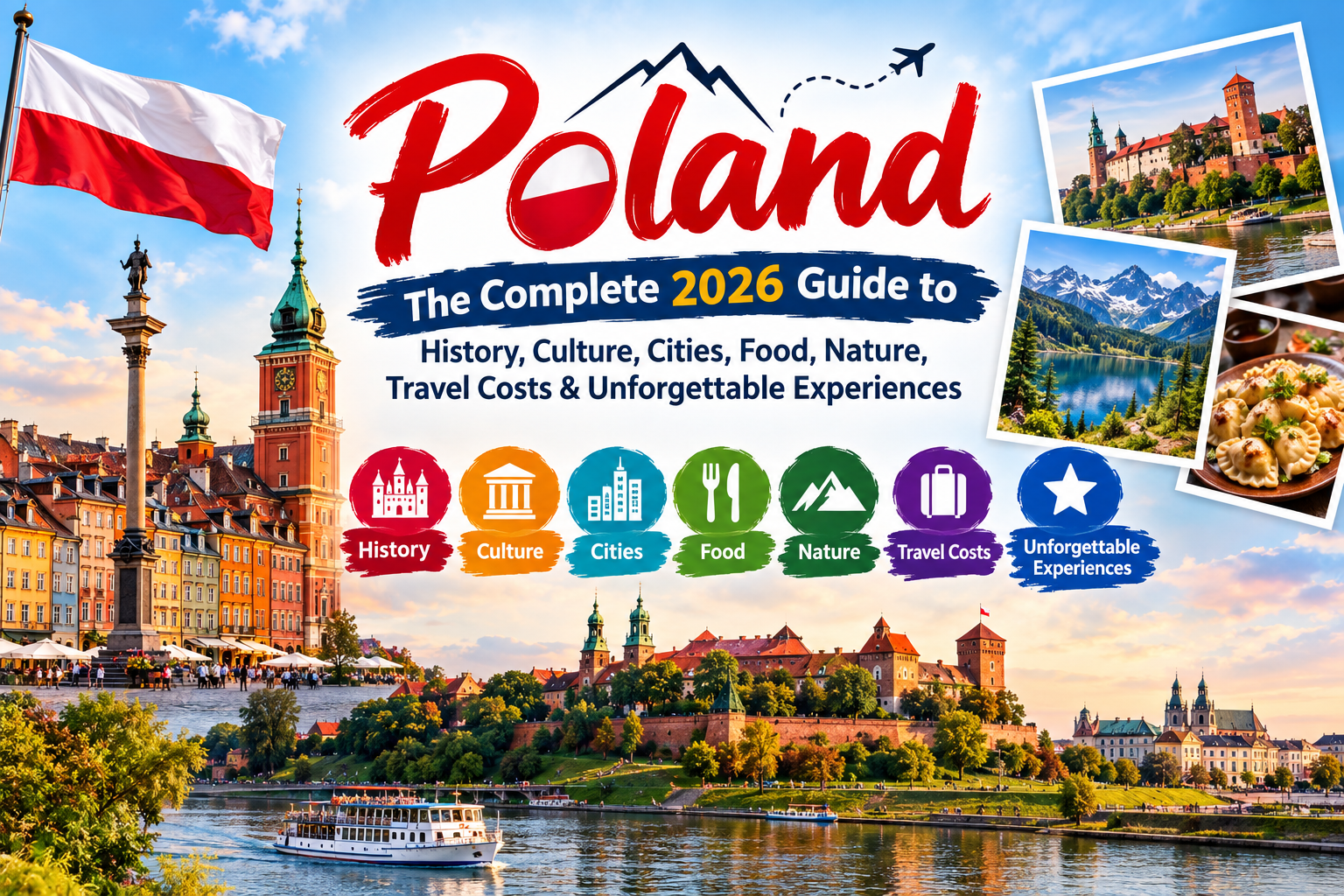
Poland is one of Europe’s most rewarding destinations for travelers who want history, culture, architecture, nature, and excellent value in one trip. From the medieval streets of Kraków and the historic center of Warsaw to the Baltic coast, Tatra Mountains, forests, castles, and lively modern neighborhoods, the country offers remarkable variety.
What makes Poland particularly interesting is the way its past and present exist side by side. Gothic churches, royal residences, communist-era buildings, restored old towns, contemporary museums, independent cafés, and modern business districts can all appear within the same city. Travelers can experience centuries of European history without sacrificing the energy of a modern destination.
For anyone planning a trip, Poland rewards curiosity. The obvious landmarks are worthwhile, but some of the most memorable experiences come from regional food, local markets, train journeys, neighborhood walks, mountain landscapes, and conversations that reveal how dramatically the country has changed over recent decades.
Why Poland Is Worth Visiting
A major reason Poland deserves a place on a European itinerary is its geographical and cultural diversity. The country stretches from the Baltic Sea in the north to the Tatra Mountains in the south, with lakes, forests, river valleys, historic towns, agricultural landscapes, and large urban centers between them. This makes it possible to build very different trips within the same country.
Poland is also compelling because its history is visible almost everywhere. Medieval kingdoms, the Polish-Lithuanian Commonwealth, partitions, the Second World War, the communist period, and the post-1989 transformation have all influenced the country’s architecture and identity. Visiting a museum or historic district therefore adds context to what you see in everyday life.
“The most interesting way to understand Poland is to see its history not as a distant timeline, but as something still visible in its streets, buildings, food, and family traditions.”
Warsaw: A Capital Rebuilt and Reimagined
Warsaw provides one of the clearest examples of resilience in Europe. Much of the city suffered catastrophic destruction during the Second World War, yet its historic center was painstakingly reconstructed. Today, the Old Town, Royal Castle, Market Square, and surrounding streets provide a striking example of historical restoration.
Beyond the reconstructed center, modern Warsaw tells another story. Glass office towers, contemporary restaurants, cultural institutions, parks, and creative districts demonstrate the capital’s transformation into a major European business and cultural center. The contrast is particularly noticeable when moving between the historic Old Town and the modern city center.
The Warsaw Uprising Museum is especially valuable for travelers interested in twentieth-century history. It provides historical context that helps explain the scale of wartime destruction and the city’s subsequent reconstruction. For a more relaxed experience, Łazienki Park offers landscaped gardens, palaces, walking paths, and peaceful green space.
Kraków and Poland’s Medieval Heritage
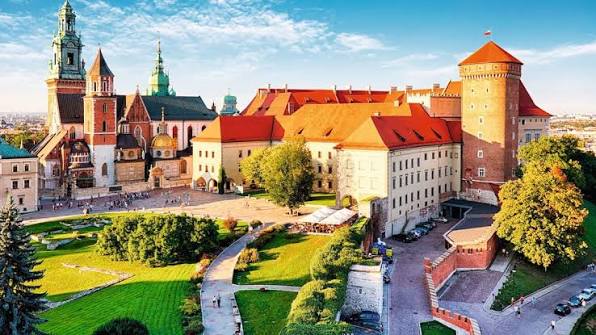
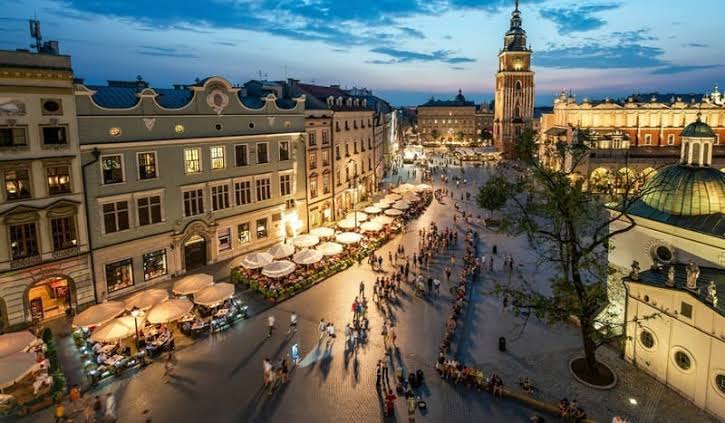
Kraków is one of the country’s most atmospheric destinations and a natural starting point for travelers interested in Poland’s architectural heritage. The historic center surrounds the enormous Main Market Square, while St. Mary’s Basilica, the Cloth Hall, and narrow streets lead toward Wawel Royal Castle.
The city’s appeal extends beyond major landmarks. Kazimierz, historically associated with Kraków’s Jewish community, is now known for historic synagogues, restaurants, cafés, galleries, and nightlife. Exploring the neighborhood slowly reveals layers of Polish and Jewish heritage that are difficult to understand through a quick sightseeing tour.
Kraków is also a practical base for regional excursions. The Wieliczka Salt Mine offers an unusual underground experience, while the former Auschwitz-Birkenau concentration and extermination camp sites provide an important and solemn historical visit. These places require respectful behavior and sufficient time rather than being treated as ordinary tourist attractions.
Gdańsk and the Baltic Coast
Gdańsk offers a very different perspective. Located on the Baltic coast, the city has a long maritime history and distinctive architecture shaped by centuries of trade and cultural exchange. The Main Town’s colorful façades, waterfront, historic crane, and cobbled streets create one of the country’s most photogenic urban environments.
The broader Tricity area connects Gdańsk with Sopot and Gdynia, making it possible to combine historical sightseeing with beaches and coastal recreation. Sopot is particularly known for its seaside atmosphere and long wooden pier, while Gdynia has a more modern maritime character.
The Baltic region is also significant historically. Gdańsk played an important role in the development of the Solidarity movement, which challenged communist rule and became an important force in Poland’s path toward political change. The European Solidarity Centre provides valuable context for understanding that transformation.
Wrocław, Poznań and Poland’s Other Cities
Travelers looking beyond the most famous destinations will find plenty to appreciate in Wrocław. Built around the Oder River and numerous islands, the city combines Gothic architecture, colorful market squares, bridges, university buildings, and a lively cultural scene. Its small dwarf statues have also become a playful feature of urban exploration.
Poznań offers another rewarding city break, particularly for visitors interested in history, architecture, and regional cuisine. The Old Market Square is surrounded by historic buildings, while the city also has strong university, business, and cultural identities.
Smaller destinations can sometimes provide a more relaxed travel experience than the major tourist centers. Cities such as Toruń, known for Gothic architecture and gingerbread traditions, demonstrate that the country’s cultural depth extends far beyond Warsaw and Kraków.
Tatra Mountains and Poland’s Natural Landscapes
Nature is one of the strongest reasons to explore Poland beyond its cities. The Tatra Mountains near Zakopane provide hiking opportunities, dramatic peaks, alpine lakes, valleys, and winter sports. Morskie Oko is among the country’s best-known mountain destinations, although popularity means trails can become busy during peak periods.
Zakopane itself has a distinctive regional identity. Traditional wooden architecture, highland cuisine, mountain culture, and access to hiking routes make it a useful base for exploring southern landscapes. Visitors should remember that mountain conditions can change rapidly, so proper footwear, weather awareness, and realistic route planning matter.
Elsewhere, the Białowieża Forest represents a completely different ecosystem. This ancient woodland is famous for European bison and exceptional biodiversity. The Baltic coast, Masurian Lake District, and extensive national parks further demonstrate the ecological variety found across the country.
| Destination | Best Known For | Ideal Trip Length | Travel Style |
|---|---|---|---|
| Warsaw | History, museums, modern city life | 2–3 days | Urban and cultural |
| Kraków | Medieval architecture and heritage | 2–4 days | Historic and cultural |
| Gdańsk | Baltic architecture and maritime history | 2–3 days | Coastal and cultural |
| Wrocław | Market squares, rivers and architecture | 2–3 days | City break |
| Zakopane | Tatra Mountains and hiking | 2–4 days | Outdoor and adventure |
| Poznań | Old Town, culture and cuisine | 1–2 days | Short city break |
| Toruń | Gothic heritage and gingerbread | 1–2 days | Historic |
| Masurian Lakes | Water sports and nature | 2–4 days | Outdoor and relaxing |
Polish Food and Culinary Traditions
Food is an essential part of experiencing Poland because traditional cuisine reflects the country’s agricultural heritage, regional influences, and changing history. Pierogi are the most internationally recognized dish, but they represent only a small part of the culinary landscape. Depending on the region, travelers can encounter żurek, bigos, barszcz, placki ziemniaczane, kiełbasa, and various soups and dumplings.
Traditional restaurants are often a good place to start, but local food markets, bakeries, milk bars, and neighborhood cafés can reveal another side of Polish dining. Milk bars, in particular, have historical roots in affordable communal dining and remain an interesting cultural experience.
Food also varies seasonally. Hearty soups, fermented ingredients, cabbage dishes, mushrooms, and potatoes are particularly associated with colder months, while summer brings berries, fresh vegetables, lighter meals, and outdoor dining. Trying regional specialties rather than ordering familiar international dishes is one of the easiest ways to make a trip more memorable.
Polish History, Culture and Heritage
Understanding Poland’s history adds considerable depth to travel. The country has experienced partitions, foreign occupation, war, population movements, political upheaval, and dramatic economic transformation. Yet Polish cultural identity has remained remarkably resilient through language, literature, music, religion, traditions, and community life.
Museums are especially useful for placing modern Poland in context. The POLIN Museum in Warsaw explores the history of Polish Jews, while the Warsaw Uprising Museum examines one of the defining events of the city’s wartime history. In Kraków, historical sites and museums help visitors understand the city’s changing communities and political significance.
Cultural experiences should also extend beyond museums. Folk traditions, regional architecture, classical music, contemporary art, Christmas markets, Easter customs, and local festivals reveal how historical identity continues to influence modern life.
Transportation and Getting Around
One of the practical advantages of Poland is its extensive transportation network. Intercity trains connect major destinations, while urban public transportation generally includes trams, buses, or both. For many travelers, trains are more convenient than driving between major cities.
A rail-based itinerary can connect Warsaw, Kraków, Wrocław, Poznań, and Gdańsk efficiently. Regional buses and trains are useful for smaller destinations, while rental cars become more valuable in rural areas where public transportation is less frequent.
Travelers should avoid assuming that every destination can be reached equally easily. Mountain villages, national parks, and rural attractions may require additional transfers. The best solution is to plan transportation around geography rather than trying to cover too many distant regions in a short trip.
Travel Costs and Budget Planning
Compared with several Western European capitals, Poland can offer strong value, although prices vary significantly by city, season, accommodation type, and travel style. Warsaw and Kraków can become expensive in busy periods, while smaller cities may offer more affordable accommodation and dining.
A realistic budget should account for accommodation, intercity transportation, attractions, meals, and occasional activities. Travelers who stay outside the most tourist-heavy streets, use public transportation, and mix restaurants with bakeries or casual eateries can generally control daily expenses more effectively.
The biggest budgeting mistake is focusing only on accommodation prices. A cheap hotel far from the center can create additional transportation costs and consume valuable sightseeing time. Paying slightly more for a convenient location can sometimes provide better overall value.
Best Time to Visit
Spring and autumn are excellent seasons for exploring Poland because temperatures are generally comfortable for city walks, while major attractions can feel less crowded than during peak summer periods. These seasons are particularly suitable for combining cultural sightseeing with outdoor activities.
Summer offers long daylight hours and is ideal for Baltic beaches, hiking, lake activities, and outdoor festivals. The downside is greater demand in popular destinations, particularly along the coast and in mountain areas.
Winter creates a completely different atmosphere. Christmas markets, snow-covered mountain scenery, winter sports, and seasonal food can make colder months appealing. However, shorter daylight hours and changing weather require more careful itinerary planning.
Common Travel Challenges and Smart Solutions
One common problem when planning a trip is trying to cover too much of the country at once. Poland is geographically large enough that moving between distant regions can consume significant time. A better approach is to build a route around two or three connected regions rather than treating every attraction as equally essential.
Another challenge is misunderstanding the country’s historical complexity. A traveler who sees only attractive Old Towns may miss the deeper stories behind them. Visiting at least one major history museum and reading basic historical context before arrival can transform sightseeing from passive observation into meaningful travel.
Language can occasionally create uncertainty outside major tourist areas, but visitors can generally manage with basic English in hotels, transportation hubs, restaurants, and popular attractions. Learning a few Polish greetings and polite expressions is still appreciated and can make interactions warmer.
Frequently Asked Questions
Is Poland good for a first trip to Europe?
Poland is an excellent choice for a first European trip because it combines major historical attractions, efficient transportation, diverse landscapes, distinctive food, and relatively good value. Its major cities are accessible, while travelers can gradually expand into coastal, rural, and mountain regions.
How many days are enough to visit Poland?
A week can provide a strong introduction to the country by focusing on two or three major destinations. Ten to fourteen days allow a more balanced itinerary that can include Warsaw, Kraków, another major city, and either the Baltic coast, Tatra Mountains, or another natural region.
What is Poland famous for?
Poland is famous for its medieval cities, castles, World War II history, Jewish heritage, Catholic traditions, classical and modern culture, pierogi, Polish vodka, Baltic coastline, Tatra Mountains, and contributions to European science and literature.
Is Poland expensive to visit?
Poland can be comparatively affordable by Western European standards, but costs depend heavily on destination and season. Major tourist cities and peak periods can be noticeably more expensive, while local restaurants, public transportation, and smaller cities can offer excellent value.
What food should travelers try in Poland?
Pierogi, żurek, bigos, barszcz, placki ziemniaczane, Polish sausages, and regional breads are excellent starting points. Travelers should also try local desserts and bakery products because Polish culinary traditions extend well beyond the country’s best-known dishes.
What are the best cities to visit in Poland?
Warsaw, Kraków, Gdańsk, Wrocław, and Poznań are among the strongest choices for first-time visitors. Each has a different character: Warsaw emphasizes modern history and contemporary city life, Kraków focuses on historic heritage, Gdańsk offers Baltic culture, Wrocław combines riverside scenery and architecture, and Poznań provides a compact cultural city break.
Conclusion
Poland offers something increasingly valuable in modern European travel: depth without requiring a single type of experience. Historic cities, powerful museums, traditional cuisine, Baltic beaches, ancient forests, mountain trails, lively neighborhoods, and modern cultural spaces all belong to the same national story.
The best trips combine famous attractions with time for slower discoveries. Walk through historic squares, ride the train between cities, eat regional dishes, explore museums, spend time in nature, and pay attention to the details that reveal how the country has evolved.
Ultimately, Poland is more than a collection of beautiful destinations. It is a country where complicated history, strong cultural identity, impressive landscapes, and contemporary European life meet. The final insight for travelers is simple: allow enough time to move beyond the postcard version of the country, and its greatest rewards often appear in the places and experiences you did not initially expect.