


Monaco is one of the world’s smallest countries, yet its reputation is remarkably large. Set along the Mediterranean coast between France and Italy, this glamorous city-state combines dramatic coastal scenery, royal history, luxury hotels, superyachts, high-end shopping, world-famous motorsport and an unusually sophisticated urban environment.
Despite its tiny size, Monaco offers far more than luxury. The destination has centuries of history, distinctive Mediterranean architecture, museums, gardens, beaches and a fascinating relationship with the sea. Visitors can move from the medieval atmosphere of Monaco-Ville to the modern skyline of Monte Carlo within minutes.
For travelers, the appeal lies in this contrast. A morning can involve exploring the Prince’s Palace and historic streets, while an afternoon might mean relaxing beside the Mediterranean or watching luxury yachts enter Port Hercules. Understanding how the destination works makes it possible to experience its famous glamour without treating the entire trip as an expensive splurge.
What Makes Monaco Unique?
Monaco is a sovereign microstate covering only about 2 square kilometers, making it one of the most densely populated countries in the world. It is divided into several districts, with Monte Carlo being the most internationally famous. The historic district of Monaco-Ville sits on the Rock, while La Condamine surrounds Port Hercules and Fontvieille occupies reclaimed land along the western side.
Its geographical position explains much of its character. The city-state is surrounded by France on land and faces the Mediterranean Sea, while the Italian border is relatively close. This creates a distinctly Riviera atmosphere, blending French and Italian influences with an independent national identity.
The destination is also closely associated with the Grimaldi dynasty, which has ruled Monaco for centuries. The House of Grimaldi remains central to the country’s identity, while the Prince’s Palace serves as one of its most recognizable landmarks.
A useful way to understand the destination is this: “Its size is compact, but its experiences are remarkably concentrated.” Rather than spreading attractions across a huge metropolitan area, Monaco places history, culture, luxury, entertainment and coastal scenery within a surprisingly small geographic footprint.
The History and Heritage of Monaco
The history of Monaco stretches back to ancient Mediterranean settlements, but the modern story is strongly connected with the Grimaldi family. In 1297, François Grimaldi and his supporters famously captured the fortress on the Rock, beginning a political legacy that would shape the principality for centuries.
The old town remains the best place to appreciate this heritage. Narrow streets, historic façades, small squares and viewpoints create a completely different atmosphere from the polished casinos and luxury hotels of Monte Carlo. The contrast demonstrates how the modern principality developed around an older fortified settlement.
The Prince’s Palace is particularly important. Originally associated with a medieval fortress, it evolved into the official residence of Monaco’s sovereigns. Nearby, the Saint Nicholas Cathedral is another major landmark and is closely connected with the Grimaldi family and Monaco’s royal history.
The Oceanographic Museum, founded under Prince Albert I, adds another dimension to the country’s heritage. Its exhibitions connect Monaco’s royal history with marine science and ocean exploration, reflecting the principality’s longstanding relationship with the Mediterranean.
Best Places to Visit in Monaco
For first-time visitors, Monte Carlo is an obvious starting point, especially around Casino de Monte-Carlo and Place du Casino. The Belle Époque architecture, landscaped gardens and luxury hotels create the sophisticated image that has become synonymous with the Riviera.
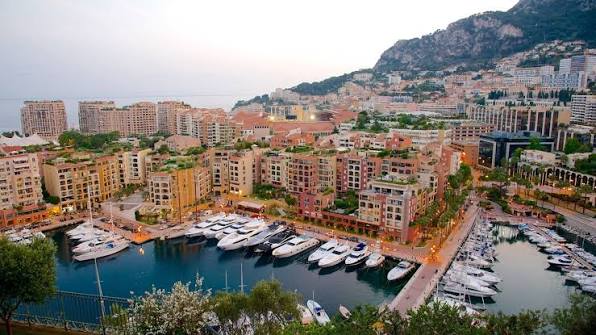
However, stopping at Monte Carlo would mean missing much of what makes the country interesting. Monaco-Ville provides a more historical experience, while Port Hercules offers views of yachts and the surrounding mountains. Fontvieille presents a more modern side of the principality, including marina areas and cultural attractions.
The Exotic Garden is another memorable stop. Built into the steep landscape, it contains an extensive collection of drought-resistant plants, including numerous cactus and succulent species. Its elevated position also provides impressive views toward the Mediterranean.
| Attraction | Best for | Approximate visit time | What makes it special |
|---|---|---|---|
| Prince’s Palace | History and heritage | 1–2 hours | Grimaldi history and historic interiors |
| Monaco-Ville | Walking and culture | 1–2 hours | Medieval streets and Mediterranean views |
| Casino de Monte-Carlo | Architecture and atmosphere | 1 hour+ | Belle Époque design and famous gaming heritage |
| Oceanographic Museum | Families and marine life | 2–3 hours | Aquariums, ocean science and exhibitions |
| Exotic Garden | Nature and photography | 1–2 hours | Rare plants and panoramic views |
| Port Hercules | Yachts and scenery | 30–90 minutes | Marina, boats and coastal atmosphere |
| Larvotto Beach | Relaxation | 1–3 hours | Mediterranean swimming and seaside leisure |
One of the smartest approaches is to combine major landmarks with unstructured walking time. The city-state’s steep streets, stairways and viewpoints often provide experiences that do not appear on conventional attraction lists.
Monte Carlo, Luxury and the Famous Casino
Monte Carlo is the destination’s most recognizable district and has long represented wealth, elegance and sophisticated entertainment. The Casino de Monte-Carlo, operated by Société des Bains de Mer, is famous for its grand architecture and long cultural association with European high society.
The casino is not simply a gambling venue. Its architecture and setting are attractions in their own right. The surrounding Hôtel de Paris Monte-Carlo, luxury boutiques and landscaped squares create an environment that feels more like an architectural showcase than an ordinary entertainment district.
Visitors should also understand that Monte Carlo is only one part of the principality. The broader destination includes residential neighborhoods, historic quarters, cultural institutions, public spaces and working marinas. This matters because travelers sometimes arrive expecting every street to resemble a luxury resort.
The better perspective is to see luxury as one layer of the experience rather than the entire identity of the country. You can admire the architecture, walk around the harbor and enjoy the scenery without spending large amounts of money.
Food, Restaurants and Mediterranean Culture
The cuisine reflects its Riviera location and draws from French, Italian and Mediterranean traditions. Fresh seafood, vegetables, olive oil, herbs, pasta, pastries and regional specialties are common influences.
Traditional dishes associated with Monaco include barbajuan, a fried pastry filled with vegetables and herbs, and socca-style Mediterranean flavors found more broadly along the Côte d’Azur. Restaurants range from casual cafés to Michelin-starred dining rooms, meaning travelers can build very different food experiences around the same destination.
Dining prices can vary dramatically. A quick café meal or bakery stop may be relatively manageable, while restaurants in luxury hotels and prestigious areas can become expensive quickly. Checking menus before sitting down is one of the simplest ways to avoid unpleasant surprises.
For travelers interested in culture, food is also a useful way to understand the destination. Rather than focusing only on extravagant restaurants, sample local-style dishes, visit markets and explore cafés. “The most memorable meal is not always the most expensive one.” In a place famous for luxury, that distinction can make a trip feel more authentic.
How Much Does a Trip to Monaco Cost?
Monaco has a reputation for being expensive, and there is truth behind it. Accommodation, fine dining and luxury experiences can command premium prices, particularly during major events and peak summer periods.
However, the idea that visiting requires unlimited wealth is misleading. Travelers can control costs by staying in nearby French towns such as Menton, Beausoleil or Nice and visiting during the day. Regional trains and buses make the wider French Riviera relatively accessible.
A practical budget depends heavily on travel style. A luxury traveler might spend hundreds or thousands of euros per day, while a budget-conscious visitor can focus on walking tours, public spaces, viewpoints, inexpensive meals and selected paid attractions.
The biggest challenge is often accommodation rather than sightseeing. Because land is scarce and demand is strong, hotel prices can rise significantly. Planning accommodation early is therefore one of the most effective cost-saving strategies.
Getting Around and Traveling Around the Riviera
The compact geography makes walking one of the best ways to explore. However, the terrain is steep in places, so comfortable footwear matters. Elevators, escalators, public buses and pedestrian routes can make moving between different elevations easier.
Public transportation is especially useful for travelers staying outside the principality. Nice, Menton and other French Riviera destinations are connected through regional rail and road networks, allowing visitors to create a wider Côte d’Azur itinerary.
For many travelers, staying in Nice and making a day trip can provide a practical balance between convenience and cost. Those who want more time to explore after sunset or experience the nightlife may prefer accommodation closer to the principality.
If driving, remember that limited space and busy roads can make parking inconvenient. A car may be useful for exploring the wider Riviera, but it is not essential for experiencing the main attractions within the city-state.
Best Time to Visit Monaco
Spring and early autumn are particularly attractive periods for sightseeing because temperatures are generally comfortable and the Mediterranean setting remains lively. Summer brings strong sunshine, beach activity and high visitor demand, while winter offers a quieter atmosphere.
Major events can dramatically change the experience. The Monaco Grand Prix is one of the world’s most famous motorsport events, transforming the streets into a temporary racing circuit. During this period, accommodation demand and prices can increase sharply.
The destination also has a strong calendar of cultural and sporting events. Travelers interested in a particular event should check official schedules before planning dates because availability and access arrangements can change.
For general sightseeing, the ideal strategy is to balance weather, crowd levels and personal interests rather than assuming that the warmest month is automatically the best.
Monaco Grand Prix and Sporting Identity
The Monaco Grand Prix is central to the destination’s global image. The Formula 1 circuit runs through ordinary city streets, creating an unusual racing environment where tight corners, barriers and elevation changes leave little room for error.
The race is more than a sporting event. It demonstrates how Monaco’s geography has become part of its identity. Roads normally used by residents and visitors temporarily become one of the world’s most recognizable motorsport venues.
Even outside race weekend, motorsport enthusiasts can walk through parts of the circuit and recognize famous locations such as Casino Square, Mirabeau and the tunnel. The Automobile Collection of the Prince of Monaco also provides another perspective on the country’s connection with cars and racing.
For visitors attending the Grand Prix, preparation is essential. Hotels can become expensive, pedestrian movement changes and popular viewing locations sell quickly. Those planning specifically around the race should organize accommodation and event access well in advance.
Practical Travel Tips for a Better Experience
The most important practical tip is to plan around the terrain. Monaco may be geographically tiny, but its hills and stairways can make distances feel longer than they appear on a map. Comfortable shoes, water and sensible pacing can make a significant difference.
Dress codes can also matter in certain luxury venues. Casual clothing is perfectly appropriate for sightseeing, but upscale restaurants and casino areas may have specific requirements. Checking the venue’s current rules before visiting prevents unnecessary problems.
Travelers should also carry a payment card and some euros. Although many establishments accept cards, having local currency available remains convenient for small purchases.
Because space is limited, reservations can be particularly useful for popular restaurants and major attractions during busy periods. A little advance planning allows visitors to spend more time enjoying the scenery rather than dealing with last-minute logistics.
Is Monaco Worth Visiting?
For travelers interested in architecture, history, Mediterranean scenery, luxury culture, motorsport or unusual European destinations, Monaco can be highly rewarding. Its compact size makes it possible to experience several completely different environments within a single day.
It may be less appealing to someone seeking a low-cost beach holiday with large open spaces. The principality is dense, expensive and urban compared with many Mediterranean resorts. Understanding that distinction helps set realistic expectations.
The strongest itineraries combine famous sights with slower exploration. Walk through Monaco-Ville, visit a museum, enjoy the harbor, take in a viewpoint and then spend time simply observing the rhythm of Riviera life.
Ultimately, the destination works best when visitors look beyond its reputation for wealth. Its real appeal comes from the combination of history, geography, culture and spectacle packed into an exceptionally small territory.
Frequently Asked Questions About Monaco
What is Monaco famous for?
Monaco is famous for its luxury lifestyle, Monte Carlo casino, Formula 1 Grand Prix, Grimaldi dynasty, Mediterranean coastline, superyachts and high-end hotels. It is also known for being one of the world’s smallest independent states and one of the most densely populated countries.
Is Monaco a country?
Yes. Monaco is a sovereign independent state and a constitutional monarchy. It is officially known as the Principality of Monaco and maintains its own government, institutions and national identity, despite being closely integrated geographically and economically with France.
Is Monaco expensive to visit?
Monaco can be expensive, particularly for luxury hotels, fine dining and major events. However, visitors can reduce costs by staying in nearby French towns, using public transportation, choosing casual restaurants and concentrating on free outdoor attractions such as historic streets, viewpoints and harbor walks.
Can Monaco be visited in one day?
Yes, a day is enough to see many of the principal attractions, particularly Monaco-Ville, the Prince’s Palace area, Monte Carlo, the casino district and Port Hercules. A longer stay is better for museums, beaches, dining and experiencing the destination without rushing.
What language is spoken in Monaco?
French is the official language, while Italian and English are also widely understood in tourism and business settings. Monégasque, the traditional local language, remains an important part of the principality’s cultural heritage.
What currency is used in Monaco?
The euro is the official currency. Although Monaco is not a member of the European Union, it uses the euro under a monetary agreement with the European Union and issues its own euro coins featuring national designs.
Conclusion
Monaco is far more than a symbol of luxury. Its appeal comes from an unusual combination of royal heritage, Mediterranean geography, dramatic architecture, world-class events, marine culture and modern sophistication.
For visitors, the key is to approach the destination with realistic expectations. It can be expensive, crowded during major events and surprisingly hilly, but thoughtful planning makes it accessible to a much wider range of travelers than its glamorous reputation suggests.
A successful visit combines the iconic with the ordinary: admire the Casino de Monte-Carlo, explore the old town, learn about the Grimaldi dynasty, watch the yachts at Port Hercules, sample Mediterranean food and take time to appreciate the coastline.
The final insight is simple: the real value of Monaco is not measured by how much you spend, but by how thoughtfully you experience its history, scenery, culture and remarkable sense of place.