


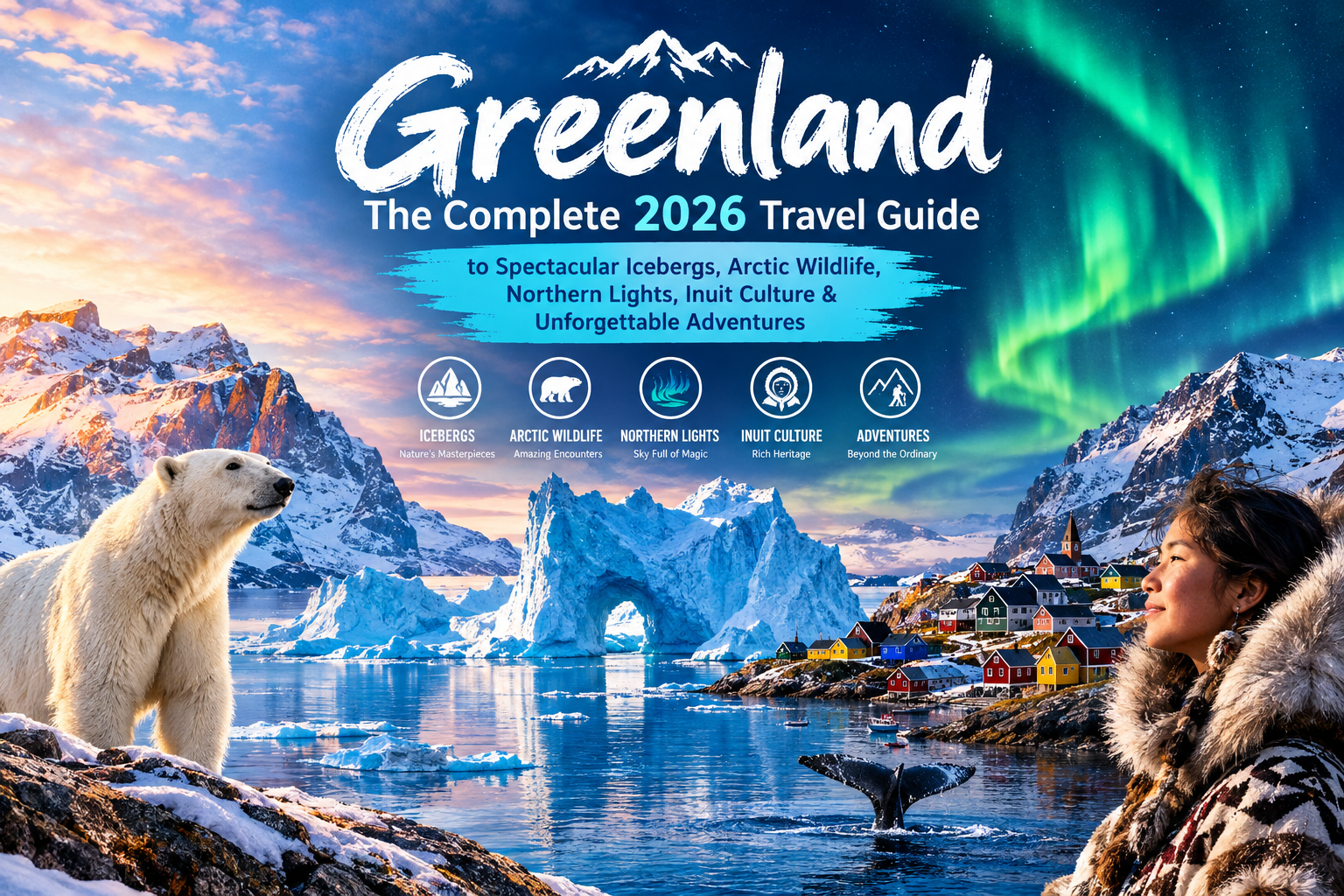
Greenland is one of the world’s most extraordinary destinations, where enormous icebergs drift through deep-blue fjords, colourful coastal settlements stand against rugged mountains, and the Northern Lights illuminate vast Arctic skies. Located between the Arctic and North Atlantic oceans, this immense island offers a rare opportunity to experience dramatic landscapes, distinctive Indigenous traditions, and some of the planet’s most remarkable natural environments.
Although Greenland is geographically enormous, most of its population lives in small coastal communities because the interior is largely covered by an extensive ice sheet. Travellers typically explore by boat, aircraft, helicopter, or on foot rather than by driving between towns on conventional roads. This remote geography is part of the destination’s appeal, but it also makes careful planning essential.
Whether you are interested in glaciers, whale watching, Arctic hiking, photography, or local culture, Greenland rewards visitors who travel thoughtfully. Understanding its seasons, transport network, weather, and community traditions will help you make the most of an unforgettable Arctic journey.
Where Is Greenland and What Makes It Unique?
Greenland lies northeast of Canada, between the Arctic Ocean and the North Atlantic. It is the world’s largest island that is not a continent, and it is an autonomous territory within the Kingdom of Denmark. It has its own government and parliament, while Denmark retains responsibility for certain areas, including monetary policy and defence under the current constitutional arrangements.
The island’s geography is strikingly different from that of most holiday destinations. Approximately 80% of its landmass is covered by an ice sheet, while towns and settlements are concentrated along ice-free coastal areas. Mountains, glaciers, tundra, deep fjords, and rocky shorelines create landscapes that change dramatically with the seasons.
Another defining feature is the close relationship between people and the environment. Inuit culture, particularly Kalaallit traditions, has developed through generations of adapting to Arctic conditions. Fishing, hunting, handicrafts, storytelling, and knowledge of local weather remain important parts of community life, although modern Greenlandic society also includes contemporary education, technology, business, and urban culture.
The Best Places to Visit in Greenland


Choosing where to go depends on your interests, available time, and the season. Because communities are separated by mountains, water, and ice, travelling between regions usually requires a domestic flight, helicopter, or boat rather than a road journey.
Ilulissat is one of the most famous destinations, known for the Ilulissat Icefjord, a UNESCO World Heritage Site. The nearby Sermeq Kujalleq glacier produces enormous quantities of ice that enter the fjord and eventually drift towards the open sea. Visitors can appreciate this landscape from marked walking routes, guided excursions, and boat tours when conditions permit.
Nuuk, the capital, offers a different perspective. It combines contemporary Greenlandic life with museums, cultural institutions, restaurants, and access to surrounding fjords. Travellers interested in history can explore exhibitions at the Greenland National Museum and Archives, while outdoor enthusiasts can arrange local hikes and boat trips.
Other rewarding destinations include Sisimiut, known for outdoor adventures and access to Arctic landscapes, and Qaqortoq, a southern town recognised for its colourful buildings and nearby Norse history. East Greenland offers dramatic mountains and remote settlements, although reaching these communities can require additional planning.
Arctic Wildlife and Unforgettable Outdoor Adventures


The Arctic environment supports remarkable wildlife, including humpback whales, seals, Arctic foxes, reindeer, and musk oxen. Whale-watching trips are especially popular during the warmer months, when several species may be observed feeding in coastal waters. Sightings depend on location, timing, and natural conditions, so guided excursions offer a practical way to improve your chances without disturbing the animals.
Outdoor activities change significantly with the seasons. Summer is ideal for hiking, kayaking, boat trips, fishing, and exploring tundra landscapes. Winter opens opportunities for dog sledding, snowshoeing, skiing, and snowmobiling with qualified local operators. Dog sledding is particularly meaningful because sled dogs remain connected to traditional transport and hunting practices in parts of the Arctic.
Safety is essential when exploring remote terrain. Sudden weather changes, cold water, unstable ice, and limited emergency services can create serious risks. Travellers should use experienced local guides for challenging excursions, carry appropriate clothing, and never venture onto glaciers or sea ice without suitable training and equipment.
Northern Lights and the Midnight Sun


The Northern Lights, also called the aurora borealis, are among the most spectacular reasons to visit the Arctic. They appear when charged particles interact with gases in Earth’s atmosphere, creating luminous patterns that may glow green, pink, or violet. In Greenland, dark skies and relatively small settlements can provide excellent viewing opportunities when solar activity and weather conditions cooperate.
The best viewing period generally extends from late summer into early spring, when darkness returns to the sky. September through April can be suitable, although cloud cover and local conditions affect visibility. Spending several nights in one location improves your chances compared with relying on a single evening.
Summer offers the opposite experience: the midnight sun. North of the Arctic Circle, the sun remains above the horizon for part of the summer, creating long days for hiking, photography, and boat excursions. Visit Greenland provides seasonal guidance for planning activities around these distinctive light conditions.
Greenlandic Culture, History and Traditional Food
Kalaallit culture is central to understanding the island beyond its spectacular landscapes. Greenlandic, known locally as Kalaallisut, is the official language, while Danish is also used in education, administration, and everyday communication. Cultural traditions include storytelling, drum dancing, distinctive clothing, handicrafts, and knowledge passed between generations.
Visitors can learn about Inuit history and contemporary society through museums, local art, cultural events, and conversations with residents. The Greenland National Museum and Archives in Nuuk is a valuable starting point for understanding archaeological discoveries, traditional ways of life, and the historical changes that have shaped the island. Respectful engagement means recognising that local communities are living societies, not simply attractions for visitors.
Traditional food often reflects the Arctic environment. Fish, shrimp, halibut, and other seafood are important ingredients, while reindeer and musk ox appear in some regional dishes. Local menus vary, and modern Greenlandic cuisine also includes international influences. Trying regional food at a local restaurant can provide insight into how communities adapt traditional ingredients to contemporary tastes.
The Best Time to Visit Greenland
The right season depends on whether you prioritise wildlife, hiking, snow activities, or aurora viewing. Summer, particularly June through August, generally offers the broadest selection of organised outdoor excursions, with long daylight hours and more accessible coastal routes. However, temperatures remain cool in many regions, and mosquitoes can be troublesome during the warmer months.
Winter, particularly February through April, is attractive for snow-based adventures and Northern Lights viewing. The colder temperatures require careful preparation, but snow-covered landscapes create a very different atmosphere from the open-water fjords of summer. September can be a useful shoulder-season choice for autumn scenery, hiking, and the return of darker skies.
| Season | Best experiences | Important considerations |
|---|---|---|
| Winter | Northern Lights, dog sledding, snow activities | Very cold weather and limited daylight |
| Spring | Snow adventures and longer days | Variable snow and travel conditions |
| Summer | Hiking, kayaking, whale watching and boat tours | Higher demand and mosquitoes |
| Autumn | Colourful tundra, hiking and aurora viewing | Changing weather and fewer tours |
Because conditions vary between northern, southern, eastern, and western regions, check local forecasts and tour schedules before booking. Seasonal averages are useful for planning but cannot guarantee specific weather or wildlife sightings.
Getting Around and Planning Your Budget
Travel between communities is one of the most important logistical considerations. Greenland does not have a road network connecting its towns, so domestic flights, helicopters, passenger boats, and seasonal boat transfers form the backbone of transport. Air Greenland operates important domestic connections, while local operators provide services in particular regions.
For this reason, travellers should plan around transport schedules rather than assuming they can move freely between destinations. A flight delay or a cancelled boat trip can affect onward connections, particularly in remote areas. Allowing spare time between important journeys and checking cancellation policies can prevent a small disruption from affecting the entire itinerary.
Costs can also be higher than in many conventional holiday destinations because supplies and visitors must travel long distances. Accommodation, guided excursions, flights, and restaurant meals can make up a significant proportion of the budget. Booking key arrangements early, staying longer in fewer locations, and comparing package inclusions can improve value. Camping may reduce accommodation expenses, but it requires suitable equipment, knowledge of local conditions, and an understanding of camping regulations.
Essential Travel Tips for a Safe and Responsible Visit
Pack insulated layers, waterproof outerwear, sturdy footwear, gloves, and a warm hat, even when travelling during summer. Weather can change quickly, and wind near icebergs or on exposed coastlines can make conditions feel much colder than expected. Sunglasses and sun protection are useful because snow and ice reflect sunlight.
Responsible tourism is particularly important in fragile Arctic environments. Follow marked trails, respect wildlife distances, avoid leaving waste behind, and seek permission before photographing people in situations where consent is appropriate. Local guides can explain environmental risks and cultural expectations that may not be obvious to first-time visitors.
Travellers should confirm passport, visa, and transit requirements for their nationality, particularly because journeys may connect through Denmark or Iceland. Travel insurance should cover the planned activities and potential emergency evacuation costs. Check official travel advice, weather forecasts, and operator safety arrangements before setting out into remote areas.
Frequently Asked Questions About Greenland
Is Greenland worth visiting?
Yes. It offers extraordinary icebergs, glaciers, Arctic wildlife, Inuit cultural experiences, and landscapes that are difficult to find elsewhere. It is particularly rewarding for travellers who enjoy nature, photography, and outdoor adventures and who are comfortable planning around remote transport and unpredictable weather.
How many days are enough to explore Greenland?
Five to seven days can provide a rewarding introduction to one destination, such as Ilulissat or Nuuk and its surrounding region. Ten days or longer allows more time for additional communities and activities, although travel between regions can require substantial planning.
Can you see the Northern Lights in Greenland?
Yes, the aurora borealis can be visible from late summer through winter and into early spring when skies are dark and sufficiently clear. Sightings are never guaranteed, so spending several nights in a suitable location improves your chances.
Is Greenland expensive to visit?
It can be expensive because flights, accommodation, food, and guided excursions often involve high operating costs. Travellers can manage their budget by booking early, comparing accommodation packages, limiting interregional transfers, and choosing activities that suit their priorities.
What is Greenland famous for?
The island is known for its vast ice sheet, enormous icebergs, dramatic fjords, Arctic wildlife, Northern Lights, midnight sun, and Inuit heritage. The Ilulissat Icefjord is particularly significant and is recognised as a UNESCO World Heritage Site for its exceptional glacial landscape.
Is Greenland suitable for family travel?
Yes, particularly for families who enjoy nature, wildlife, and educational experiences. However, long transfers, cold conditions, and limited services in remote settlements require careful planning. Choosing accessible accommodation and age-appropriate guided activities can make the journey more comfortable.
Conclusion: Discover the Extraordinary Beauty of Greenland
Greenland offers an exceptional combination of immense glaciers, floating icebergs, Arctic wildlife, dramatic mountains, and distinctive cultural traditions. From the celebrated Ilulissat Icefjord to Nuuk’s contemporary cultural scene, its destinations reveal different sides of a landscape shaped by ice, ocean, and human resilience.
The key to a rewarding journey is thoughtful preparation. Choose destinations that match the season, allow flexibility for transport and weather, respect local communities, and prioritise safety during outdoor activities. Rather than attempting to cover vast distances, spend meaningful time exploring a few places in depth.
Ultimately, Greenland is best experienced as a destination to appreciate slowly. Its greatest rewards often come from watching icebergs drift through a quiet fjord, listening to the sounds of Arctic wildlife, or learning from the people who call this extraordinary environment home.