


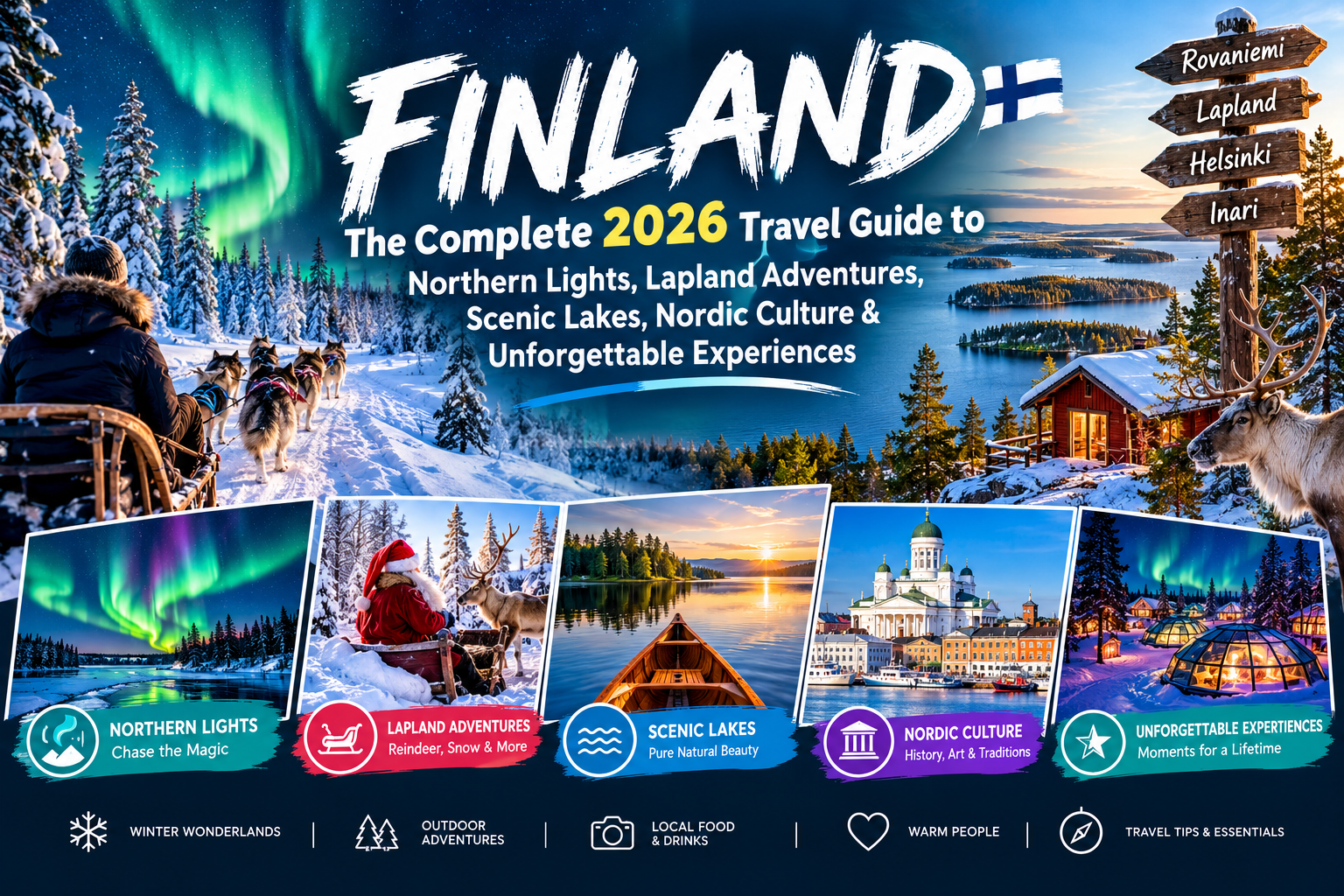
Finland is a captivating Nordic destination where peaceful forests, thousands of lakes, modern cities, and Arctic wilderness create an unforgettable travel experience. Known for its natural beauty, distinctive sauna culture, innovative design, and spectacular Northern Lights, the country appeals to adventure seekers, families, couples, and travellers looking for a slower pace of life.
From Helsinki’s waterfront architecture to the snowy landscapes of Lapland, Finland offers remarkable contrasts throughout the year. Summer brings long daylight hours, green forests, and lakeside escapes, while winter transforms northern regions into a world of snow-covered trees, reindeer, husky safaris, and opportunities to witness the aurora borealis.
Planning a rewarding trip means understanding the country’s regions, seasonal conditions, transport network, and cultural traditions. Whether you are dreaming of a winter adventure or a relaxing summer holiday, this guide explains the essential destinations, experiences, and practical details for exploring Finland in 2026.
Why Finland Is a Unique Travel Destination
Finland lies in Northern Europe and shares land borders with Sweden, Norway, and Russia. It also has an extensive coastline along the Baltic Sea and thousands of inland lakes. Its landscapes range from the urban waterfront of Helsinki to the forests and Arctic tundra of Lapland, creating opportunities for very different types of holidays.
The country is particularly well known for its connection to nature. Forest walks, lake swimming, cross-country skiing, berry picking, and sauna bathing are part of everyday leisure for many residents. This relationship with the outdoors is often associated with everyman’s right, a principle allowing people to enjoy many natural areas responsibly, subject to rules protecting property, wildlife, and the environment.
Finnish culture also combines simplicity with creativity. Helsinki features celebrated architecture, contemporary design, museums, and independent cafés, while smaller towns preserve regional traditions and a quieter rhythm of life. Visitors can experience sophisticated urban attractions without travelling far from forests, islands, and coastal scenery.
The Best Places to Visit in Finland


Choosing the right destinations depends on the season and your interests. Helsinki is an excellent starting point for first-time visitors, combining historic landmarks, waterfront markets, museums, restaurants, and access to nearby islands. The city’s Design District is particularly appealing to travellers interested in Nordic interiors, fashion, and contemporary craftsmanship.
Lapland, in the far north, offers some of the country’s most memorable winter experiences. Rovaniemi is widely associated with Santa Claus Village and family-friendly Arctic activities, while Saariselkä and Levi attract visitors seeking skiing, snowshoeing, and wilderness excursions. Northern settlements also provide opportunities to learn about Sámi culture, the heritage of Europe’s Indigenous people.
Beyond the capital and the Arctic, Turku offers historic architecture and a lively riverside atmosphere, while Tampere is known for its lakes, cultural attractions, and industrial heritage. The Finnish Lakeland region is ideal for travellers who prefer peaceful retreats, forest trails, and traditional lakeside cabins.
| Destination | Main attractions | Best suited to |
|---|---|---|
| Helsinki | Architecture, museums and waterfront life | City breaks and culture |
| Rovaniemi | Santa Claus Village and Arctic excursions | Families and winter travellers |
| Levi | Skiing, snowboarding and outdoor activities | Adventure enthusiasts |
| Saariselkä | Wilderness, hiking and aurora viewing | Nature lovers |
| Turku | Historic sites and riverside restaurants | History and relaxed city visits |
| Tampere | Lakes, museums and cultural experiences | Urban explorers |
| Finnish Lakeland | Lakeside cabins, forests and boating | Peaceful nature escapes |
For a short visit, combining Helsinki with one other region is generally more practical than attempting to cross the entire country. Longer holidays provide time to experience both the southern cities and northern wilderness.
Northern Lights and Arctic Lapland Adventures


The Northern Lights are among Finland’s biggest attractions, particularly in Lapland, where dark winter skies can provide excellent viewing opportunities. The aurora borealis forms when charged particles from the Sun interact with gases in Earth’s atmosphere, producing luminous patterns that can appear green, violet, or pink.
The viewing season generally runs from late summer through early spring, when darkness returns to northern skies. September to March is a popular period for aurora-focused travel, although cloud cover, solar activity, and local weather determine whether the lights will be visible on any particular night. Staying several nights and travelling away from bright artificial lighting can improve your chances.
Lapland also offers husky sledding, reindeer experiences, snowmobiling, snowshoeing, and cross-country skiing. Visitors should choose licensed or reputable operators, check what equipment is provided, and understand the physical requirements of each excursion. Winter temperatures can fall well below freezing, so thermal base layers, insulated outerwear, warm gloves, and suitable boots are essential.
Glass-roofed cabins and aurora lodges provide a memorable way to enjoy the Arctic atmosphere, but accommodation alone cannot guarantee a Northern Lights display. For the best experience, combine comfortable lodging with outdoor opportunities and realistic expectations about the weather.
Finnish Lakes, Forests and Summer Outdoor Activities


Summer reveals a completely different side of the country. Forests turn green, lakes become inviting for boating and swimming, and long daylight hours allow visitors to enjoy outdoor activities well into the evening. In the north, the midnight sun creates extended periods of daylight around the summer solstice.
Finnish Lakeland is especially attractive for travellers seeking tranquillity. Wooden cabins beside lakes provide opportunities for fishing, canoeing, hiking, and relaxing beside the water. Many properties include a private sauna, allowing visitors to experience one of the country’s most distinctive traditions in a natural setting.
National parks offer well-marked trails, birdwatching, and opportunities to explore forests, wetlands, and rocky shorelines. Nuuksio National Park near Helsinki is a convenient choice for a nature excursion without travelling deep into the countryside. Further north, Urho Kekkonen National Park provides expansive wilderness and hiking routes for visitors who are better prepared for remote conditions.
The practical challenge is balancing outdoor freedom with environmental responsibility. Visitors should follow local fire restrictions, use established paths, respect wildlife, and understand the rules governing overnight stays and access to private land. Mosquitoes can also be common in northern and wetland areas during summer, making insect repellent and suitable clothing useful additions to your packing list.
Finnish Culture, Sauna Traditions and Local Lifestyle
Finnish culture places considerable value on personal space, practical design, equality, and a close connection with nature. Visitors may notice that social interactions can feel quieter or more reserved than in some other countries, but this should not be mistaken for unfriendliness. Reliability, sincerity, and respect for others’ privacy are important aspects of everyday life.
The sauna is perhaps the country’s most recognisable cultural tradition. Public saunas, hotel facilities, lakeside cabins, and private homes all provide opportunities to experience this practice. For many Finns, sauna bathing is a way to relax, socialise, and maintain a connection with family traditions rather than simply a tourist activity.
Helsinki’s Löyly sauna complex is a well-known contemporary example, combining traditional bathing with modern architecture and a waterfront location. Visitors should follow each facility’s instructions regarding clothing, washing, heat, and cooling off. Anyone who feels dizzy or unwell should leave the sauna and cool down safely.
Sámi culture is also an important part of northern Finland’s identity. The Sámi have their own languages, traditions, livelihoods, and connections to the Arctic environment. Travellers can learn through Sámi cultural institutions and community-led experiences, while choosing operators who present Indigenous heritage respectfully rather than reducing it to a tourist performance.
Finnish Food and Traditional Nordic Flavours
Finnish cuisine reflects its forests, lakes, agricultural traditions, and northern climate. Seasonal berries, mushrooms, rye bread, potatoes, fish, dairy products, and game feature in many traditional dishes. Modern restaurants combine these ingredients with contemporary Nordic cooking techniques.
Lohikeitto, a creamy salmon soup with potatoes and dill, is a popular comfort food. Karjalanpiirakka, or Karelian pies, are traditionally filled with rice porridge or other fillings and often served with an egg-butter spread. Rye bread is another staple, while cinnamon buns and pulla offer familiar sweet treats alongside coffee.
Regional and seasonal food is particularly rewarding to explore. Summer markets feature fresh berries, while autumn brings mushrooms and other forest produce. In Lapland, menus may include reindeer, Arctic char, and local berry desserts, although availability and preparation vary by restaurant.
Travellers with dietary restrictions should check ingredients carefully, especially in soups, sauces, and traditional pastries. Helsinki and other larger cities generally offer a wider range of vegetarian, vegan, and international dining options, while smaller destinations may have fewer choices.
The Best Time to Visit Finland
The ideal season depends on the experiences you want. Winter is popular for snowy scenery, skiing, husky safaris, and Northern Lights viewing, particularly in Lapland. Summer is better suited to lake holidays, hiking, cycling, boating, and exploring cities under long daylight hours.
Spring and autumn can offer quieter travel experiences, but conditions vary. Snow and ice may persist in northern regions during spring, while autumn brings colourful foliage and increasingly dark evenings. September can be particularly appealing for forest scenery and aurora trips, although weather conditions are never guaranteed.
| Season | Best experiences | What to consider |
|---|---|---|
| Winter | Northern Lights, skiing and husky safaris | Cold temperatures and limited daylight |
| Spring | Changing landscapes and outdoor exploration | Variable snow and road conditions |
| Summer | Lakes, hiking, boating and long evenings | Busy accommodation periods |
| Autumn | Colourful forests and aurora viewing | Cooler weather and shorter days |
For winter trips, reserve popular accommodation and guided activities early, especially around Christmas and New Year. During summer, lakeside cabins and national park accommodation can also book up well in advance.
Getting Around and Managing Travel Costs
Finland has a reliable transport network connecting major cities through trains, buses, and domestic flights. Helsinki’s public transport system includes trams, buses, metro services, and commuter trains, making it straightforward to explore the capital without hiring a car.
Long-distance trains connect Helsinki with cities such as Tampere, Turku, and Oulu. Travelling to Lapland by train can be an appealing part of the journey, although reaching remote wilderness areas may require a bus, rental car, or organised transfer. In winter, allow additional time for weather-related disruptions and confirm the availability of onward connections.
Costs depend on the season, accommodation, and activities. Winter resorts and glass-roofed cabins can be expensive, while hostels, public transport, supermarkets, and self-catering apartments can help reduce spending. Comparing the total cost of a package—including transfers, meals, equipment rental, and guided excursions—is more useful than looking at room prices alone.
Driving offers flexibility for exploring lakes and remote villages, but winter roads can be icy and require appropriate tyres and careful driving. If you are unfamiliar with snowy conditions, public transport and guided excursions may be safer and less stressful.
Frequently Asked Questions About Finland
Is Finland worth visiting in 2026?
Yes. Finland offers diverse experiences throughout the year, from Arctic adventures and Northern Lights to lakeside retreats, contemporary design, and distinctive food traditions. The best itinerary depends on whether you prefer winter activities, summer nature experiences, or a combination of city and countryside exploration.
How many days are enough to explore Finland?
Five to seven days can provide a rewarding introduction to Helsinki and one additional destination. Ten days or longer allows more time to explore Lapland, the Finnish Lakeland, or several cities without spending too much of the holiday travelling.
What is the best month to see the Northern Lights in Finland?
September through March is generally a popular period for aurora viewing because nights are dark enough for the lights to be visible. Clear skies and solar activity are essential, so spending several nights in Lapland is more effective than relying on a single evening.
Is Finland expensive for tourists?
Finland can be relatively expensive compared with many European destinations, particularly for accommodation, restaurant meals, and organised winter excursions. Travellers can manage costs by booking early, using public transport, shopping at supermarkets, and choosing activities that match their budget.
What should visitors pack for Finland?
In winter, pack thermal layers, an insulated jacket, warm gloves, a hat, and waterproof winter footwear. Summer travellers should bring comfortable walking shoes, layers for changing weather, rain protection, and insect repellent for forest and lake areas.
Is Finland suitable for family holidays?
Yes. Families can enjoy Santa Claus Village, wildlife experiences, national parks, lakeside cabins, museums, and outdoor activities. Choose age-appropriate excursions, prepare for seasonal temperatures, and allow rest time between journeys, especially when travelling with young children.
Conclusion: Discover the Natural Beauty and Nordic Charm of Finland
Finland combines peaceful forests, beautiful lakes, vibrant cities, Arctic adventures, and a distinctive cultural identity. From Helsinki’s waterfront architecture to Lapland’s snowy wilderness, its regions offer very different experiences while sharing a strong connection with nature.
A memorable visit begins with choosing the right season, selecting destinations that complement one another, and planning transport around realistic journey times. Whether you are hoping to see the Northern Lights, experience a traditional sauna, explore national parks, or relax beside a lake, thoughtful preparation helps you get more from every day.
Ultimately, Finland is a destination best experienced by balancing adventure with tranquillity. Leave room for quiet forest walks, local food, and unhurried evenings alongside the major attractions, and you will discover a rewarding side of Nordic travel that extends well beyond the famous winter scenery.