


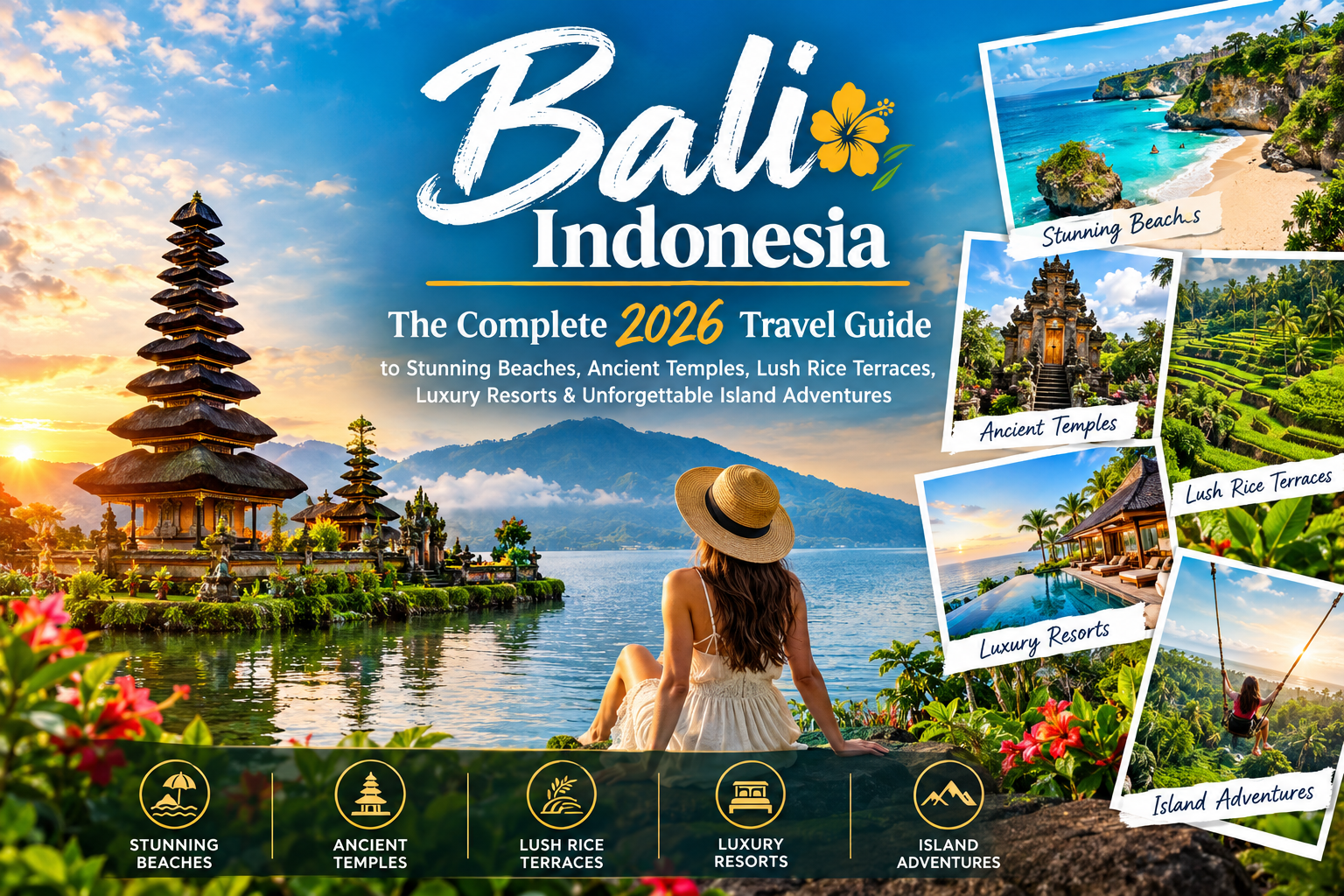
Bali is one of Southeast Asia’s most captivating destinations, combining tropical beaches, dramatic volcanic landscapes, ancient Hindu temples, traditional villages, and a vibrant food scene. Located in the Indonesian archipelago, this island attracts honeymooners, adventure seekers, families, wellness travelers, and digital nomads looking for a memorable escape.
What makes Bali special is its variety. You can watch the sunrise above Mount Batur, explore emerald rice terraces in Ubud, surf the waves of Canggu, or relax beside the turquoise waters of Nusa Dua—all within the same trip. However, choosing the right area, understanding local customs, and planning around traffic and seasonal weather can make a significant difference to your experience.
This guide explains where to go, what to do, when to visit, what to eat, and how to plan a rewarding journey while respecting the island’s culture and environment.
Where Is Bali Indonesia and What Makes It Special?
Bali is an Indonesian island situated between Java and Lombok, within the Lesser Sunda Islands. Its main gateway is I Gusti Ngurah Rai International Airport, near the southern resort areas of Kuta and Jimbaran. From there, travelers can reach popular destinations such as Seminyak, Ubud, Sanur, and Uluwatu, although journey times vary considerably with traffic.
Unlike many destinations known mainly for their beaches, Bali offers a distinctive blend of natural beauty and living cultural traditions. Balinese Hinduism influences temple architecture, religious ceremonies, family compounds, traditional dance, and daily offerings known as canang sari. These small arrangements of flowers and other offerings are commonly placed outside homes, shops, and temples.
The island’s identity is also shaped by its volcanic terrain, tropical forests, fertile agricultural land, and traditional irrigation networks known as subak. The cultural landscape of Bali’s subak system is recognized as a UNESCO World Heritage Site, highlighting the relationship between water management, farming, community cooperation, and religious beliefs.
Best Places to Visit in Bali
Choosing where to stay is one of the most important decisions when planning a trip. Bali’s regions have different personalities, and crossing the island can take longer than expected because of narrow roads, congestion, and winding routes.


Ubud: Rice Terraces, Art, and Cultural Experiences
Ubud is an excellent choice for travelers interested in nature, art, wellness, and traditional Balinese culture. The surrounding countryside features rice paddies, palm-covered valleys, small villages, craft workshops, and forested walking trails. Popular attractions include the Sacred Monkey Forest Sanctuary, Ubud Palace, and the Tegallalang Rice Terraces.
Spend time exploring local markets, visiting art galleries, or taking a Balinese cooking class. Early mornings are particularly rewarding for countryside walks before the heat and tour groups arrive. Visitors should follow wildlife guidance around monkeys and keep food, sunglasses, and loose belongings secure.
Uluwatu: Dramatic Cliffs and Sunset Views
Uluwatu occupies the southern Bukit Peninsula, where limestone cliffs rise above the Indian Ocean. It is known for surf breaks, beach clubs, coastal viewpoints, and the historic Uluwatu Temple. The traditional Kecak fire dance, often performed around sunset, offers an opportunity to experience Balinese performance traditions in a striking setting.
The beaches around this area can involve steep staircases and strong currents. Padang Padang, Bingin, and Melasti are popular choices, but conditions vary with tides and weather. Check local safety advice before swimming, especially if you are unfamiliar with reef breaks.
Seminyak and Canggu: Dining, Shopping, and Nightlife
Seminyak appeals to travelers who enjoy stylish accommodation, restaurants, boutiques, spas, and beachside sunsets. Canggu has a more casual, youthful atmosphere, with surf schools, cafés, creative businesses, and a large selection of international food.
These areas are convenient for social activities but can become congested, particularly around popular dining streets. If you want to spend much of your holiday relaxing on quiet beaches, consider staying elsewhere and visiting these districts for a day or evening.
Nusa Dua and Sanur: Relaxed Coastal Escapes
Nusa Dua is known for landscaped resort grounds, upscale hotels, and beaches suited to a more relaxed holiday. It is especially appealing to families and travelers who prefer organized facilities and convenient access to resort services.
Sanur, on Bali’s southeastern coast, has a calmer atmosphere, a beachfront promenade, and sunrise views. Its coastal setting makes it attractive for cycling, leisurely walks, and boat trips to nearby islands. Both areas can offer a slower pace than the busier southwest, although beach and swimming conditions still depend on tides and weather.
Best Things to Do in Bali
A rewarding itinerary combines famous attractions with activities that reveal the island’s everyday character. Rather than trying to visit every landmark, choose experiences that suit your interests and leave enough time to enjoy each destination.


Watch the Sunrise from Mount Batur
Mount Batur is an active volcano in the Kintamani region and a popular destination for guided sunrise treks. On a clear morning, hikers may see volcanic landscapes, Lake Batur, and distant mountains illuminated by the rising sun.
The hike typically starts before dawn and includes uneven, sometimes slippery terrain. Wear suitable footwear, carry water, and choose a reputable guide. Travelers with mobility limitations or relevant medical concerns should assess the physical demands before booking.
Explore Temples and Traditional Culture
Bali’s temples are among its most meaningful attractions. Tanah Lot is famous for its coastal setting, while Tirta Empul is associated with sacred spring water and purification rituals. Besakih, located on the slopes of Mount Agung, is widely regarded as the island’s principal temple complex.
Dress respectfully and follow posted rules. Many temples require a sarong, and visitors should avoid entering restricted areas or interrupting ceremonies. Ask before photographing worshippers, and remember that religious sites are active places of worship rather than simply tourist attractions.
Take a Day Trip to Nusa Penida
Nusa Penida, an island southeast of Bali, is known for dramatic coastal scenery, including Kelingking Beach and Broken Beach. Boat services commonly operate from ports such as Sanur, with schedules influenced by weather and sea conditions.
The views can be spectacular, but travel between attractions may involve rough roads, steep paths, and limited shade. Allow extra time, bring drinking water, and avoid approaching cliff edges for photographs. A guided trip can simplify logistics, particularly if you have only one day available.
Enjoy Surfing, Snorkeling, and Wellness
Bali offers activities for different experience levels. Surf schools operate in several coastal areas, while snorkeling and diving trips visit selected reefs and nearby islands. Conditions are seasonal and location-specific, so use qualified operators and check sea conditions before entering the water.
Yoga classes, traditional massages, spa treatments, and wellness retreats are also widely available. If relaxation is your priority, a slower schedule with a few planned activities may be more satisfying than moving between several destinations every day.
Balinese Food You Should Try
Food is an essential part of the travel experience, combining Indonesian staples with distinctive Balinese seasonings, fresh vegetables, rice, seafood, and aromatic spice pastes. Traditional dishes often balance savory, spicy, sweet, and fragrant flavors.


Some dishes worth trying include nasi campur, a rice-based meal served with several side dishes; sate lilit, minced meat or seafood seasoned with spices and wrapped around a skewer; and lawar, a traditional mixture of vegetables, coconut, herbs, and other ingredients. Babi guling, or roast suckling pig, is another well-known Balinese specialty, although it is not suitable for everyone.
| Food | What to expect | Helpful tip |
|---|---|---|
| Nasi campur | Rice with a selection of sides | Ask about spice levels and ingredients |
| Sate lilit | Seasoned minced meat or seafood on skewers | Try it freshly grilled |
| Nasi goreng | Indonesian fried rice | Often available with egg, chicken, or vegetables |
| Mie goreng | Stir-fried noodles with vegetables and optional protein | A convenient casual meal |
| Lawar | Traditional vegetable, coconut, and herb mixture | Recipes vary, so ask about ingredients |
| Babi guling | Balinese roast pork with spices | Usually found at specialist local eateries |
Food safety matters, especially in hot weather. Choose busy places with freshly prepared food, wash your hands before eating, and use sealed or reliably treated drinking water. Travelers with allergies or dietary restrictions should explain them clearly, as sauces and spice pastes may contain unexpected ingredients.
When Is the Best Time to Visit Bali?
Bali has a tropical climate with warm temperatures throughout the year. The year is commonly divided into a drier season, roughly from April to October, and a wetter season, generally from November to March. These are broad patterns rather than guarantees, and rainfall can vary between regions and from one year to another.
The drier months are often popular for beach activities, hiking, and outdoor sightseeing. July and August can be particularly busy, as can Christmas and New Year. The wetter season may bring heavier showers and humid conditions, but it can also offer lush landscapes and opportunities to find accommodation deals outside major holiday periods.
| Travel period | General conditions | Best suited for |
|---|---|---|
| April–June | Often relatively dry, with fewer peak-season crowds | Sightseeing, outdoor activities, and balanced itineraries |
| July–August | Popular travel period; accommodation can be expensive | Beach holidays, surfing, and busy social areas |
| September–October | Often favorable for outdoor exploration | Couples, cultural trips, and mixed itineraries |
| November–March | Wetter, humid conditions are more likely | Flexible schedules, wellness breaks, and selected lower-season deals |
For the most comfortable trip, check local forecasts before departure and build flexibility into your itinerary. Rain can affect road travel, boat crossings, hiking plans, and visibility at scenic viewpoints.
Where to Stay and How Much to Budget
Accommodation in Bali ranges from affordable guesthouses and homestays to boutique hotels, private villas, and luxury beachfront resorts. Your best base depends on the type of holiday you want. Ubud suits culture and countryside, Uluwatu is attractive for coastal scenery, Seminyak and Canggu offer restaurants and nightlife, and Sanur or Nusa Dua can suit travelers seeking a more relaxed seaside stay.
As a planning guide, budget travelers may spend around US$25–60 per person per day, mid-range travelers around US$60–150, and luxury travelers US$150 or more. These are approximate estimates, not fixed prices, and may exclude international flights, premium excursions, or peak-season accommodation. Costs vary significantly with room type, dining choices, transport, and the exchange rate.
| Expense | Budget approach | Mid-range approach |
|---|---|---|
| Accommodation | Guesthouse or simple homestay | Comfortable hotel or private room |
| Meals | Local warungs and casual eateries | Mix of local restaurants and cafés |
| Transport | Shared trips and selected local rides | Private driver for planned day trips |
| Activities | Beaches, walks, and cultural sites | Guided tours, classes, and boat excursions |
| Shopping | Local markets and small purchases | Boutiques, crafts, and specialty stores |
A practical way to control spending is to stay several nights in one area rather than paying for frequent transfers. Compare accommodation locations, account for transport costs, and check whether quoted prices include taxes and service charges.
Getting Around Bali Safely and Efficiently
Bali does not have a comprehensive rail or metro network for tourists, so most visitors rely on cars, taxis, ride-hailing services where available, private drivers, or motorcycles. Travel time depends heavily on distance, road conditions, and traffic. A journey that looks short on a map can take much longer during busy periods.
Hiring a private driver for a planned day of sightseeing can be convenient for families, groups, or travelers visiting several attractions. Motorcycle rental may appeal to experienced riders, but it carries meaningful risks because of congestion, unfamiliar roads, and local driving conditions. Always use a properly licensed and insured service, wear a helmet, and follow local traffic laws. If you are not experienced on a motorcycle, use another form of transport.
For boat trips to nearby islands, book with reputable operators and verify departure details. Sea conditions can cause delays or cancellations, so avoid scheduling an important international flight immediately after a boat transfer.
Essential Travel Tips and Local Etiquette
Respect for Balinese culture makes a trip more meaningful and helps prevent uncomfortable misunderstandings. When entering temples, follow dress requirements, wear a sarong if required, and observe signs indicating restricted areas. Avoid touching people’s heads, do not step on ceremonial offerings, and be discreet during religious ceremonies. If a local custom is unfamiliar, ask politely rather than assuming.
Responsible tourism also means considering the island’s environmental pressures. Carry a reusable water bottle where practical, reduce single-use plastic, use reef-safe practices when swimming, and avoid activities involving animal mistreatment. Support locally owned businesses and purchase handicrafts directly from artisans when possible.
Before traveling, check current Indonesian entry requirements, passport validity rules, visa eligibility, and any applicable tourist levy or declaration procedures through official sources. Arrange suitable travel insurance, including coverage for planned activities, and keep emergency contacts accessible. Conditions and regulations can change, so verify requirements close to your departure date.
Frequently Asked Questions About Bali Indonesia
Is Bali Indonesia worth visiting in 2026?
Yes, Bali offers an appealing mix of beaches, cultural attractions, nature, food, wellness, and accommodation for different budgets. The best experience comes from choosing suitable regions, allowing enough time for travel between them, and respecting local customs. Checking current entry rules, weather, and transport arrangements also helps make the trip smoother.
How many days do you need in Bali?
Five to seven days can provide a satisfying introduction to Bali, while ten to fourteen days allows more time for different regions and nearby islands. For a week-long itinerary, you might divide your stay between Ubud and the southern coast. Longer trips can include Sanur, northern Bali, or Nusa Penida without rushing every day.
What is the best area to stay in Bali for first-time visitors?
Ubud is a strong choice for travelers interested in culture, rice terraces, and inland scenery. Seminyak or Canggu may suit visitors who prioritize dining and nightlife, while Sanur and Nusa Dua are attractive for a quieter coastal stay. Consider your preferred activities and travel times before choosing a base.
Is Bali expensive for tourists?
Bali can accommodate a range of budgets. Local eateries, guesthouses, and public attractions may keep costs manageable, while private villas, premium resorts, beach clubs, and private excursions can increase spending substantially. Planning accommodation and transport in advance is often more effective than trying to reduce every daily expense once you arrive.
Is Bali safe for solo travelers?
Many solo travelers visit Bali successfully, but sensible precautions remain important. Use reputable transport, secure valuables, follow water-safety guidance, and avoid poorly lit or isolated places when alone at night. Travelers should also check their insurance coverage and stay informed about local conditions and official travel advice.
Can you swim at Bali’s beaches?
Swimming is possible at many beaches, but conditions vary. Some areas have strong currents, powerful surf, reef breaks, or changing tides. Follow lifeguard instructions and warning flags, choose beaches appropriate to your swimming ability, and never assume that calm-looking water is automatically safe.
What should you wear when visiting temples in Bali?
Wear clothing that covers your shoulders and knees, and use a sarong or sash when required by the temple. Follow any additional rules displayed at the entrance, and remember that some sacred areas are restricted to worshippers. Modest clothing and respectful behavior help visitors experience these sites appropriately.
Conclusion: Planning an Unforgettable Bali Experience
Bali combines remarkable natural scenery with a rich cultural identity, offering far more than a conventional beach holiday. From the rice terraces and temples around Ubud to Uluwatu’s dramatic cliffs, Sanur’s relaxed coastline, and the lively dining districts of the south, each region reveals a different side of the island.
The key to a successful visit is to plan around your interests rather than trying to see everything at once. Choose a practical base, allow extra time for transport, explore local food, respect religious traditions, and make responsible choices that benefit the communities you visit.
Ultimately, Bali Indonesia is most rewarding when you balance its famous attractions with slower, more meaningful experiences. A sunrise trek, a meal at a family-run warung, a walk through green rice fields, or a quiet moment at the coast may become the memories you value most long after the journey ends.