


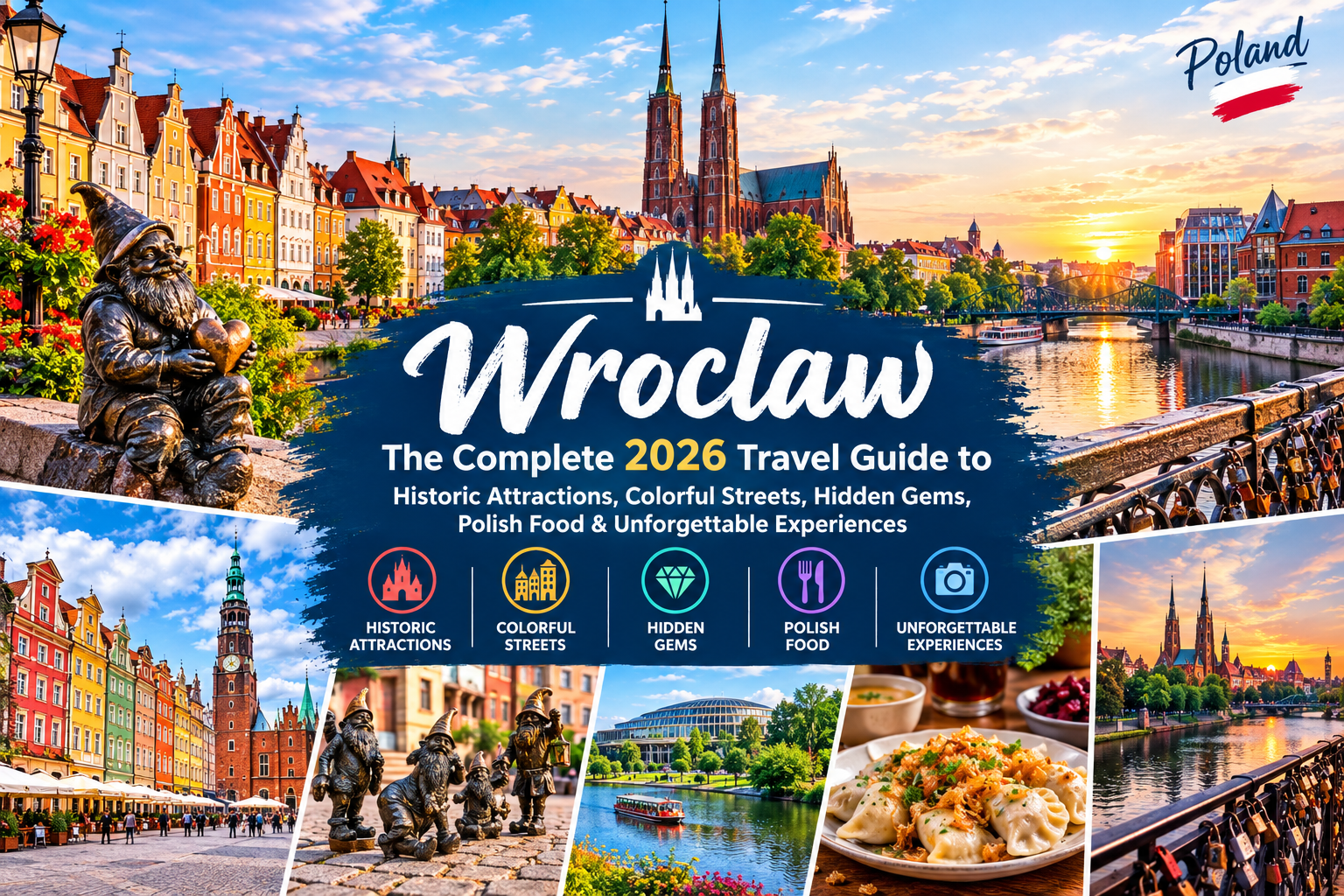
Wroclaw is one of Poland’s most captivating cities, known for its colorful Market Square, elegant architecture, riverside scenery, historic bridges, and playful bronze dwarf statues scattered throughout its streets. Located in southwestern Poland along the Oder River, it blends centuries of Central European history with a lively modern atmosphere. Whether you are planning a weekend city break, a longer cultural holiday, or your first trip to Poland, this destination offers an appealing mix of heritage, food, outdoor spaces, and entertainment.
Often overlooked in favor of Kraków or Warsaw, Wroclaw rewards travelers who take the time to explore beyond the main square. You can admire Gothic churches, visit museums, enjoy traditional Polish dishes, relax on river islands, and discover neighborhoods shaped by different periods of European history. The city is also home to a large student population, which contributes to its cafés, nightlife, festivals, and creative energy.
Where Is Wroclaw and What Makes It Special?
Wroclaw lies in the Lower Silesian region of southwestern Poland, close to the borders of Germany and the Czech Republic. Its position along the Oder River helped establish it as an important trading and cultural center over many centuries. The city has been influenced by Polish, Bohemian, Habsburg, Prussian, and German history, creating an architectural and cultural identity that feels distinct from many other Polish destinations.
One of its defining features is its relationship with water. The Oder and its branches form islands, riverbanks, and scenic walking routes, while numerous bridges connect different parts of the city. Historic churches, medieval streets, and grand squares sit alongside contemporary restaurants, modern developments, and university buildings. This contrast makes sightseeing feel varied rather than repetitive.
The city is also famous for its small bronze dwarf sculptures, known locally as krasnale. These figures appear near shops, monuments, cafés, and public buildings, turning an ordinary walk into a playful treasure hunt. Their origins are linked to the Orange Alternative movement, an anti-communist protest movement that used absurdist humor and dwarf imagery to challenge the authorities during the 1980s.
Best Things to Do in Wroclaw


Explore the Market Square and Old Town
The Market Square, or Rynek, is the natural starting point for most visits. Surrounded by richly colored townhouses, cafés, restaurants, and historic buildings, it is one of the city’s most recognizable landmarks. At its center stands the Old Town Hall, a remarkable Gothic building whose detailed stonework reflects the city’s medieval commercial importance.
Spend time exploring the smaller streets branching away from the square rather than treating it as a quick photo stop. These lanes reveal independent shops, traditional restaurants, historic churches, and quieter corners that are easy to miss during a rushed itinerary. Visiting in the morning provides a calmer atmosphere, while evenings bring outdoor dining, illuminated architecture, and a lively social scene.
Visit Ostrow Tumski, the Cathedral Island
Ostrow Tumski is among the oldest parts of the city and is particularly appealing to visitors interested in architecture and religious history. The area is known for its cobblestone streets, historic churches, and the impressive Cathedral of St. John the Baptist, whose towers provide a recognizable feature of the skyline.
Walking through the district offers a quieter contrast to the busy Market Square. The area’s traditional atmosphere becomes especially memorable around dusk, when streetlights illuminate the historic buildings. Some lamps have traditionally been lit by a lamplighter, a practice that has become one of the district’s distinctive attractions. Check locally for current timings and arrangements if seeing this tradition is a priority.
Discover the Centennial Hall and Pergola
Centennial Hall, a UNESCO World Heritage Site, is an important example of early reinforced-concrete architecture. Designed by Max Berg and opened in 1913, it demonstrates how modern engineering began reshaping large public buildings in the early twentieth century. Its scale and architectural design make it worthwhile even for travelers who do not usually seek out technical or architectural landmarks.
Nearby, the Pergola and multimedia fountain provide open spaces for walking and relaxing, with seasonal water displays adding another attraction. The surrounding area is well suited to families and travelers who want a break from the historic center. Check the official schedule before visiting because fountain shows and event access can vary by season.
Museums, Culture, and Historic Landmarks


The Panorama of Racławice is one of the city’s most distinctive cultural attractions. This enormous panoramic painting depicts the Battle of Racławice and is displayed in a purpose-built circular setting that creates an immersive visual experience. It combines art, historical storytelling, and theatrical presentation, making it interesting even for visitors who are not regular museumgoers. Advance booking can be sensible during busy travel periods.
The University of Wroclaw is another worthwhile stop, particularly for its ornate Aula Leopoldina, a richly decorated Baroque hall. The National Museum offers collections of Polish and regional art, while Hydropolis explores water through interactive exhibits about science, engineering, and the environment. Together, these attractions provide a broader understanding of the city beyond its medieval architecture.
When planning cultural visits, check opening days, ticket availability, and photography rules in advance. Some sites have limited access to individual rooms, and special events may affect normal visiting hours. Choosing two or three attractions that genuinely interest you is often more rewarding than rushing through a long museum checklist.
Food to Try: Traditional Polish Flavors and Local Favorites
Polish food is an essential part of the experience. Pierogi—dumplings filled with ingredients such as potato and cheese, meat, mushrooms, or fruit—are a familiar starting point. Other dishes worth trying include żurek, a tangy fermented rye soup often served with sausage or egg; bigos, a hearty stew made with cabbage and meat; and placki ziemniaczane, crisp potato pancakes commonly served with savory or sweet toppings.
The city also has a diverse contemporary dining scene, from casual milk bars and bakeries to modern Polish restaurants and international cafés. Milk bars, known as bar mleczny, are particularly useful for travelers seeking simple, filling meals at relatively affordable prices. Menus and English-language descriptions vary, so checking a translation or asking staff about ingredients can help if you have dietary restrictions.
| Food or drink | What it is | Best way to enjoy it |
|---|---|---|
| Pierogi | Filled Polish dumplings | Try a mix of savory fillings |
| Żurek | Sour rye soup | Enjoy as a warming lunch |
| Bigos | Cabbage and meat stew | Sample at a traditional Polish restaurant |
| Placki ziemniaczane | Potato pancakes | Try with a savory topping or sour cream |
| Pączki | Filled Polish doughnuts | Pick one up from a local bakery |
| Polish kompot | Fruit-based drink | A traditional accompaniment to a meal |
A useful approach is to combine one traditional restaurant meal with visits to bakeries, cafés, and neighborhood food spots. This gives you a broader sense of local eating habits without making every meal a formal dining experience.
Hidden Gems, River Walks, and Outdoor Spaces
Beyond the best-known landmarks, the city’s riverside areas offer some of its most relaxing experiences. Walk along the Oder, explore the islands, or cross the smaller bridges to discover changing views of churches, historic buildings, and modern riverfront developments. In warmer months, outdoor seating and riverside paths make the water a natural gathering place for residents and visitors.
Słodowa Island is popular with students and locals who come to relax, socialize, and enjoy the open space. It is particularly lively during warmer evenings, although the atmosphere can vary with the season and events. For a different perspective, consider a river cruise when services are operating; seeing the skyline from the water reveals how closely the city’s development follows the river network.
The Four Denominations District is another interesting area to explore, reflecting the coexistence of different religious communities within a compact urban setting. It is home to churches associated with Catholic, Orthodox, Protestant, and Jewish traditions. Visitors should treat active places of worship respectfully, particularly during services, and check access arrangements before entering.
Best Time to Visit and What the Weather Is Like
Late spring and early autumn are excellent periods for exploring the city on foot. May and June generally bring longer days and greener parks, while September often offers comfortable sightseeing conditions and a lively cultural calendar. Outdoor cafés, river walks, and open-air events are particularly enjoyable when temperatures are mild.
Summer provides long daylight hours and a busy atmosphere, but popular attractions may be crowded and occasional heat or thunderstorms can affect plans. Winter brings colder weather, shorter days, and the possibility of snow or icy pavements. However, seasonal decorations and Christmas markets can make the Old Town especially atmospheric when events are running.
| Season | Typical experience | Travel advice |
|---|---|---|
| Spring | Parks, riverside walks, and milder days | Pack layers and a light rain jacket |
| Summer | Outdoor dining, festivals, and long evenings | Book accommodation early for busy dates |
| Autumn | Comfortable sightseeing and seasonal colors | Bring a warm layer for evenings |
| Winter | Christmas markets and indoor cultural attractions | Wear insulated footwear and check event dates |
Weather conditions vary from year to year, so check the forecast shortly before departure. Comfortable walking shoes are useful in every season because cobblestones, historic streets, and long sightseeing days can be tiring.
Getting Around, Where to Stay, and Travel Costs
Wroclaw is relatively easy to explore without a car. The historic center is walkable, while trams and buses connect the Old Town with railway stations, residential districts, and attractions farther away. A local transport ticket can be useful if you plan to visit Centennial Hall, travel between neighborhoods, or return to your accommodation after an evening out. Check current ticket rules and validation requirements before boarding.
For accommodation, the Old Town is convenient for first-time visitors who want restaurants, major landmarks, and nightlife close by. Staying near the main railway station can be practical for travelers arriving by train or taking day trips. Areas beyond the center may offer quieter surroundings or better value, but compare public transport access and journey times before booking.
Costs depend on travel dates, room category, restaurant choices, and event schedules. You can keep spending manageable by walking between central attractions, using public transport, choosing casual local eateries, and booking popular museums ahead of time when required. Remember to account for airport transfers, attraction tickets, and any service charges when comparing the total cost of a trip.
Frequently Asked Questions About Wroclaw
Is Wroclaw worth visiting?
Yes. The city combines a beautiful historic center, distinctive architecture, riverside scenery, engaging museums, and an approachable food scene. It is especially appealing to travelers who enjoy exploring on foot and discovering places with layered European history without spending their entire trip in a major capital.
How many days are enough for Wroclaw?
Two full days are enough to see the Market Square, Ostrow Tumski, and several major attractions at a comfortable pace. Three or four days allow additional time for museums, river walks, Centennial Hall, local restaurants, and quieter neighborhoods without rushing.
Is Wroclaw expensive for tourists?
It can be more affordable than some major Western European destinations, although costs vary by season and travel style. Budget-conscious visitors can save money by walking, using public transport, choosing casual Polish restaurants, and booking accommodation in advance. Central hotels and peak-season dates generally cost more.
What is Wroclaw famous for?
The city is known for its colorful Market Square, Gothic Old Town Hall, Cathedral Island, numerous bridges, and small bronze dwarf statues. It is also recognized for Centennial Hall, the Panorama of Racławice, its university traditions, and a history shaped by several Central European cultures.
Is Wroclaw safe for visitors?
It is generally considered a manageable destination for ordinary city sightseeing, but standard precautions remain important. Keep valuables secure in crowded areas, use licensed transport, stay aware around nightlife districts, and check local travel advice. Visitors should also take care on cobblestones and during icy winter conditions.
Can you visit Wroclaw without speaking Polish?
Yes. Visitors can generally navigate major attractions, hotels, and many restaurants with English, especially in central tourist areas. Learning a few Polish greetings is appreciated, and translation tools can help with menus, public transport information, or smaller businesses where English may be limited.
Conclusion: Why Wroclaw Deserves a Place on Your Travel List
Wroclaw brings together the best elements of a memorable European city break: colorful architecture, meaningful historical sites, traditional Polish food, vibrant cultural spaces, and peaceful walks beside the river. From the medieval atmosphere of the Market Square to the engineering legacy of Centennial Hall, its attractions reveal different chapters of the city’s past and present.
The most rewarding itinerary balances famous landmarks with time to wander through side streets, relax on the riverbanks, and try local dishes. Plan around the season, book essential attractions when needed, and leave room for discoveries that are not on your original list. Wroclaw is more than a pretty Old Town; it is a city whose layered history, creative energy, and riverside character make it worth exploring at a slower pace.