


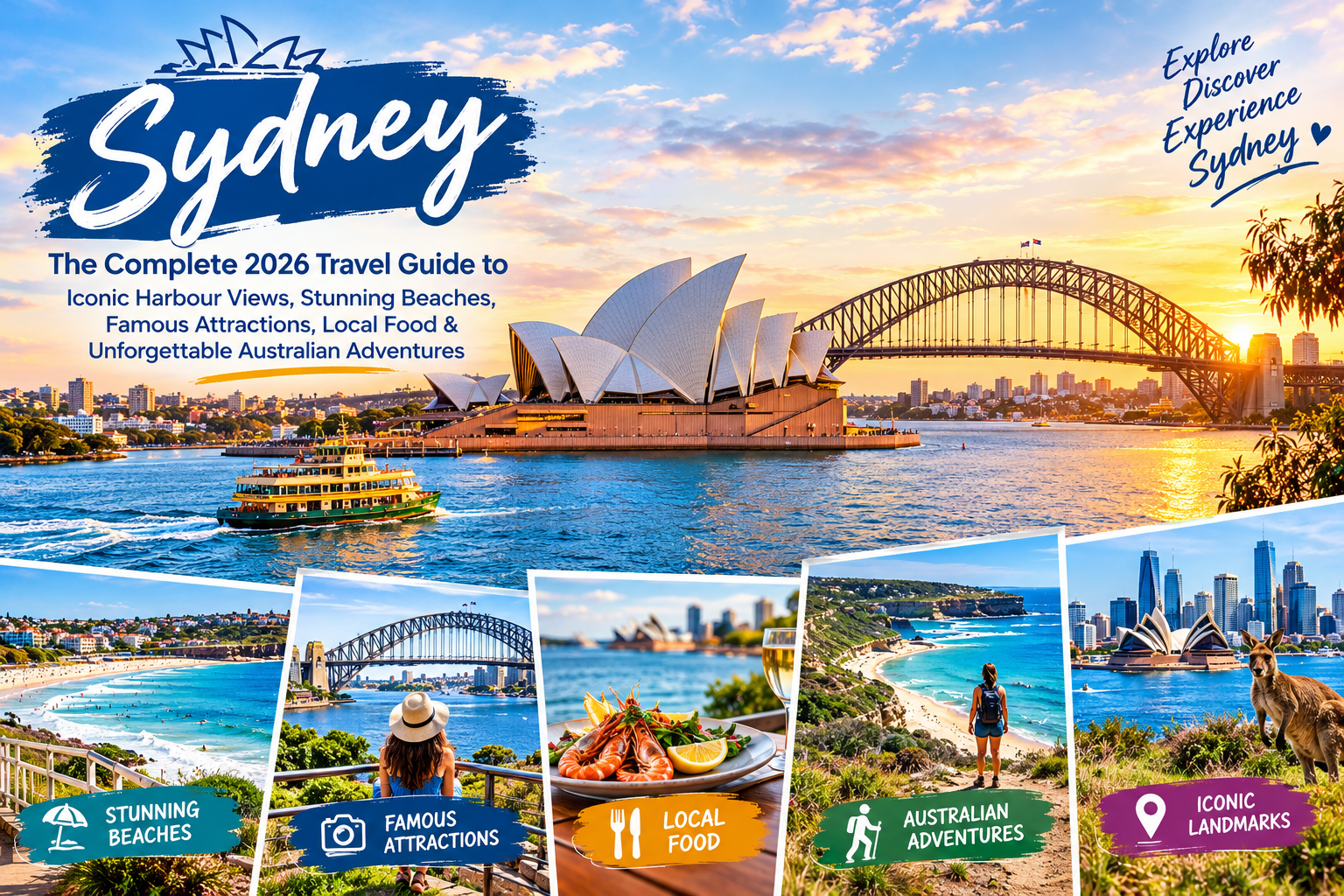
Sydney is one of Australia’s most recognizable destinations, combining a spectacular natural harbour with golden beaches, historic neighbourhoods, a vibrant food scene, and world-class cultural attractions. From the famous Opera House and Harbour Bridge to coastal walking trails and relaxed waterfront cafés, the city offers a memorable experience for first-time visitors and returning travellers alike.
What makes the city especially appealing is its variety. You can spend the morning exploring historic streets, enjoy fresh seafood beside the water at lunch, and watch the sunset from a coastal lookout in the evening. Whether you are planning a short city break, a family holiday, or a longer Australian adventure, understanding the best places to visit, how to get around, and when to travel will help you make the most of your stay.
Why Sydney Is Worth Visiting

Sydney stands out because urban attractions and natural scenery exist remarkably close together. Its harbour creates a dramatic setting for ferries, waterfront restaurants, and iconic landmarks, while the surrounding coastline provides opportunities for swimming, surfing, coastal hikes, and relaxing beach days. Visitors do not need to travel far from the central business district to experience a very different side of Australia.
The city also has a strong cultural identity shaped by Aboriginal and Torres Strait Islander heritage, British colonial history, immigration, and contemporary Australian life. Museums, galleries, markets, and neighbourhood dining spots reveal different parts of that story. For travellers who enjoy variety, the combination of outdoor activities, architecture, history, and food makes the destination rewarding beyond its famous postcard views.
Best Attractions to See in Sydney

Sydney’s most recognizable landmarks are concentrated around the harbour, making them convenient to combine into a walking itinerary. The Sydney Opera House is a must-see for its distinctive architecture and performing arts programme. Visitors can admire it from Circular Quay, explore its public spaces, or book a guided tour to learn about its design and construction. Nearby, the Sydney Harbour Bridge provides another unforgettable view, whether you walk across its pedestrian path or admire its steel arches from the waterfront.

The historic centre also offers attractions that deserve more than a quick photograph. The Rocks features cobbled lanes, heritage buildings, pubs, markets, and views toward the harbour. The Royal Botanic Garden offers peaceful walking paths and excellent perspectives of the Opera House, while Darling Harbour combines waterfront dining with museums, family attractions, and entertainment. The best approach is to group nearby sights together instead of crossing the city repeatedly.
The Best Beaches and Outdoor Experiences

Bondi Beach is among Australia’s best-known coastal destinations, famous for its surf culture, lively cafés, and wide stretch of sand. It is a popular place to swim, learn to surf, or simply watch the ocean from the promenade. Conditions can change quickly, so visitors should follow beach safety signs, swim between the red and yellow flags where lifeguards operate, and pay attention to warnings about currents.

For a more scenic outing, the Bondi to Coogee Coastal Walk passes sandstone cliffs, ocean pools, beaches, and coastal parks. The full route is roughly six kilometres, although the time required depends on stops, weather, and fitness. Manly Beach offers another excellent option, with the ferry journey from Circular Quay becoming part of the experience. For quieter surroundings, consider visiting lesser-known harbour beaches or exploring coastal parks on weekdays, when popular areas may be less crowded.
When Is the Best Time to Visit Sydney?
The best time to visit depends on your priorities. Spring and autumn generally offer comfortable conditions for sightseeing and outdoor activities, while summer is attractive for beach visits and longer daylight hours. Winter is usually milder than in many northern-hemisphere destinations, making it suitable for harbour walks, museums, restaurants, and city exploration.
| Season | Typical months | What to expect | Best for |
|---|---|---|---|
| Summer | December–February | Warm weather, beach activity, busy attractions | Swimming and outdoor events |
| Autumn | March–May | Often comfortable temperatures and fewer summer crowds | Walking and sightseeing |
| Winter | June–August | Cooler days and occasional rain | Museums, dining, and city breaks |
| Spring | September–November | Warming weather and blooming gardens | Coastal walks and outdoor exploration |
Australia’s seasons are opposite to those in Europe and North America, so December is part of summer. School holidays, major events, and the Christmas–New Year period can increase hotel prices and crowd levels. Booking accommodation early is particularly useful if your dates are fixed or you want to stay close to the harbour.
Getting Around the City Easily

Public transport is often the most practical way to explore the central areas. Trains connect the airport and major urban districts, buses serve many neighbourhoods, and ferries link Circular Quay with destinations such as Manly and other harbour-side communities. Walking is also effective around the central business district, The Rocks, and the waterfront, although steep streets and warm weather can make some routes more demanding.
For a smoother trip, plan each day around a particular area. For example, combine the Opera House, Royal Botanic Garden, and The Rocks on one day, then dedicate another to Bondi and the coastal walk. Check current transport fares, service updates, and payment requirements before travelling, as these details can change. Taxis and rideshare services are convenient for late-night trips or destinations that are less well served by public transport, but they can be expensive during busy periods.
Food, Coffee, and Local Dining Culture

The food scene reflects the city’s multicultural population and access to fresh seafood. Visitors can find everything from modern Australian restaurants and waterfront seafood venues to Thai, Chinese, Vietnamese, Greek, Lebanese, and Italian food. Neighbourhoods such as Haymarket, Newtown, Surry Hills, and Marrickville offer distinct dining experiences, often with more variety than a single tourist district.
A useful way to explore local food is to mix well-known experiences with everyday neighbourhood favourites. Try Australian café culture with a flat white and a relaxed brunch, look for seasonal seafood, or visit a market for baked goods and casual meals. Dining beside the harbour can be memorable, but waterfront locations may charge more for their setting. If value matters, explore streets a little farther from the main attractions and compare menus before choosing a restaurant.
Where to Stay for Different Travel Styles

Choosing the right neighbourhood can save time and shape the character of your trip. The central business district and Circular Quay are convenient for first-time visitors who want easy access to major landmarks and transport connections. Darling Harbour works well for families and travellers interested in museums, entertainment, and waterfront restaurants. These central areas can be expensive, particularly during major events and peak holiday periods.
Bondi and Manly suit visitors who want a beach-focused stay, while Surry Hills and Newtown appeal to travellers interested in independent cafés, nightlife, and local culture. The trade-off is travel time: a cheaper room far from the attractions may cost more in transport and take longer to reach each day. Compare the total cost, including transport and breakfast, rather than choosing accommodation solely by its nightly price.
Understanding Travel Costs and Saving Money
The cost of a visit varies with accommodation standards, dining choices, travel dates, and planned activities. Hotels near the harbour and premium beach districts can be expensive, while guesthouses, hostels, and accommodation farther from the centre may provide better value. Major paid experiences, such as climbing the Harbour Bridge, can also take a substantial share of a travel budget.
You can reduce expenses without missing the city’s best experiences. Many memorable activities, including harbour walks, beach visits, coastal viewpoints, and exploring historic neighbourhoods, cost little or nothing. Use public transport, book popular activities in advance when appropriate, and balance restaurant meals with casual cafés or market food. A practical budget should also allow for weather changes, occasional taxis, and unexpected admission costs rather than allocating every dollar to planned activities.
Aboriginal Heritage, History, and Cultural Experiences

The area has a deep Aboriginal history that long predates European settlement. The Gadigal people of the Eora Nation are the Traditional Custodians of much of the land around the central harbour area. Learning about Country, cultural knowledge, and continuing Indigenous connections adds important context to the city’s landscape and history.
Visitors can explore this heritage through exhibitions, cultural tours, public art, and educational programmes led by Aboriginal guides and organisations. The Australian Museum and other cultural institutions provide further opportunities to learn about First Nations histories and living cultures. Approach these experiences with curiosity and respect, recognizing that Aboriginal culture is diverse, contemporary, and not simply a part of the city’s past.
Practical Travel Tips for a Smooth Visit
Good planning helps prevent common problems. Summer sun can be intense, so bring sunscreen, a hat, and drinking water, even on days that feel breezy beside the harbour. Coastal weather can shift, and ocean conditions are not always safe for swimming. Check local forecasts and beach warnings before setting out, particularly if you plan to surf or walk along exposed headlands.
Visitors arriving from overseas should also check visa requirements through official Australian government resources before booking non-refundable travel. Keep an eye on public transport updates, reserve accommodation around major events, and leave room in your schedule for unexpected discoveries. Trying to fit every attraction into a short visit can make the experience tiring; choosing a few priorities each day usually creates a more enjoyable trip.
Frequently Asked Questions About Sydney
How many days are enough to explore Sydney?
Three to five days is a useful starting point for first-time visitors. Three days can cover the harbour landmarks, a beach visit, and a few neighbourhoods, while five days allows more time for coastal walks, museums, local dining, and relaxed exploration. Travellers interested in day trips or outdoor adventures may benefit from staying longer.
What is Sydney most famous for?
The city is best known internationally for the Sydney Opera House, Sydney Harbour Bridge, Bondi Beach, and its beautiful harbour. It is also recognized for its surf culture, multicultural food scene, major cultural institutions, and outdoor lifestyle. These attractions offer different ways to experience the destination beyond its iconic skyline.
Is Sydney expensive for tourists?
It can be, particularly for accommodation, restaurant dining, and premium attractions in central locations. However, travellers can manage costs by using public transport, choosing accommodation carefully, enjoying free outdoor attractions, and mixing restaurant meals with affordable local food. Booking well ahead can also help during busy travel periods.
What is the best way to get from the airport to the city?
The airport train is a convenient option for reaching central areas, while taxis and rideshare services offer door-to-door transport. The best choice depends on your accommodation location, luggage, group size, and budget. Check current fares and airport transport arrangements before travelling.
Is Sydney suitable for families?
Yes. Families can enjoy beaches, harbour ferries, parks, museums, aquariums, and other child-friendly attractions. Planning around travel time, meal breaks, and weather makes outings easier, especially with younger children. Parents should supervise children near water and follow lifeguard instructions at beaches.
Can you visit Sydney without a car?
Yes. Most first-time visitors can explore major attractions using trains, buses, ferries, and walking routes. A car may be useful for certain regional day trips, but parking costs and city traffic can make driving inconvenient in central neighbourhoods. Public transport is generally a sensible starting point.
Conclusion: Make the Most of Your Sydney Adventure
Sydney offers far more than a famous harbour and a collection of landmarks. Its appeal comes from the way beaches, coastal trails, historic districts, cultural institutions, and diverse dining experiences fit together in one destination. A well-planned visit can include major attractions without losing the relaxed moments that make travel memorable.
The smartest approach is to choose the season and neighbourhoods that match your interests, use public transport where practical, and leave time to explore beyond the busiest tourist areas. Whether you are watching the sunset over the water, discovering Aboriginal heritage, or enjoying a coffee in a lively local neighbourhood, Sydney rewards travellers who balance iconic sights with genuine everyday experiences.