

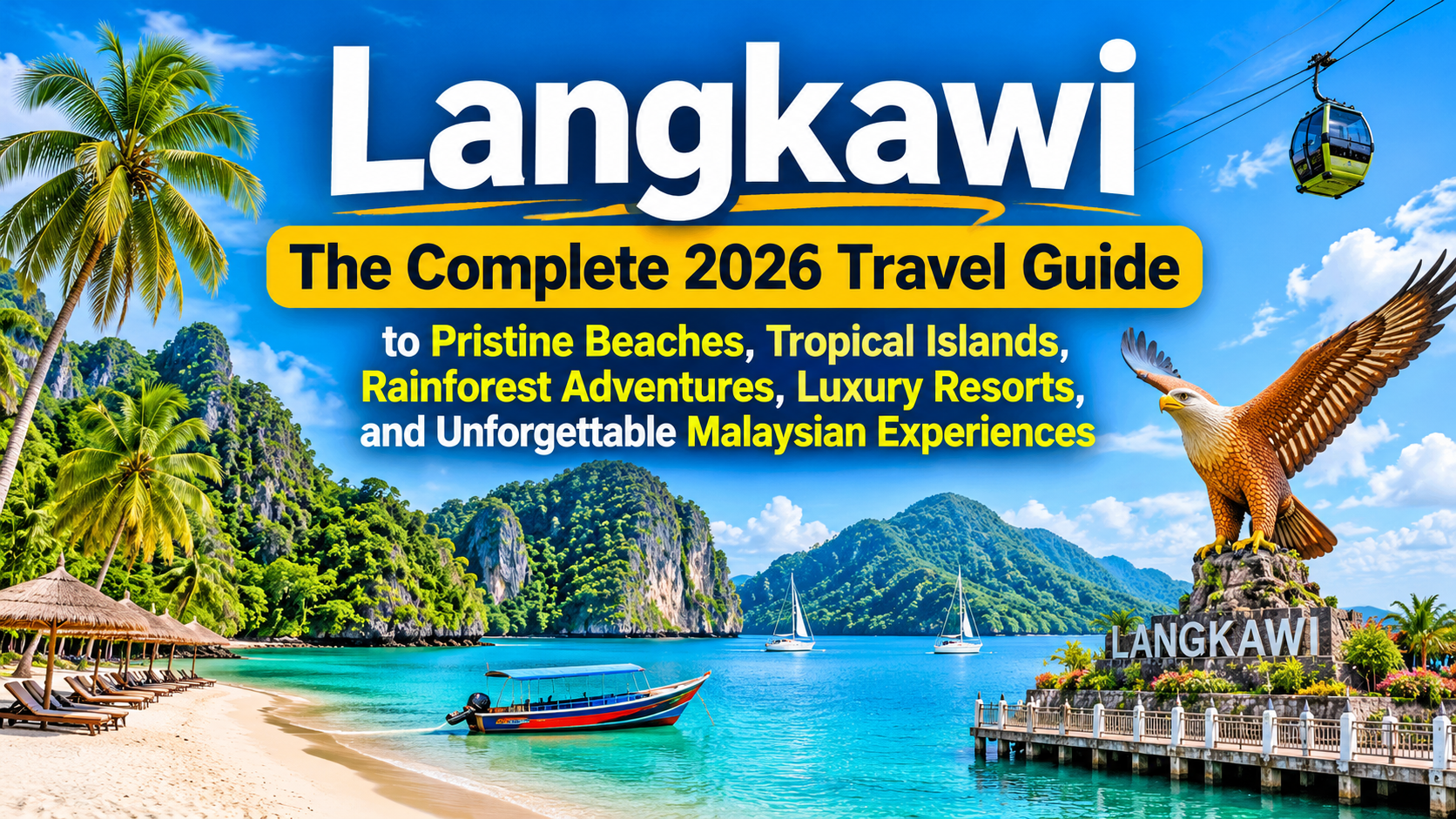
Langkawi is one of Malaysia’s most appealing tropical destinations, combining white-sand beaches, emerald rainforests, dramatic limestone formations, and warm Andaman Sea waters. Located off the northwestern coast of Peninsular Malaysia, this archipelago offers a refreshing balance between peaceful island escapes and exciting outdoor adventures.
Known officially as the Langkawi UNESCO Global Geopark, the destination is made up of 99 islands at high tide, with additional smaller islands appearing during lower tides. Its landscapes range from lively beachfront areas and traditional fishing villages to quiet coves, mangrove forests, and mountainous interiors.
Whether you are planning a romantic holiday, a family beach break, or an adventure-filled escape, Langkawi has experiences for different travel styles. Its combination of natural beauty, accessible attractions, Malaysian hospitality, and varied accommodation makes it an excellent destination for exploring the tropical side of Southeast Asia.
Why Visit Langkawi?
One of the biggest attractions of Langkawi is its variety. Travellers can spend a morning relaxing beside turquoise water, an afternoon exploring a rainforest, and an evening enjoying fresh seafood at a beachfront restaurant. Unlike destinations focused almost entirely on nightlife or resort experiences, the island offers a wider mix of nature, culture, and leisure.
The archipelago is particularly attractive to visitors who enjoy scenic landscapes. Its beaches are backed by coconut palms, while forested mountains rise above the coastline. Inland, waterfalls, winding roads, and traditional villages provide a different perspective on island life.
The destination also suits different budgets. Visitors can choose luxury resorts with private beach access, comfortable mid-range hotels, or affordable guesthouses near popular tourist areas. Renting a car or scooter can make exploring more convenient, although travellers should check licensing, insurance, and local road requirements before driving.
Best Beaches to Explore


8
Langkawi’s coastline is one of its defining features. Pantai Cenang is the best-known beach, offering a lively atmosphere, restaurants, cafés, water sports, and easy access to hotels. It is a practical choice for first-time visitors who want to stay close to activities and dining options.
For a quieter setting, Tanjung Rhu Beach is particularly attractive. Its pale sand, clear water, and limestone islands create a dramatic coastal landscape. The surrounding scenery is especially beautiful during calm weather, although swimming conditions can change with tides and seasonal conditions.
Pantai Tengah, south of Cenang, offers a more relaxed alternative while remaining close to restaurants and accommodation. Meanwhile, Datai Bay is known for its rainforest setting and upscale resorts, making it appealing to travellers seeking privacy and a peaceful atmosphere.
The best beach depends on the type of holiday you want. Cenang is convenient and energetic, while Tanjung Rhu and Datai Bay are better suited to visitors prioritising scenery and tranquillity.
Langkawi Sky Bridge and Cable Car


6
The Langkawi Sky Bridge is among the archipelago’s most recognisable attractions. Suspended high above the rainforest on Mount Mat Cincang, this curved pedestrian bridge provides panoramic views across the surrounding mountains, islands, and Andaman Sea.
Visitors reach the mountain area through the Langkawi SkyCab cable car, which climbs from the Oriental Village towards the upper station. The journey is an attraction in itself, with views of forested slopes and steep mountain scenery. On clear days, the elevated viewpoints offer particularly impressive photographs.
Weather can influence the experience. Rain, strong winds, or low cloud may affect operations and visibility, so checking official operating updates before travelling is sensible. Comfortable shoes are recommended, especially if you plan to explore the viewpoints and walking areas.
For many visitors, the cable car and Sky Bridge provide the most memorable perspective on the island’s dramatic geography.
Island Hopping and Marine Adventures


7
Island hopping is a popular way to explore the smaller islands surrounding the main landmass. Boat tours commonly include Pulau Dayang Bunting, Pulau Singa Besar, and Pulau Beras Basah, although routes and stops vary by operator and sea conditions.
Pulau Dayang Bunting is famous for its freshwater lake, known as the Pregnant Maiden Lake. Surrounded by forested hills, the lake provides a scenic setting for visitors interested in nature and local legends. Pulau Beras Basah, meanwhile, is known for its sandy beach and opportunities to relax beside the sea.
Snorkelling, swimming, kayaking, and boat excursions add variety to a beach holiday. However, marine visibility and water conditions are seasonal, so not every trip offers the same experience. Choose licensed operators, follow safety instructions, and avoid touching coral or disturbing marine wildlife.
Kilim Karst Geoforest Park and Mangrove Tours


8
Kilim Karst Geoforest Park offers a different experience from the island’s beaches. This protected landscape features mangrove forests, limestone cliffs, winding waterways, caves, and distinctive coastal ecosystems. It forms part of the wider Langkawi UNESCO Global Geopark, recognised for its geological heritage.
Boat tours take visitors through mangrove channels and around impressive limestone formations. Depending on the route, excursions may include visits to caves, sheltered waterways, and traditional fishing areas. Guides often explain how mangroves support coastal ecosystems by providing habitats for fish, birds, and other wildlife while helping protect shorelines.
A responsible tour should prioritise wildlife conservation. Avoid operators who encourage feeding wild animals or disturbing nesting and feeding areas. The most rewarding experience is one that allows visitors to appreciate the landscape without damaging the environment.
Waterfalls, Rainforests, and Outdoor Activities


7
The island’s interior contains waterfalls and rainforest trails that provide a welcome break from the coastline. Telaga Tujuh Waterfalls, also known as Seven Wells, is particularly well known for its natural pools and forest scenery. Reaching the upper sections involves climbing steps, so visitors should consider their fitness and the weather.
Temurun Waterfall is another attractive natural site, with water cascading down a forested rock face. Durian Perangin Waterfall offers another opportunity to enjoy the island’s tropical environment. Water levels can vary depending on rainfall, and slippery paths may make some areas difficult to access.
Outdoor enthusiasts can also explore hiking routes, cycling roads, and rainforest viewpoints. Wear suitable footwear, carry drinking water, and avoid hiking during thunderstorms or extreme heat. Visitors should stay on marked paths and respect wildlife rather than attempting to approach or feed animals.
Malaysian Food and Local Dining Experiences


10
Food is an important part of the island experience. Local dining combines Malay, Chinese, Indian, and regional influences, creating a varied selection of flavours. Seafood is particularly popular, with restaurants serving grilled fish, prawns, squid, and crab.
Visitors should try nasi lemak, a Malaysian favourite featuring coconut rice, sambal, peanuts, anchovies, and other accompaniments. Laksa Kedah, a regional noodle dish with a tangy fish-based broth, is another worthwhile choice. Satay, roti canai, and fresh tropical fruits also appear on many menus.
Night markets provide an affordable way to sample local food. Their locations and operating days can vary, so check current listings during your stay. A useful approach is to try small portions from different stalls rather than ordering everything from one place. This gives you a broader taste of local cooking while keeping the experience relaxed.
Where to Stay: Resorts, Hotels, and Beach Areas
Accommodation ranges from luxury beachfront properties to budget-friendly guesthouses. The best location depends on your priorities, particularly whether you prefer restaurants and entertainment nearby or a more secluded natural setting.
Pantai Cenang and Pantai Tengah are convenient bases for first-time visitors. They offer access to beaches, cafés, tour operators, and shopping. Tanjung Rhu and Datai Bay are better suited to travellers seeking a quieter atmosphere, scenic surroundings, and higher-end resort experiences.
| Area | Best For | Accommodation Style |
|---|---|---|
| Pantai Cenang | Restaurants, nightlife, activities | Budget hotels and beachfront resorts |
| Pantai Tengah | Relaxed beach holidays | Mid-range hotels and resorts |
| Tanjung Rhu | Peaceful scenery | Secluded resorts and villas |
| Datai Bay | Luxury and nature | Premium rainforest resorts |
| Kuah | Shopping and local town life | Hotels and affordable stays |
When choosing accommodation, consider transport costs and distance from your planned activities. A remote resort may offer beautiful surroundings but require more travel for restaurants, shops, and excursions.
Best Time to Visit and Travel Tips
The best time to visit Langkawi is generally during the drier months, particularly from November to March, when conditions are often more favourable for beach activities and boat trips. April to August can bring a mix of sunshine and rainfall, while September and October are typically among the wetter months.
Tropical weather is not always predictable, however. Even during drier periods, short showers can occur, and sea conditions may affect island-hopping tours. Flexible itineraries are useful because they allow you to move outdoor activities when the weather changes.
| Travel Consideration | Helpful Advice |
|---|---|
| Best general season | November to March |
| Wettest period | Often September and October |
| Main airport | Langkawi International Airport |
| Local transport | Rental cars, taxis, and ride-hailing where available |
| Currency | Malaysian ringgit (MYR) |
| Popular base | Pantai Cenang |
| Outdoor essentials | Sunscreen, water, comfortable footwear, insect repellent |
The island is relatively spread out, so relying entirely on walking is impractical for many attractions. Plan transport in advance, carry sun protection, and keep some flexibility in your schedule.
Frequently Asked Questions About Langkawi
Is Langkawi worth visiting?
Yes. The destination combines beautiful beaches, rainforest scenery, island excursions, cultural experiences, and excellent seafood. It is particularly appealing to travellers who want a tropical holiday with more variety than simply staying at a beach resort.
How many days are enough for Langkawi?
Three to five days provide enough time to explore the main beaches, visit the Sky Bridge, enjoy an island-hopping tour, and experience the local food scene. A longer stay is ideal for travellers who prefer a slower holiday or want to explore more remote areas.
What is the best month to visit Langkawi?
December, January, and February are generally popular because they fall within the drier travel season. November and March can also offer good conditions, although weather varies from year to year.
Is Langkawi suitable for families?
Yes. Families can enjoy beaches, cable car rides, boat excursions, waterfalls, and nature experiences. Parents should check swimming conditions, tour safety arrangements, and age restrictions before booking activities.
Is Langkawi expensive?
It can suit different budgets. Local restaurants, guesthouses, and shared tours help keep costs manageable, while luxury resorts, private excursions, and premium dining increase spending. Planning accommodation and transport in advance can make budgeting easier.
How do you get around Langkawi?
Visitors commonly use rental cars, taxis, and ride-hailing services where available. A rental vehicle provides flexibility for reaching beaches, waterfalls, and attractions, but travellers should confirm their driving eligibility and insurance coverage.
Conclusion
Langkawi offers a memorable combination of tropical beaches, spectacular mountain scenery, rich geological landscapes, and welcoming Malaysian culture. From the panoramic views of the Sky Bridge and the mangrove waterways of Kilim Karst Geoforest Park to the quiet shores of Tanjung Rhu, the archipelago provides experiences for both adventurous travellers and those seeking relaxation.
Its appeal lies in the freedom to create different kinds of holidays. You can spend your days exploring rainforest trails, tasting regional dishes, visiting smaller islands, or simply enjoying the coastline from a comfortable resort.
Ultimately, Langkawi is more than a beach destination. It is an opportunity to experience Malaysia’s natural diversity at a relaxed pace, with each part of the archipelago offering a different reason to stay a little longer.