


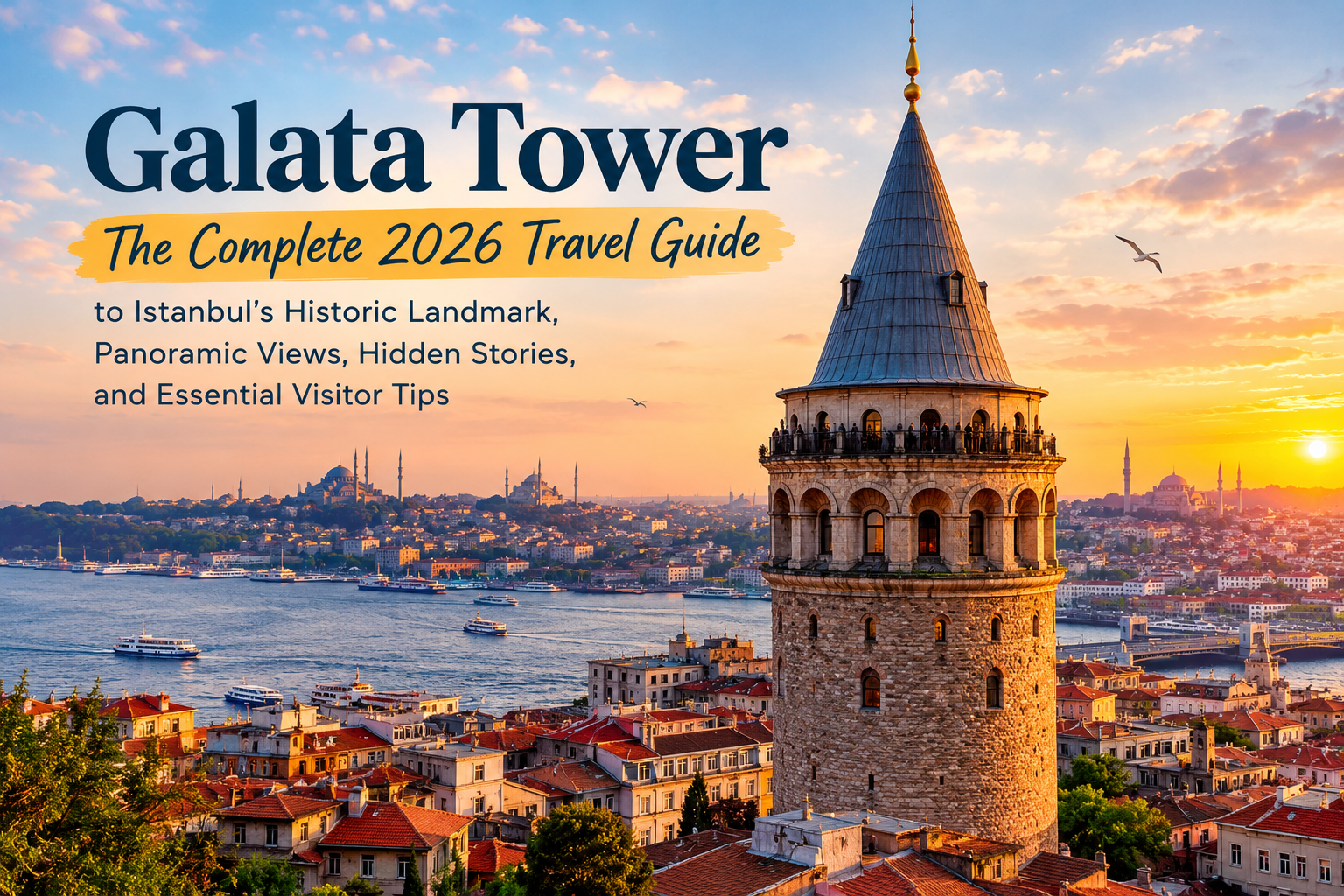
Istanbul is a city where Europe and Asia meet, Byzantine history intersects with Ottoman heritage, and centuries-old streets lead to lively cafés and modern cultural spaces. Rising above the historic Galata district, Galata Tower is one of the city’s most recognizable landmarks. Its cylindrical stone structure, conical roof, and elevated position make it a striking feature of the Istanbul skyline.
The tower offers more than a memorable photograph. It connects visitors with the city’s Genoese trading past, changing empires, maritime traditions, and enduring urban character. From its observation level, travelers can appreciate the Golden Horn, the Bosphorus, historic mosques, and the dense rooftops stretching across Istanbul.
Whether you are planning your first visit or returning to explore a different side of the city, understanding the tower’s history, location, visitor experience, and surrounding neighborhood will help you make the most of your time.


What Is Galata Tower and Why Is It Famous?
Galata Tower is a medieval stone tower in the Beyoğlu district of Istanbul, Türkiye. It stands in the historic Galata neighborhood, north of the Golden Horn, and is famous for its distinctive architecture, long history, and panoramic views over the city.
The structure is commonly associated with the Genoese presence in Constantinople during the Middle Ages. It served as a defensive and observation point within the fortified settlement of Galata, which was an important commercial center linked to Mediterranean and Black Sea trade. Over the centuries, its function changed as Istanbul developed under different rulers.
Today, the tower is a major sightseeing attraction and a visual symbol of the city. Visitors come to see the historic masonry, explore the surrounding streets, and look out across Istanbul’s complex landscape. Its appeal lies in the contrast between a medieval structure and a modern metropolis that has grown around it.
The Fascinating History of the Tower


The tower generally seen today dates to 1348, when the Genoese community built it as part of the fortifications protecting their settlement in Galata. The Genoese were influential maritime traders whose commercial networks connected ports across the Mediterranean and beyond. Their presence helped make Galata an important center of trade, diplomacy, and cultural exchange.
After the Ottoman conquest of Constantinople in 1453, the surrounding district and tower entered a new political era. Over time, the structure was used for different purposes, including observation and fire detection. Istanbul’s dense wooden buildings made fires a serious urban threat, so elevated viewpoints became valuable for spotting smoke and alerting residents.
Earthquakes, fires, repairs, and renovations shaped the tower through the centuries. Its current appearance reflects this long process rather than a perfectly untouched medieval design. This layered history is part of what makes the landmark compelling: it has survived changes in government, technology, architecture, and the everyday life of the city.
Architecture and Distinctive Design
The tower’s most recognizable features are its thick stone walls, rounded body, upper observation levels, and conical roof. Its sturdy medieval form contrasts with the narrow streets, apartment buildings, cafés, and shops that surround it. From ground level, the structure feels imposing; from a distance, it becomes a visual anchor in the wider cityscape.
Its design reflects the practical needs of a fortified medieval settlement. A tall tower provided a useful vantage point over the surrounding district and waterways, while its masonry construction offered durability. Later alterations changed parts of its exterior and upper sections, giving the building the appearance visitors recognize today.
For architecture enthusiasts, the site is especially interesting because it sits within a district shaped by multiple cultural influences. Nearby streets feature historic European-style façades, traditional Turkish buildings, modern storefronts, and restored properties. Exploring the area on foot reveals how Istanbul’s architectural identity developed through centuries of trade and cultural contact.
Panoramic Views Across Istanbul


One of the main reasons travelers visit Galata Tower is the elevated panorama. From the observation level, the city unfolds in several directions, revealing waterways, crowded rooftops, historic neighborhoods, and distant landmarks. The Golden Horn curves through the urban landscape, while the Bosphorus connects the city’s European and Asian sides.
On a clear day, you may be able to identify prominent buildings on the historic peninsula, including the domes and minarets associated with Hagia Sophia and the Blue Mosque. The exact visibility depends on weather, haze, and the viewing angle. The surrounding rooftops also provide an interesting perspective on how densely Istanbul has developed.
Timing can significantly influence the experience. Early visits may offer softer light and fewer crowds, while late afternoon brings warmer tones to the buildings. Sunset can be beautiful, but it is also a popular period, so expect potential queues. Photographers should bring a lens suited to broad cityscapes, although a phone camera can capture excellent views in good conditions.
A practical approach is to enjoy the panorama slowly rather than trying to photograph every landmark. Take time to observe how ferries move across the water, how neighborhoods rise along the hills, and how historic buildings sit beside contemporary development.
Best Time to Visit
Spring and autumn are often comfortable seasons for exploring Istanbul on foot. Temperatures are generally more pleasant than during the hottest summer periods, and walking through Galata’s sloping streets can be easier in mild weather. April, May, September, and October are useful months to consider, although conditions vary from year to year.
Summer can bring long daylight hours and lively street activity, but heat, crowds, and waiting times may make sightseeing more tiring. Winter visits can offer a quieter atmosphere, though rain, wind, or low cloud may reduce visibility from the observation level. Check the forecast before choosing your visit time, particularly if panoramic views are your priority.
For a balance between photography and comfort, consider arriving earlier in the day or visiting outside peak afternoon periods. Weekends and public holidays may be busier. Seasonal conditions, official opening hours, ticket rules, and access arrangements can change, so verify current details through the relevant official visitor information before traveling.
Opening Hours, Tickets, and Practical Visitor Information
Planning ahead can make your visit smoother, particularly during busy travel seasons. The official Turkish Museums website lists the tower as open daily, with daytime hours and a separate night-museum schedule. Because operating hours, ticket prices, and entry arrangements can change, check the latest information before setting out.
| Visitor detail | What to know |
|---|---|
| Location | Bereketzade, Beyoğlu, Istanbul, Türkiye |
| Historic construction | 1348, during the Genoese period |
| Main experience | Museum displays and panoramic city views |
| Best time for photography | Early morning or late afternoon |
| Recommended visit duration | Around 1–1.5 hours, allowing for queues |
| Nearby transport | Şişhane Metro and Karaköy tram and waterfront connections |
| Official information | Turkish Museums – Galata Tower |
The tower’s elevated position means visitors should be prepared for stairs, narrow passages, and potentially crowded viewing areas. Wear comfortable shoes, bring a light layer for windy conditions, and keep your camera or phone ready before reaching the observation level. If you have mobility concerns, check current accessibility arrangements directly with the museum before visiting.
A common travel frustration is arriving at a landmark without checking its latest entry rules. Avoid this by verifying official hours and admission details on the day of your visit. During peak periods, allow extra time for queues instead of scheduling another attraction immediately afterward.
How to Get to the Tower
The tower is located in Beyoğlu, within walking distance of several major transport connections. Şişhane Metro Station is convenient for visitors approaching from other parts of Istanbul, while Karaköy offers tram, ferry, and waterfront connections. Your best route depends on where you are staying and which public transport line you are using.
The final approach can involve steep streets and uneven paving. If you are coming from Karaköy, the uphill walk passes shops, cafés, and historic buildings, making the journey part of the experience. Travelers who prefer to avoid a strenuous climb can consider using nearby transport connections before walking the final stretch.
For navigation, search for the tower’s official location rather than relying solely on a broad destination label. Istanbul has busy roads, winding lanes, and several nearby landmarks that can make an unfamiliar route confusing. Allow extra time if you are traveling with children, carrying luggage, or visiting during a crowded period.
Best Attractions Near the Tower


The neighborhood around the tower is ideal for exploring on foot. İstiklal Avenue offers shops, cafés, historic buildings, and a lively pedestrian atmosphere. Walking along its side streets reveals smaller galleries, independent businesses, and architectural details that can be missed when traveling directly between major attractions.
Downhill toward the water, Karaköy combines historic commercial buildings with contemporary cafés, restaurants, and creative spaces. The Galata Bridge provides views across the Golden Horn and is a good place to observe local fishing activity and the movement of ferries. For travelers interested in religious and cultural history, the nearby Galata Mevlevihanesi offers another perspective on Istanbul’s spiritual heritage.
These attractions work well as a half-day walking itinerary. Begin with the tower, explore the surrounding lanes, continue toward Karaköy for lunch or coffee, and finish with a waterfront stroll. This route combines history, food, street photography, and city views without requiring multiple long journeys across Istanbul.
Local Food, Cafés, and the Galata Atmosphere
The streets surrounding the tower offer plenty of opportunities to experience Istanbul’s everyday food culture. Depending on the establishment, you may find Turkish breakfast plates, simit, börek, kebabs, meze, fresh pastries, Turkish coffee, and modern café menus. Trying a small local bakery or stopping for tea can add a relaxed break to a sightseeing day.
Rather than choosing the first restaurant directly beside the attraction, consider walking a few streets away and comparing menus and prices. Tourist-heavy areas can have different price levels from less central streets, and checking a menu before sitting down helps avoid surprises. For a quick, budget-conscious option, a bakery snack or a simple café meal may be more practical than a long restaurant stop.
The district’s atmosphere is another reason to linger. Historic shopfronts, steep lanes, street musicians, and contemporary businesses exist side by side. Visit with enough time to wander rather than treating the area as merely a stop for one photograph.
Myths, Legends, and Cultural Significance
One of the best-known stories associated with the tower concerns Hezarfen Ahmed Çelebi, an Ottoman-era figure said to have flown across the Bosphorus toward Üsküdar using artificial wings in the seventeenth century. The story appears in later historical accounts and remains an important part of Istanbul’s popular cultural imagination. However, the details are not supported by the kind of contemporary evidence needed to treat every element as established fact.
The legend adds another dimension to the building’s identity. The tower is not only a structure associated with medieval trade and later fire observation; it has also become a setting for stories about ambition, invention, and the relationship between people and their city. These stories help explain why the landmark appears so often in books, illustrations, travel photography, and local cultural references.
Its modern significance is equally strong. For many visitors, the tower represents Istanbul’s ability to preserve historical landmarks while continuing to change around them. The surrounding neighborhood is active and contemporary, but the medieval structure remains a reminder of the city’s long history as a crossroads between regions and civilizations.
Common Visitor Challenges and How to Avoid Them
Crowds are one of the most predictable challenges, particularly around sunset, weekends, and peak holiday periods. The solution is to visit early when possible, check current ticket arrangements, and keep your itinerary flexible. If the queue is longer than expected, explore nearby streets and return later if entry arrangements allow.
Another challenge is underestimating the terrain. The surrounding neighborhood has steep streets, and the tower’s viewing areas can feel exposed in windy weather. Comfortable footwear, suitable clothing, and realistic timing make the experience easier. Travelers with mobility limitations should confirm access details in advance instead of assuming that every level is accessible.
Photography can also become frustrating when visitors focus entirely on getting the perfect image. Instead, take a few photographs, then spend time looking at the city itself. The experience is richer when you notice the contrast between the Golden Horn, the Bosphorus, historic rooftops, and Istanbul’s modern neighborhoods.
Frequently Asked Questions
Is Galata Tower worth visiting?
Yes, it can be a rewarding stop for travelers interested in history, architecture, photography, and panoramic city views. Its medieval origins and changing role through the centuries give it historical significance, while its elevated observation level offers a distinctive perspective on Istanbul. The experience is especially valuable when combined with a walk through Galata and Karaköy.
How old is the tower in Istanbul?
The tower in its familiar form dates to 1348, when the Genoese built it as part of the fortifications surrounding their settlement. There are historical discussions about earlier structures in the area, but the present tower is principally associated with the fourteenth-century Genoese construction and subsequent alterations.
How long should I spend at Galata Tower?
Allow approximately one to one and a half hours for the tower itself, depending on queues, museum displays, and how long you spend enjoying the views. If you plan to explore nearby cafés, shops, historic streets, or the Karaköy waterfront, reserve at least half a day for the wider area.
What is the best time to visit for photographs?
Early morning is useful for a calmer experience, while late afternoon can provide warm light across Istanbul’s rooftops and waterways. Sunset is popular, so expect more visitors during that period. Clear weather matters more than the clock alone, as haze and cloud can reduce visibility.
Can you see the Bosphorus from the tower?
Yes. The observation area provides broad views across Istanbul, including the Bosphorus and the Golden Horn. Depending on weather and visibility, visitors can also see parts of the historic peninsula, distant bridges, and neighborhoods extending across the city.
Is the tower suitable for families with children?
Families can enjoy the historical displays and elevated views, but children should be supervised carefully around stairs and viewing areas. The official museum information states that visitors under 18 must be accompanied by their parents or legal guardians. Check the current rules before traveling.
What else can I visit nearby?
İstiklal Avenue, Karaköy, Galata Bridge, and Galata Mevlevihanesi are useful additions to a visit. These places offer a mix of shopping, food, waterfront scenery, and cultural history. Walking between them helps you experience the neighborhood rather than limiting your trip to the tower alone.
Conclusion
Galata Tower is one of Istanbul’s most distinctive landmarks because it brings together centuries of history, memorable architecture, local legends, and sweeping city views. Built during the Genoese period and reshaped by later generations, it offers a tangible connection to Istanbul’s evolution as a major center of trade and cultural exchange.
For the most rewarding visit, check official opening information, choose a time that suits your interests, wear comfortable shoes, and leave room to explore the surrounding streets. Pairing the tower with Karaköy, İstiklal Avenue, and the Golden Horn turns a short sightseeing stop into a richer experience of the city.
The lasting appeal is not simply the view from above. It is the opportunity to see Istanbul’s many layers at once: historic waterways, centuries-old buildings, busy modern neighborhoods, and a city that continues to reinvent itself while holding on to its past.