


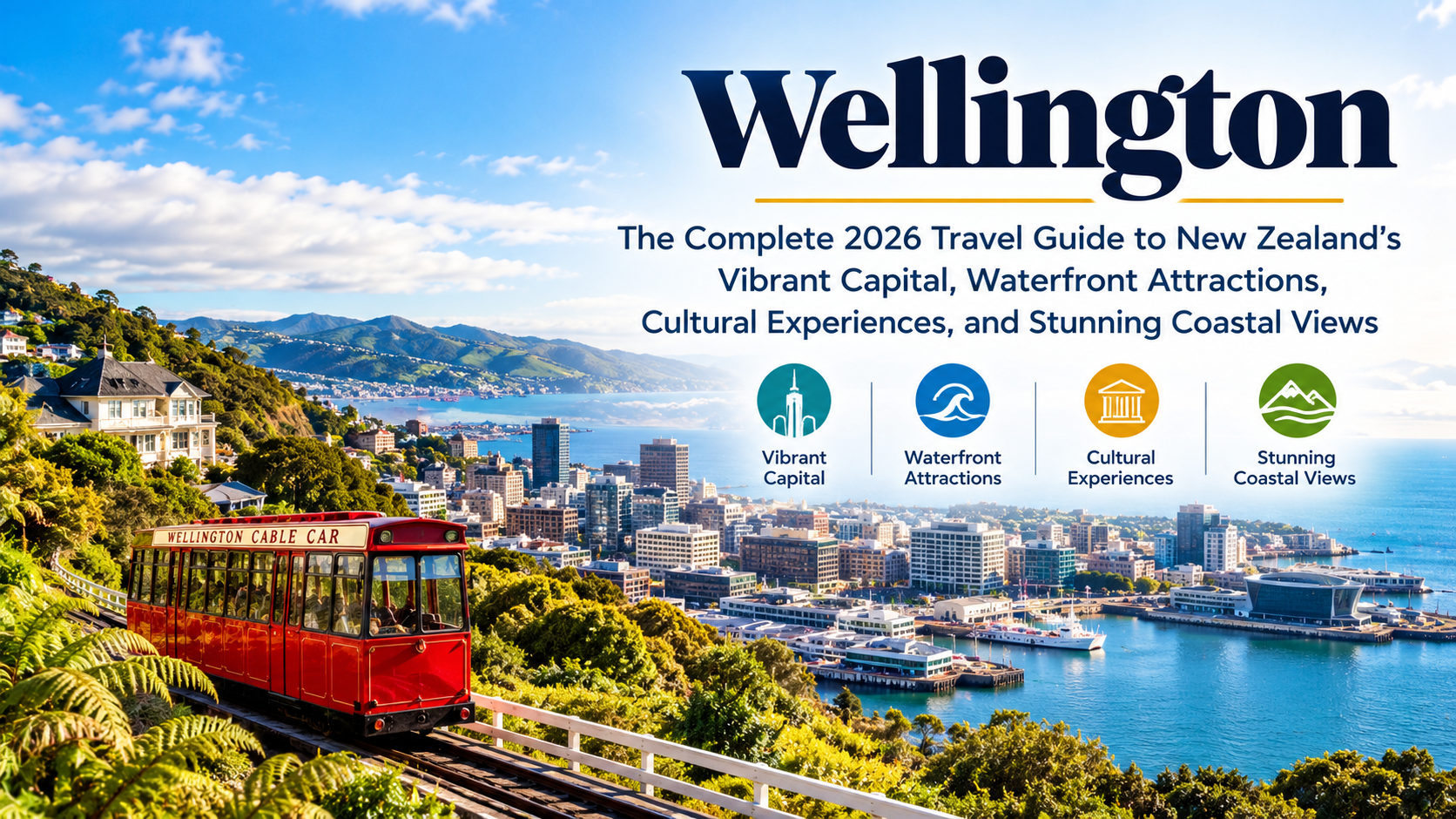
Introduction to New Zealand’s Creative Capital
Wellington, the capital of New Zealand, combines a lively arts scene, dramatic coastal scenery, excellent food, and a compact city centre that is easy to explore on foot. Set between a natural harbour and green hills at the southern end of the North Island, it offers a different experience from larger cities such as Auckland. Visitors can spend the morning exploring a world-class museum, enjoy coffee at an independent café, ride a historic cable car, and finish the day watching the sunset over the Cook Strait.
Often called the country’s cultural and political heart, the city is home to Parliament, national cultural institutions, independent designers, and a thriving film industry. Its famously changeable weather and strong winds can affect outdoor plans, but they also shape the character of the waterfront and surrounding landscape. Whether you are planning a weekend break, a longer New Zealand itinerary, or a stop before travelling to the South Island, understanding the city’s neighbourhoods, transport, attractions, and seasons will help you make the most of your visit.
Where Wellington Is and What Makes It Special
Located at the southern tip of New Zealand’s North Island, the city overlooks Wellington Harbour, with hills rising close to the central business district. Its position near the Cook Strait places it close to the inter-island ferry routes connecting the North and South Islands. The compact layout means many central attractions are within walking distance, while buses, trains, and the cable car make it easier to reach places beyond the waterfront.
What distinguishes the capital is the way urban life and nature meet. Government buildings, galleries, theatres, independent bookshops, and restaurants sit close to walking trails, beaches, and panoramic viewpoints. The city also has a strong coffee culture and a reputation for creative industries, particularly filmmaking. For travellers, this mix means a visit does not have to revolve around one major landmark: much of the appeal comes from connecting smaller experiences across different neighbourhoods.
Te Papa Tongarewa and the City’s Cultural Attractions


The Museum of New Zealand Te Papa Tongarewa is one of the city’s essential stops. Located on the waterfront, it explores the country’s natural environment, Māori heritage, Pacific connections, social history, and contemporary identity through interactive displays and carefully presented collections. It is particularly useful for visitors who want context before travelling elsewhere in New Zealand, because its exhibitions explain how geography, migration, colonisation, and cultural traditions have shaped the nation.
Allow several hours rather than treating the museum as a quick stop. Families can enjoy hands-on exhibits, while adults may prefer the historical and cultural galleries. Admission to the museum’s general collection is typically free, although special exhibitions or experiences may carry a charge. Check the official Te Papa website for current exhibitions, opening hours, and any ticket requirements before visiting.
Beyond the museum, the city offers Parliament Buildings, the historic Old St Paul’s church, City Gallery Wellington when exhibitions are operating, and a variety of theatres and live-music venues. These places offer different perspectives on the capital, from its political institutions to its contemporary creative scene.
Wellington Cable Car and Botanic Garden Views


The Wellington Cable Car is a classic visitor experience, connecting Lambton Quay in the central city with Kelburn on the hillside. The short ride provides a different perspective on the city’s steep terrain and leads to viewpoints overlooking the harbour and surrounding suburbs. At the upper terminal, visitors can explore the Cable Car Museum and continue towards the Wellington Botanic Garden.
The Botanic Garden is a rewarding place to slow down after sightseeing in the central business district. Its landscaped gardens, native plants, seasonal flower displays, and walking paths make it suitable for a gentle stroll or a longer wander. Some routes are steep, so comfortable footwear is helpful, particularly after rain. Travellers with limited time can ride the cable car uphill, visit the garden, and walk downhill towards the city if conditions and mobility allow.
The area is also a good example of how to plan around the weather. If the harbour is windy or rain arrives unexpectedly, the museum and indoor attractions can provide a useful alternative to exposed viewpoints. On a clear day, however, the elevated paths offer some of the most memorable city panoramas.
Zealandia: Discover New Zealand’s Native Wildlife


For travellers who want to experience New Zealand’s natural heritage without leaving the city, Zealandia Te Māra a Tāne is a standout attraction. This fenced ecosanctuary protects a regenerating forest environment where native birds, reptiles, and other wildlife can thrive with reduced pressure from introduced mammalian predators. Visitors may encounter species such as kākā parrots, tūī, kererū, and, with luck and patience, rarer wildlife during guided experiences.
The sanctuary rewards visitors who slow down. Instead of expecting animals to appear immediately, listen for bird calls, watch the branches, and give yourself time to notice movement along the tracks. Daytime visits are suitable for general wildlife watching, while guided twilight or night tours can offer a different perspective on nocturnal species. Check current trail conditions and tour availability before travelling, and wear comfortable shoes for forest paths.
Zealandia also illustrates an important aspect of New Zealand conservation: protecting habitats can help native species recover even near urban areas. It is a particularly good choice for families, nature enthusiasts, and photographers who want something more meaningful than a quick viewpoint stop.
Wētā Workshop and Wellington’s Film Culture


The capital has a strong connection to filmmaking, especially through Wētā Workshop, the creative effects company associated with elaborate props, costumes, creatures, and practical effects for major film productions. Its visitor experiences give travellers a behind-the-scenes look at how artists and craftspeople turn sketches and imaginative concepts into tangible objects for the screen. Film fans familiar with The Lord of the Rings may find the experience particularly engaging, but the craftsmanship is interesting even if you are not a devoted movie enthusiast.
Allow time to check which tour or experience suits your interests, as access to workshop spaces and displays depends on the specific offering. The Wētā Cave is also worth considering for film-themed displays and collectibles. Because these attractions are outside the main waterfront cluster, plan transport rather than assuming every stop is easily walkable from the central business district.
For a broader film-themed day, combine a workshop visit with selected filming locations or a guided tour. This approach provides more context than visiting individual spots without knowing their connection to the films.
Cuba Street, Local Food, and Coffee Culture


Cuba Street is one of the best places to experience the city’s independent spirit. Its cafés, vintage shops, small galleries, restaurants, and lively street atmosphere make it ideal for unhurried exploration. Rather than following a strict sightseeing schedule, visitors can browse local stores, stop for coffee, and sample food from different cuisines. Nearby Te Aro and Courtenay Place offer additional dining options, from casual meals to more polished restaurants.
Coffee is a significant part of the local identity, and independent cafés are easy to find around the central city. For a relaxed morning, choose a café on Cuba Street, explore the surrounding lanes, and then walk towards the waterfront or Te Papa. This creates a practical route that mixes food, shopping, and culture without needing a car.
The city’s food scene also reflects its creative character. Menus change with seasonal ingredients, and visitors can find seafood, international dishes, bakeries, craft chocolate, and vegetarian options. If you have dietary requirements, check menus ahead of time or speak directly with staff. For a more local experience, choose a busy neighbourhood café rather than limiting every meal to restaurants beside major attractions.
Waterfront Walks, Oriental Bay, and Mount Victoria


The waterfront is one of the easiest places to enjoy the outdoors without committing to a long hike. Walking paths, public art, seating areas, and harbour views make it suitable for a morning stroll or a sunset outing. You can start near Te Papa and continue along the promenade, pausing to watch boats and enjoy the open views. On calmer days, the waterfront is also a pleasant place for cycling or simply sitting with a takeaway coffee.
Oriental Bay offers a beachside atmosphere close to the city centre. In warmer weather, visitors can enjoy the sand, take photographs, or relax beside the water. Swimming conditions vary, so pay attention to local guidance and water quality notices rather than assuming the harbour is always suitable for a dip.
For a wider panorama, head to Mount Victoria Lookout. The elevated viewpoint gives a sweeping view across the city, harbour, and surrounding hills. It is especially attractive in clear weather, although wind can make the exposed summit uncomfortable. Bring a warm layer, check conditions before setting out, and consider using public transport or a taxi if you do not want to tackle the uphill walk.
Best Time to Visit and Seasonal Travel Tips
The city can be visited throughout the year because museums, cafés, cultural venues, and indoor attractions provide alternatives when the weather turns. Summer generally offers longer daylight hours and more opportunities for coastal walks, beach visits, and outdoor dining. Autumn can be comfortable for exploring neighbourhoods and viewpoints, while winter is well suited to museums, galleries, restaurants, and film-related experiences. Spring brings changing conditions and fresh growth in gardens, although wind and rain can still disrupt outdoor plans.
| Season | What to expect | Best experiences |
|---|---|---|
| Summer (December–February) | Longer days, generally milder weather, busy visitor areas | Waterfront walks, beaches, harbour activities |
| Autumn (March–May) | Cooler temperatures and changing foliage | Museums, cafés, gardens, scenic viewpoints |
| Winter (June–August) | Colder, wetter, potentially windy days | Te Papa, galleries, restaurants, indoor attractions |
| Spring (September–November) | Changeable conditions and blooming gardens | Cable car, gardens, wildlife watching, walking |
The key to comfortable travel is flexibility. The city is known for strong winds, so carry a windproof jacket even when the forecast looks promising. Keep one or two indoor attractions in reserve, and avoid scheduling every outdoor activity tightly. If a coastal walk becomes unpleasant, switch to a museum visit or a long lunch instead of trying to push through poor conditions.
Getting to Wellington and Getting Around
The city is accessible by air, road, rail, and ferry. Wellington International Airport handles domestic services and selected international routes, while the Northern Explorer train connects the capital with Auckland through a scenic journey across the North Island. Drivers can reach the city via State Highways 1 and 2, although travel times depend on traffic and road conditions. For journeys to the South Island, Interislander and Bluebridge operate Cook Strait ferry services between the capital and Picton. The crossing takes around three and a half hours in typical conditions, but sailing times and disruptions can vary.
Once you arrive, walking is one of the most convenient ways to explore the central city. Buses and trains serve the wider region, while the Airport Express provides a direct public transport connection between the airport and the city centre. A Snapper card can make local bus journeys easier, and contactless payment options may also be available depending on the service. Check the current Metlink journey planner for routes, fares, and service changes before travelling.
For most first-time visitors, two or three days is a useful amount of time. One day can cover the waterfront, Te Papa, Cuba Street, and dinner in the central city. A second day can include the cable car, Botanic Garden, and Zealandia, while a third gives you time for Wētā Workshop, Mount Victoria, or a more relaxed coastal excursion.
Where to Stay and How to Plan Your Budget
The central business district and Te Aro are practical bases for visitors who want restaurants, museums, shopping, and public transport nearby. Staying around the waterfront makes it easy to reach Te Papa and harbour walks on foot. Kelburn is appealing for its hillside setting and garden access, while Oriental Bay suits travellers who prefer a coastal atmosphere. Compare accommodation by transport access as well as price, particularly if you plan to visit attractions outside the central area.
Your budget will depend on the season, accommodation category, dining choices, and paid activities. You can keep costs manageable by walking between central attractions, using public transport, and balancing paid tours with free outdoor experiences. However, do not assume every major attraction is free: Te Papa currently charges international visitors aged 16 and over NZ$35 for general museum entry, while New Zealanders and people living in New Zealand continue to receive free entry. Paid exhibitions and experiences may cost extra, so check the museum’s official visitor information before your visit.
A useful planning principle is to group nearby sights together. Visit Te Papa and the waterfront on the same day, then combine the cable car with the Botanic Garden. Save Zealandia or Wētā Workshop for a separate half-day, allowing enough time for transport and the experience itself. This reduces unnecessary travel and leaves room for spontaneous café stops or changes in the weather.
Frequently Asked Questions
Is Wellington worth visiting?
Yes. The city combines national museums, Māori and Pacific cultural experiences, a respected food and coffee scene, film attractions, and coastal scenery within a relatively compact area. It is especially rewarding for travellers who enjoy a balance of culture and nature rather than a holiday focused only on beaches or major shopping districts.
How many days should you spend in Wellington?
Two to three days is a sensible starting point for a first visit. Two days allow time for the main cultural attractions, waterfront, cable car, and a neighbourhood food experience. Three days provide more room for Zealandia, Wētā Workshop, Mount Victoria, or a slower pace. Travellers interested in regional excursions may want to stay longer.
What is Wellington best known for?
The capital is known for New Zealand’s Parliament, Te Papa Tongarewa, its creative film industry, independent cafés, and scenic harbour setting. Its compact centre, strong arts culture, and proximity to native forest and coastal walks make it distinctive among New Zealand cities.
Is Wellington easy to explore without a car?
Yes. Many central attractions are within walking distance, and buses and trains connect the city with surrounding suburbs. The cable car is useful for reaching Kelburn, while public transport and taxis can help with destinations farther from the centre. A car becomes more useful if you plan to explore remote parts of the wider region.
What should you pack for a visit?
Pack comfortable walking shoes, layers, and a windproof jacket in every season. A waterproof outer layer is useful because conditions can change quickly. In summer, bring sun protection for exposed coastal walks; in winter, add warmer clothing for viewpoints and outdoor activities.
Is Wellington suitable for families?
Yes. Te Papa offers engaging exhibitions, the cable car provides an enjoyable ride with city views, and Zealandia gives families an opportunity to learn about native wildlife. Beaches, waterfront paths, and gardens provide additional outdoor activities. Check age recommendations, accessibility details, and tour availability when planning activities with young children.
Conclusion: Make the Most of New Zealand’s Capital
Wellington rewards visitors who combine its major attractions with time to explore its smaller details. A visit to Te Papa can provide cultural and historical context, the cable car and Mount Victoria offer memorable views, and Zealandia reveals a surprising world of native wildlife close to the city. Meanwhile, Cuba Street, independent cafés, and the waterfront bring everyday local life into the experience.
The best way to plan a trip is to balance indoor attractions with outdoor exploration and leave space for the weather to shape your day. With two or three days, comfortable walking shoes, and a flexible itinerary, you can experience the capital’s creative energy, natural beauty, and distinctive character without rushing from one stop to the next. The lasting appeal of Wellington lies in that combination: a compact city with a strong cultural identity, dramatic scenery, and plenty of opportunities to discover something unexpected.