


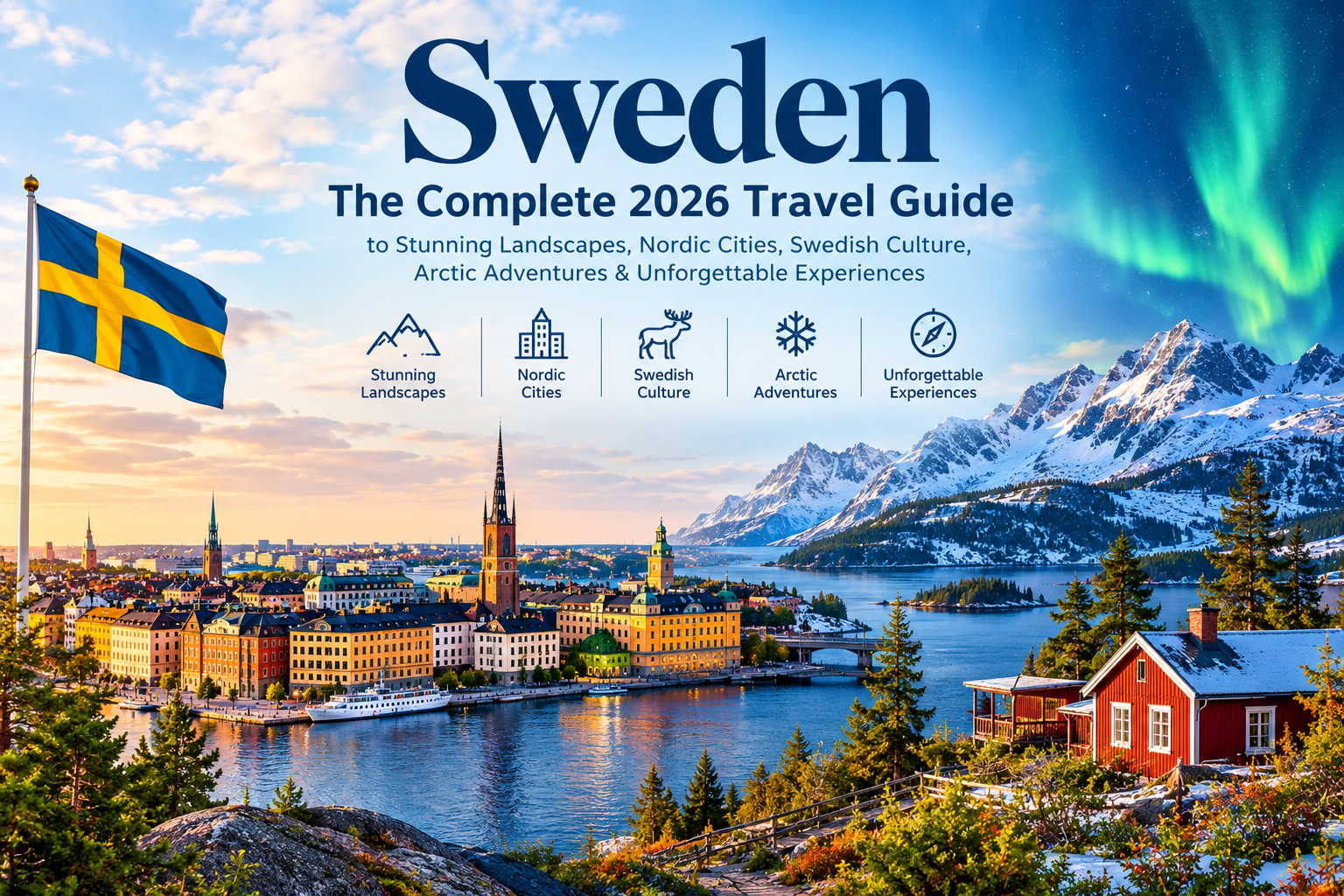
Sweden is a destination where modern Scandinavian design meets unspoiled wilderness, historic towns, and a relaxed way of life. From Stockholm’s waterfront streets and colorful old buildings to the forests of central Sweden and the snowy landscapes of the Arctic north, the country offers remarkable variety for travelers. You can explore medieval landmarks in the morning, enjoy a traditional Swedish fika in the afternoon, and spend the evening beside a peaceful lake or beneath the Northern Lights.
Whether you enjoy city breaks, outdoor adventures, wildlife, food, or cultural experiences, Sweden offers opportunities throughout the year. Summer brings long daylight hours, green forests, island-hopping, and outdoor festivals. Winter transforms the north into a snowy landscape of dog sledding, reindeer encounters, and aurora viewing.
This guide explores the best places to visit, memorable experiences, Swedish traditions, seasonal travel, food, transportation, and practical planning tips to help you build an unforgettable itinerary.
Discover Stockholm, Sweden’s Beautiful Capital


Stockholm is an excellent starting point for discovering the country’s culture and history. Built across islands connected by bridges, the capital combines waterfront scenery with royal landmarks, museums, shopping streets, and contemporary Scandinavian architecture. Gamla Stan, the historic Old Town, is particularly memorable for its narrow cobblestone lanes, colorful façades, cafés, and the Royal Palace.
Visitors can explore the Vasa Museum, home to a remarkably preserved seventeenth-century warship, or visit Skansen, an open-air museum showcasing traditional Swedish buildings and cultural heritage. The waterfront provides opportunities for boat trips, while neighborhoods such as Södermalm offer independent boutiques, restaurants, and creative spaces.
Allow at least two full days to experience Stockholm without rushing. Walking is enjoyable in the central districts, and public transport makes it easy to reach attractions across the city. In summer, consider a boat excursion into the surrounding archipelago, where forested islands and quiet coves offer a refreshing contrast to the urban center.
Explore Swedish Lapland and Experience the Northern Lights


Swedish Lapland offers a very different experience from the southern cities. Located in the far north, this vast region features Arctic wilderness, frozen lakes, mountain scenery, Sami cultural traditions, and excellent opportunities to observe the aurora borealis. Abisko National Park is a popular destination for travelers hoping to see the Northern Lights because its location and local weather patterns can sometimes provide favorable viewing conditions.
The Northern Lights occur when charged particles from the Sun interact with gases in Earth’s atmosphere, creating luminous displays across dark skies. The viewing season generally extends from autumn through early spring, although sightings depend on cloud cover, darkness, and solar activity. Staying several nights improves your chances, but no destination or tour can guarantee an appearance.
Winter activities include dog sledding, snowshoeing, cross-country skiing, and guided wildlife excursions. Kiruna provides a convenient base for Arctic experiences, while the famous Icehotel in Jukkasjärvi offers rooms and artistic structures created from ice and snow during the winter season. Pack insulated clothing, thermal layers, gloves, and suitable boots, as temperatures can fall well below freezing.
Visit Gothenburg for Coastal Charm and Swedish Food


Gothenburg, on the west coast, is known for its maritime heritage, relaxed atmosphere, green spaces, and excellent food scene. The historic Haga district features traditional buildings, independent shops, and cafés where visitors can enjoy coffee and oversized cinnamon buns. The city also offers museums, canals, waterfront walks, and Liseberg amusement park, making it appealing to couples and families alike.
Food is a major reason to visit. Gothenburg’s coastal location makes seafood especially prominent, with menus featuring prawns, fish soup, oysters, and seasonal shellfish. Feskekörka, a historic fish market building, is associated with the city’s seafood culture, although visitors should check current opening arrangements before planning a visit.
For a quieter escape, take a ferry into the Gothenburg archipelago. The islands offer rocky shores, small villages, walking paths, and opportunities to enjoy the sea away from busy streets. The combination of urban attractions and easy access to the coast makes Gothenburg an excellent addition to a longer Scandinavian itinerary.
Discover Malmö and Southern Sweden’s Scenic Towns


Malmö is a multicultural city in southern Sweden, connected to Copenhagen in Denmark by the Öresund Bridge. Its contemporary architecture, waterfront neighborhoods, parks, and diverse food scene create a modern urban experience. Turning Torso, the twisting skyscraper designed by Santiago Calatrava, is one of Malmö’s most recognizable landmarks.
The historic center offers a more traditional atmosphere, especially around Lilla Torg, where cafés and restaurants occupy charming old buildings. Malmö is also a useful base for exploring the southern region of Skåne, known for rolling farmland, beaches, castles, and small coastal communities. Travelers with extra time can visit towns such as Ystad, which is known for its historic streets and seaside setting.
Southern Sweden is especially rewarding during warmer months, when cycling, coastal walks, and outdoor dining become more appealing. Compared with the Arctic north, the region has a milder climate and a different landscape, making it suitable for travelers who prefer relaxed countryside exploration over snowy wilderness.
Experience Swedish Nature, Lakes, Forests, and Archipelagos


Nature is central to the Swedish experience. Vast forests, thousands of lakes, mountain ranges, and island chains provide opportunities for hiking, kayaking, fishing, cycling, and camping. The Stockholm archipelago alone contains thousands of islands and islets, ranging from inhabited communities with regular ferry services to quiet rocky outcrops surrounded by open water.
Outdoor enthusiasts can explore national parks such as Sarek in the north, known for rugged mountain wilderness, or Fulufjället National Park, which features dramatic scenery and the waterfall Njupeskär. These areas vary significantly in difficulty and accessibility. Some trails suit casual walkers, while remote mountain routes require navigation skills, suitable equipment, and careful weather planning.
Sweden’s right of public access, known as allemansrätten, allows people to enjoy much of the countryside responsibly. It does not mean everything is permitted everywhere: visitors must respect private homes, protected areas, wildlife, and local restrictions. A useful principle is to leave nature as you found it, avoid damaging vegetation, and take all rubbish away.
Discover Swedish Culture, Traditions, and Everyday Life
Swedish culture blends historical traditions with contemporary design, social equality, and an appreciation for outdoor living. One of the most familiar customs is fika, a coffee break often accompanied by a cinnamon bun, pastry, or sandwich. More than a quick drink, fika provides time to slow down, connect with friends, and enjoy a moment away from work or sightseeing.
Midsummer is another important celebration, particularly in rural communities. Held around the summer solstice, it often involves flower wreaths, maypole dancing, traditional songs, seasonal food, and gatherings outdoors. December brings Lucia celebrations, when candlelit processions and traditional songs mark a distinctive part of the winter season.
Travelers may also notice the influence of Swedish design in furniture, textiles, architecture, and everyday objects. Stockholm’s museums and design shops offer insight into this creative tradition, while historic towns reveal earlier influences through wooden houses, churches, and preserved town centers. Respecting local customs and learning a few basic Swedish expressions can make interactions more rewarding, although English is widely spoken in many tourist settings.
Taste Traditional Swedish Food and Local Specialties


Swedish cuisine reflects the country’s forests, coastline, agricultural traditions, and seasonal ingredients. Swedish meatballs are widely recognized and are often served with creamy gravy, mashed potatoes, lingonberry sauce, and pickled cucumber. Other popular dishes include gravlax, cured salmon traditionally accompanied by dill and mustard sauce, and toast Skagen, a seafood toast commonly prepared with prawns.
Baked goods are equally important. Cinnamon buns, known as kanelbullar, are a classic fika companion, while cardamom buns offer a fragrant alternative. In summer, strawberries and fresh potatoes feature prominently in seasonal meals. Regional specialties vary, and northern cuisine may include reindeer, game, and ingredients gathered from forests and mountains.
Food prices can be relatively high in major cities, so travelers working with a budget can mix restaurant meals with supermarkets, bakeries, and casual lunch cafés. Look for daily lunch menus, often called dagens lunch, which can offer better value than ordering dinner à la carte. Exploring local food markets and seasonal menus is also a useful way to understand Swedish culinary traditions.
Best Time to Visit Sweden
The best time to visit depends on your priorities. Summer is ideal for island trips, hiking, lakeside stays, and long daylight hours. Winter suits travelers interested in snow activities and Northern Lights viewing, especially in Lapland. Spring and autumn can provide quieter city visits and changing landscapes, although weather and daylight vary substantially between the south and north.
The table below summarizes typical seasonal highlights to help you plan. Conditions vary each year, so check regional forecasts and opening schedules before booking activities.
| Season | Best experiences | Important considerations |
|---|---|---|
| Winter: December–February | Northern Lights, skiing, snow activities, Icehotel | Cold temperatures and limited daylight in the north |
| Spring: March–May | City sightseeing, early hiking, seasonal landscapes | Variable weather and lingering snow in northern areas |
| Summer: June–August | Archipelagos, hiking, festivals, lakes, long days | Higher demand at popular destinations |
| Autumn: September–November | Forest colors, quieter cities, early aurora trips | Shortening daylight and increasingly cold weather |
Practical Travel Tips for Visiting Sweden
Sweden has an efficient transport network, and trains connect major cities such as Stockholm, Gothenburg, and Malmö. Regional buses and local public transport make many towns accessible without a rental car. For remote areas, particularly in Lapland or rural national parks, a car or organized excursion may provide greater flexibility. Compare travel time and cost before choosing between rail, air, and road transport.
The country uses the Swedish krona (SEK), not the euro. Card payments are widely accepted, and some businesses operate with limited cash handling, so carrying a payment card is useful. Costs for hotels, dining, and activities can add up, especially in summer, making early accommodation reservations and advance transport bookings worthwhile.
Pack according to the region and season rather than assuming the entire country shares the same weather. Southern cities can experience relatively mild summers, while northern areas remain cooler and have long winter conditions. Waterproof layers and comfortable walking shoes are useful year-round. For outdoor adventures, check trail conditions, daylight, and local safety advice before setting off.
Frequently Asked Questions About Sweden
What is Sweden best known for?
Sweden is known for its Scandinavian design, beautiful forests and lakes, Stockholm’s island setting, the Northern Lights in the far north, and traditions such as fika and Midsummer. It also has a strong reputation for innovation, sustainable urban planning, outdoor recreation, and a high standard of living. Visitors can experience these qualities through its cities, food, museums, and natural landscapes.
How many days are enough to visit Sweden?
Five to seven days can provide a useful introduction to Stockholm and one additional destination, such as Gothenburg or Malmö. A trip of ten to fourteen days allows more time for regional travel, outdoor activities, or a journey north to Swedish Lapland. Because distances are considerable, trying to see the entire country in a short visit can leave little time to enjoy individual places.
Is Sweden expensive for tourists?
Sweden can be expensive, particularly for hotels, restaurant meals, and organized excursions in popular destinations. Travelers can manage costs by using public transport, booking accommodation early, choosing casual lunch menus, and preparing some meals themselves. Prices vary by city and season, so comparing the full cost of transport and accommodation is more useful than considering individual prices alone.
What is the best month to see the Northern Lights in Sweden?
The Northern Lights are generally visible in northern Sweden during the darker months, especially from autumn through early spring. September and October can offer aurora opportunities before the deepest winter, while midwinter brings long nights but colder conditions. Visibility depends on solar activity, cloud cover, and darkness, so spending several nights in a suitable location improves your chances without guaranteeing a sighting.
Is Sweden suitable for family holidays?
Yes, Sweden offers family-friendly museums, parks, outdoor activities, public transport, and attractions designed for different ages. Stockholm has museums and boat trips, Gothenburg offers Liseberg amusement park, and rural areas provide opportunities for swimming, hiking, and lakeside stays. Families should check seasonal opening hours and travel distances before building an itinerary.
Do tourists need to speak Swedish?
No. English is widely spoken, particularly in cities, hotels, restaurants, and popular tourist destinations. Learning basic Swedish words such as hej for hello and tack for thank you is still appreciated. In remote areas, understanding local signs and carrying offline maps can be helpful, especially when traveling beyond the main tourist routes.
Conclusion: Plan an Unforgettable Journey Through Sweden
From Stockholm’s historic waterfront and Gothenburg’s seafood culture to the beaches of Skåne and the Arctic wilderness of Lapland, Sweden offers a varied mix of urban discovery, cultural traditions, and outdoor adventure. Its appeal lies in the contrast between lively cities and peaceful natural spaces, allowing travelers to shape a trip around their interests and the season.
A successful itinerary should balance famous attractions with time for local experiences. Enjoy a traditional fika, explore a forest trail, take a ferry through an archipelago, or spend a few nights in the north beneath dark Arctic skies. Plan transport carefully, respect nature, and allow flexibility for changing weather and seasonal conditions.
The final takeaway: Sweden is best experienced at a pace that leaves room for discovery. Whether you come for Scandinavian design, pristine landscapes, traditional food, or Northern Lights, thoughtful planning can turn a simple visit into a memorable Nordic adventure.