


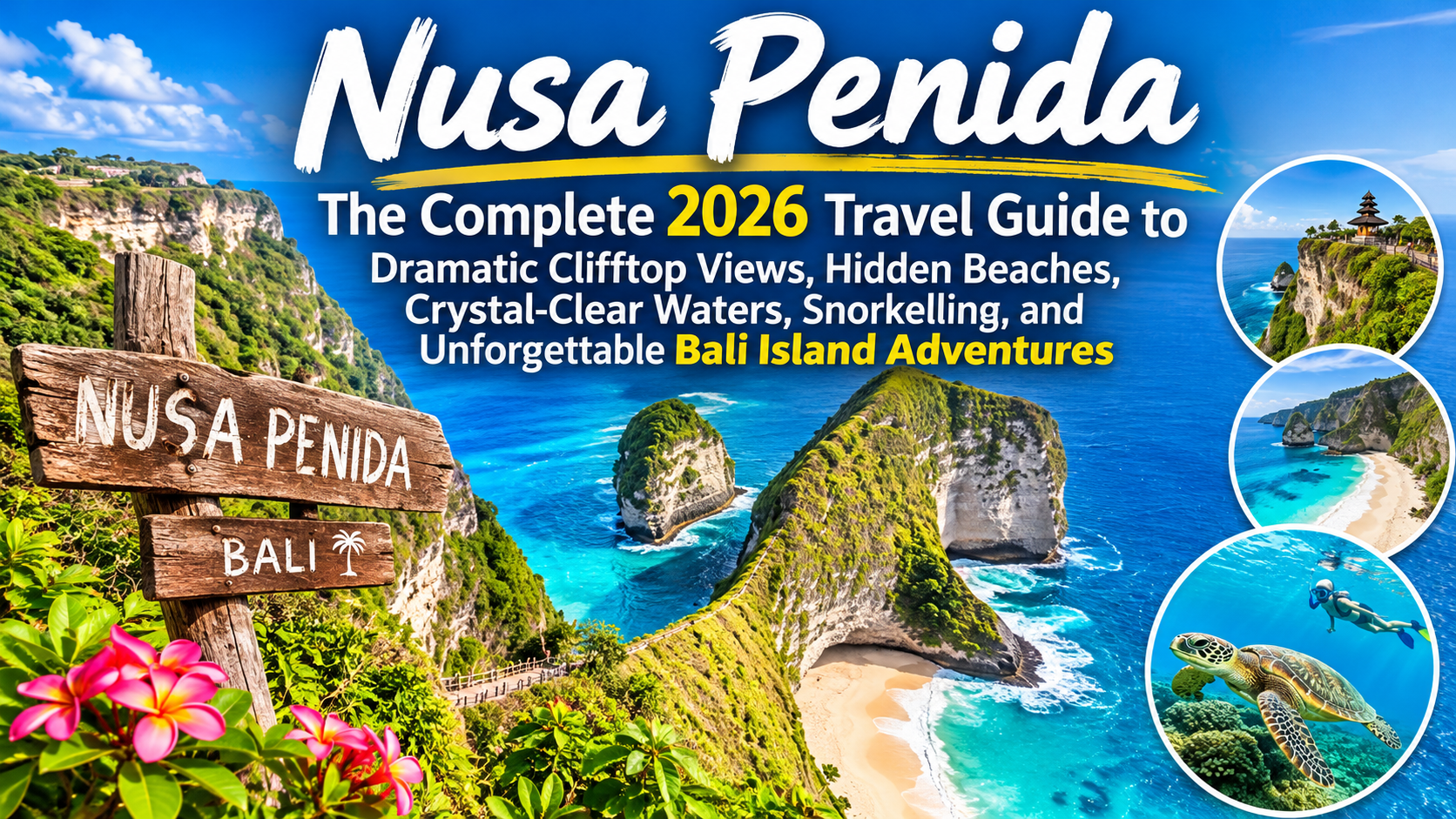
Just southeast of Bali lies an island of towering limestone cliffs, secluded beaches, turquoise bays, and rugged coastal landscapes. Nusa Penida has become one of Indonesia’s most photographed destinations, attracting travellers who want to experience a wilder, more dramatic side of the Bali region. Its scenery ranges from spectacular ocean viewpoints to quiet villages and traditional temples, creating a destination that rewards visitors who look beyond the usual sightseeing stops.
Despite its growing popularity, the island is not a conventional beach-resort destination. Roads can be narrow, journeys between attractions often take longer than expected, and access to some beaches involves steep staircases. Understanding its geography, transport options, seasonal conditions, and safety considerations helps visitors plan a rewarding trip without rushing between viewpoints.
Where Is Nusa Penida and What Makes It Special?
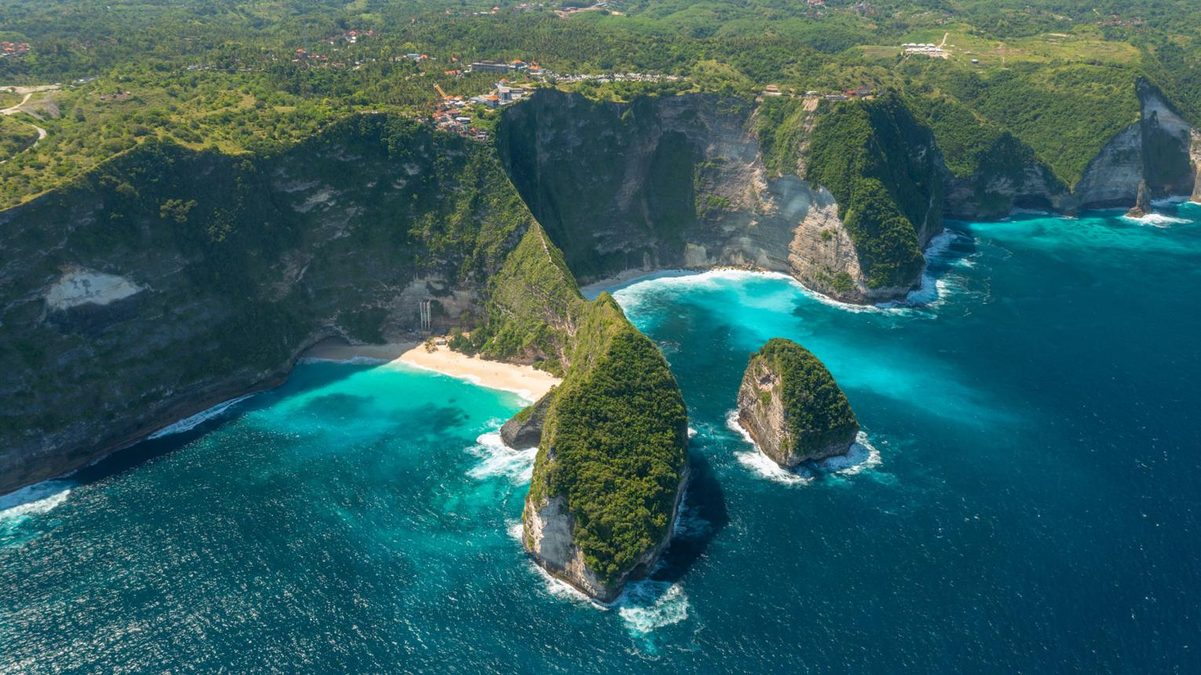
Nusa Penida is an Indonesian island located southeast of mainland Bali, across the Badung Strait. It belongs to the Nusa Islands group, alongside the smaller islands of Nusa Lembongan and Nusa Ceningan. Although geographically close to Bali, it has a noticeably different atmosphere, with a rugged interior, dramatic coastal formations, traditional settlements, and stretches of relatively undeveloped shoreline.
The island’s appeal comes from its contrast between spectacular natural scenery and a more challenging travel environment. Famous locations such as Kelingking Beach and Diamond Beach attract large numbers of visitors, while quieter inland roads lead through villages, temples, and agricultural landscapes. It is particularly appealing to photographers, adventure travellers, couples, and visitors interested in marine activities.
Best Beaches and Coastal Attractions
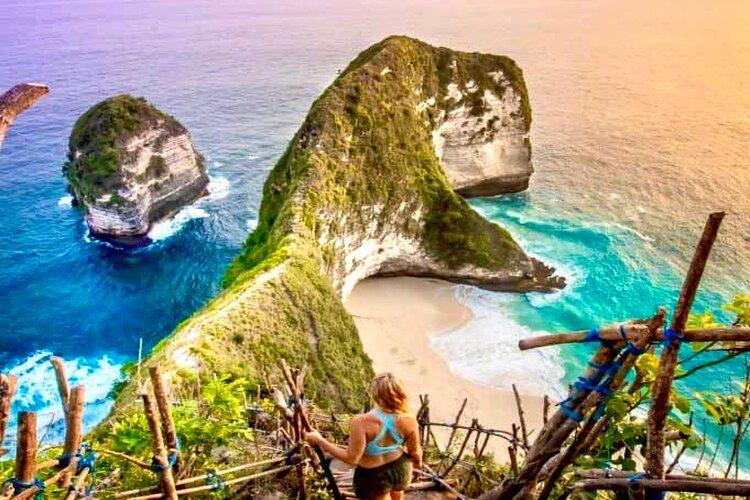
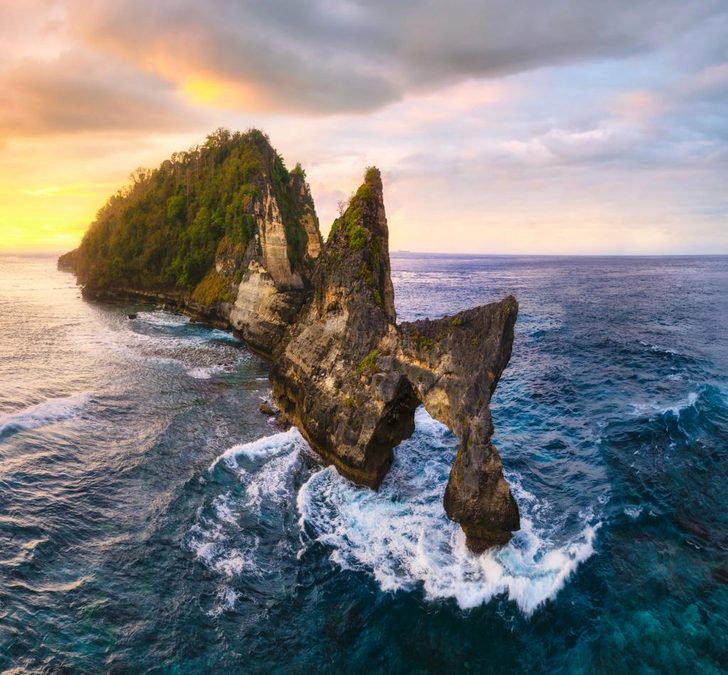
The most recognisable landmark is Kelingking Beach, where a dramatic headland resembles the shape of a dinosaur when viewed from above. Its elevated viewpoint overlooks a curved beach surrounded by steep cliffs and brilliant blue water. The scenery is extraordinary, but descending to the beach is physically demanding and should only be attempted by visitors who are comfortable with steep, uneven terrain.
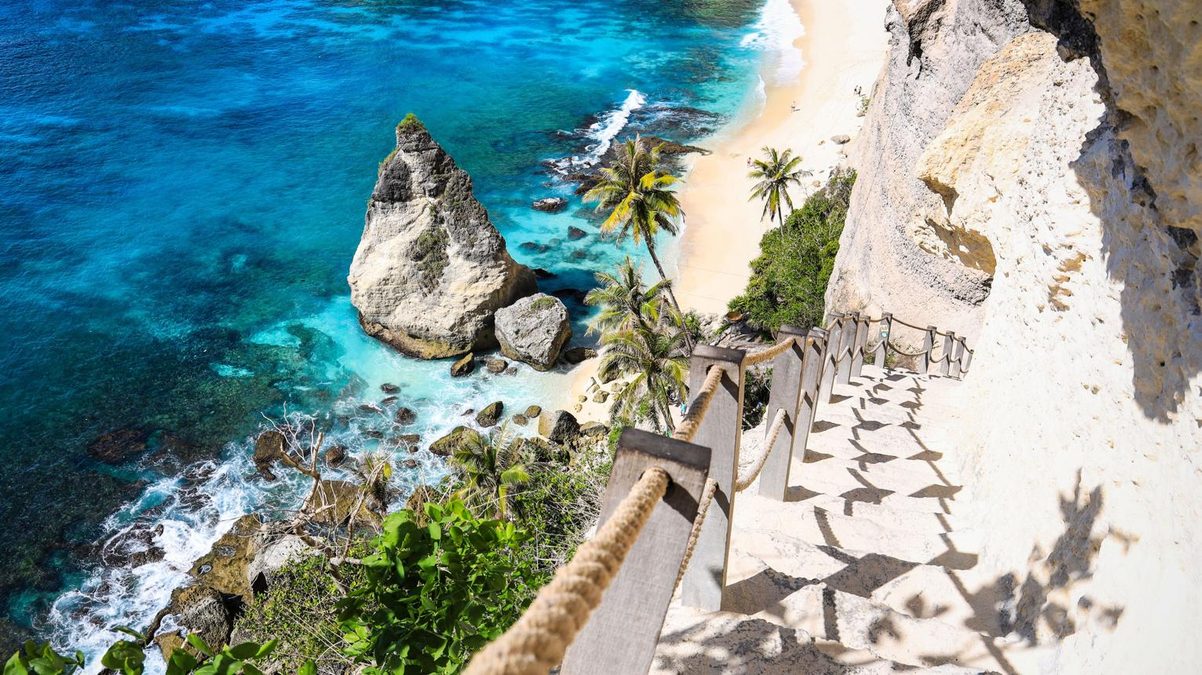
On the eastern coast, Diamond Beach is famous for white sand, turquoise water, and pointed limestone formations rising from the sea. A staircase carved into the cliff provides access, although the descent requires care. Nearby Atuh Beach offers a sheltered-looking bay framed by rock formations, while Crystal Bay on the western side is popular for swimming when sea conditions are suitable and for watching the sunset.
These beaches are not equally accessible or safe for every visitor. Strong currents, powerful waves, steep steps, and limited facilities can make certain locations unsuitable for casual swimming. Follow warning signs, respect local restrictions, and never assume calm-looking water is safe.
Snorkelling, Diving, and Marine Wildlife
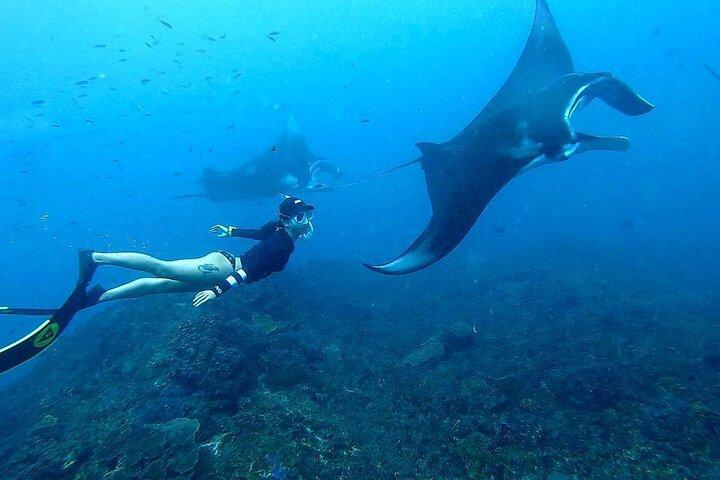

The waters surrounding the island are among the region’s major attractions for underwater enthusiasts. Snorkelling trips commonly visit areas such as Manta Bay and Gamat Bay, where visitors may encounter colourful reef fish, coral formations, and, under suitable conditions, manta rays. Sightings are never guaranteed because marine animals move freely through their natural habitats.
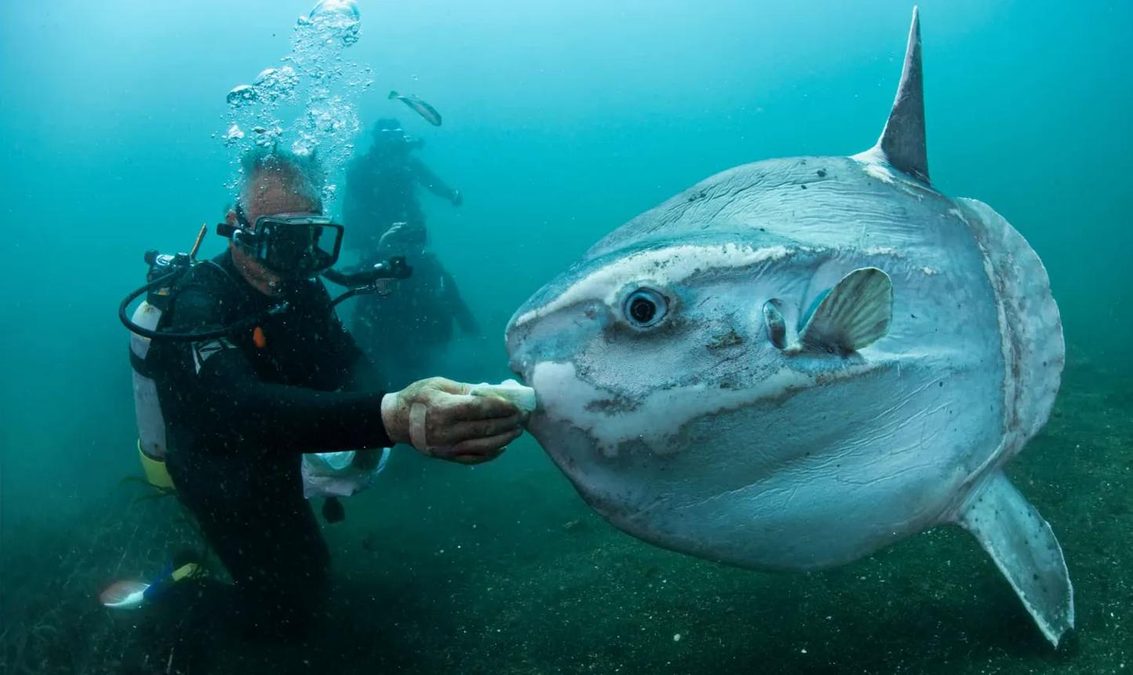
Scuba divers are drawn to sites such as Crystal Bay, Manta Point, and SD Point. These locations offer opportunities to explore reefs and observe larger marine species. The area is also known for seasonal sightings of the ocean sunfish, or Mola mola, although encounters depend on water conditions, depth, and time of year. Some dive sites experience strong currents and changing conditions, making them unsuitable for inexperienced divers.
Choose a reputable operator that provides appropriate safety equipment, qualified guides, and clear information about conditions. Avoid touching coral, chasing marine animals, or booking excursions that encourage unsafe wildlife interactions. Responsible operators help protect the marine ecosystem while making the experience safer for visitors.
Temples, Villages, and Local Island Culture


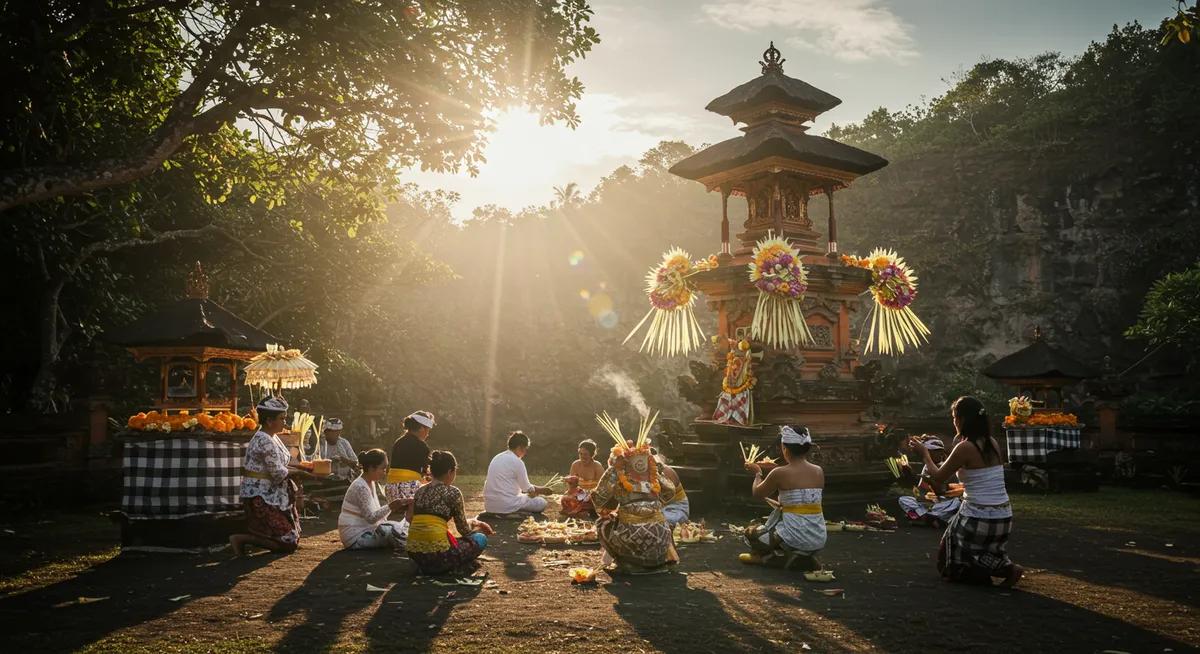
Beyond its beaches, the island has a strong cultural identity shaped by Balinese Hindu traditions. Pura Goa Giri Putri is one of its most distinctive religious sites. Located inside a large limestone cave, the temple is reached through a narrow entrance before opening into a surprisingly spacious interior used for worship and ceremonies. Visitors should dress respectfully and follow local guidance when entering sacred spaces.
Pura Paluang, sometimes called the Car Temple because of its unusual stone carvings resembling vehicles, is another interesting stop. Traditional villages provide a glimpse of everyday life, from family compounds and small shops to agricultural activity and religious offerings placed outside homes.
Tourism has created new economic opportunities, but local customs remain important. Dress modestly when visiting temples, avoid interrupting ceremonies, and ask permission before photographing people. A respectful visit offers a more meaningful understanding of the island than simply moving between famous viewpoints.
Best Viewpoints, Waterfalls, and Natural Landscapes
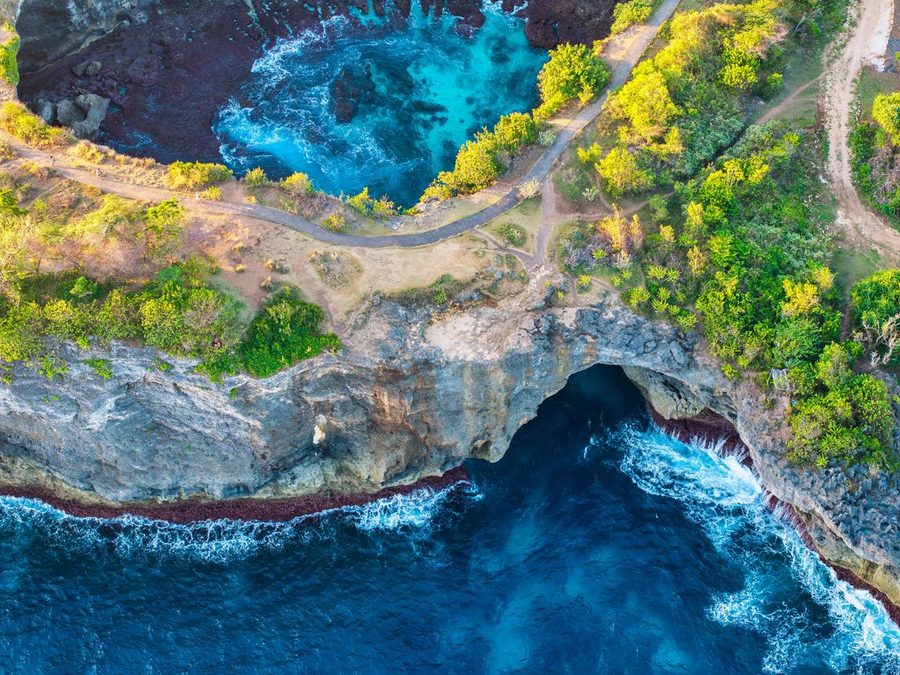

Some of the island’s most memorable scenery is found away from its famous beaches. Broken Beach (Pasih Uug) is a natural coastal formation featuring a circular cove surrounded by cliffs, with a large rock arch allowing seawater to flow into the enclosed area. It is an excellent photography stop, particularly when viewed from the surrounding clifftop paths.
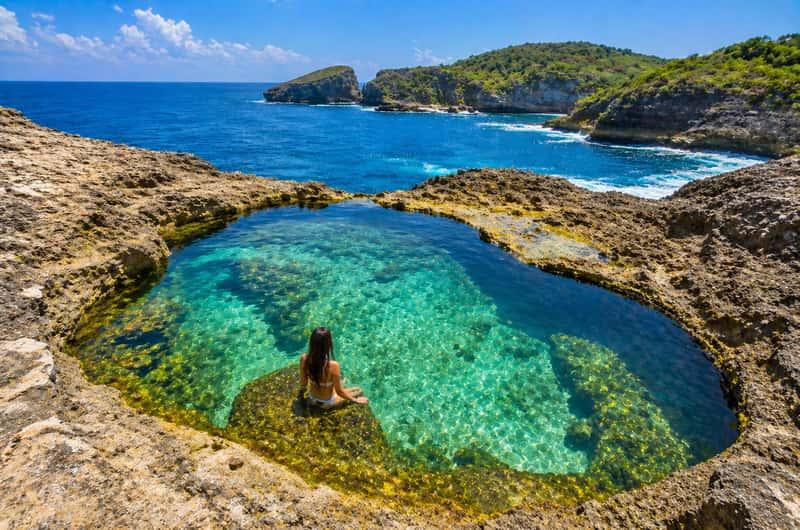
Nearby, Angel’s Billabong is a natural rock formation where seawater collects in a shallow pool. Although it can resemble an infinity pool, swimming is dangerous when waves are high because powerful surges can sweep across the rocks. Always observe barriers and local advice rather than entering the water for photographs. Inland, Teletubbies Hill offers rolling green landscapes that look especially attractive after the rainy season, while Peguyangan Waterfall is known for its striking blue staircase descending along a steep cliff towards the ocean.
Getting to Nusa Penida and Getting Around
Most visitors reach the island by fast boat from Sanur Harbour in Bali. Services also operate from other departure points depending on the operator and season. The crossing usually takes around 30–45 minutes from Sanur, although sea conditions, boat schedules, and harbour arrangements can affect journey times. Booking ahead during busy holiday periods is sensible, and travellers should confirm baggage allowances and departure details directly with their operator.
Once on the island, transport requires some planning. Scooter rentals are common, but roads can be steep, narrow, uneven, and damaged in places. Travellers without suitable riding experience may find a private car with a local driver more comfortable and practical. Distances can look short on a map but take much longer because of road conditions, traffic, and access routes to attractions.
Best Time to Visit and How Long to Stay
The dry season, generally from April to October, is often considered the most convenient period for sightseeing, beach visits, and boat excursions. Conditions are usually more favourable for outdoor activities, although visibility, waves, and currents still vary. July and August can be particularly busy, so early starts help visitors reach popular viewpoints before the largest tour groups arrive.
The rainy season, usually from November to March, brings greener scenery but can also mean slippery roads, heavy showers, and rougher sea conditions. A day trip is possible, but it can feel rushed because the island’s attractions are spread across different areas. Staying for two or three days gives visitors more time to explore the west, east, and interior without spending the entire holiday in a vehicle.
| Travel plan | Suggested duration | Best for |
|---|---|---|
| Day trip | 1 day | A few major viewpoints |
| Short stay | 2 days | West and east coast highlights |
| Relaxed visit | 3–4 days | Beaches, temples, nature, and snorkelling |
| Diving holiday | 4–5 days or more | Multiple guided underwater excursions |
Where to Stay, What to Eat, and Travel Costs
Accommodation ranges from simple guesthouses and homestays to boutique hotels and private villas. Areas around Toyapakeh, Sampalan, and Crystal Bay offer different advantages depending on transport access, restaurants, and preferred activities. Staying near the main harbour can make arrival and departure easier, while a property closer to the coast may provide a more peaceful setting.
Local food is another worthwhile part of the experience. Visitors can enjoy Indonesian favourites such as nasi goreng, mie goreng, satay, and fresh seafood, alongside Balinese dishes and international restaurant options. Prices vary by location and accommodation style, so it is helpful to budget separately for boat transfers, private transport, meals, entrance or parking fees, and guided excursions. Carry some cash because smaller businesses may not accept cards reliably.
Responsible Tourism and Essential Safety Advice
The island’s natural beauty depends on healthy coastlines, coral reefs, and marine habitats. Visitors can help protect these environments by avoiding single-use plastics, using refillable bottles, choosing responsible snorkelling and diving operators, and never standing on or collecting coral. Respecting local rules at beaches and religious sites also helps ensure tourism benefits residents without damaging cultural traditions.
Safety deserves particular attention because some attractions involve steep paths, exposed cliffs, and unpredictable ocean conditions. Wear shoes with good grip, carry drinking water, protect yourself from the sun, and avoid standing close to unstable cliff edges for photographs. If you are not confident riding a scooter, hiring a local driver is a safer solution. For water activities, follow guide instructions and avoid entering the sea when conditions are unsuitable.
Frequently Asked Questions About Nusa Penida
Is Nusa Penida worth visiting?
Yes. The island offers dramatic coastal scenery, beautiful beaches, marine wildlife, traditional temples, and memorable viewpoints. It is particularly worthwhile for travellers who enjoy nature and outdoor exploration, although its roads and beach access can be more challenging than those in many Bali resort areas.
How many days are enough to explore Nusa Penida?
Two to three days is a comfortable timeframe for seeing several major attractions. One day can cover a small selection of popular viewpoints, but a longer stay allows time for eastern and western coastal areas, cultural sites, and guided marine activities without excessive rushing.
Can you visit Nusa Penida on a day trip from Bali?
Yes. Fast boats connect Sanur with the island, making day trips possible. However, travel time between attractions can be considerable, so it is best to focus on a limited number of locations rather than attempting to cover the entire island in one day.
Is Nusa Penida safe for swimming?
Swimming safety depends on the beach, tides, waves, and currents. Some locations have strong surf and dangerous water conditions, even when the sea looks calm from above. Choose beaches with suitable conditions, follow local warnings, and never swim beyond your ability.
What is the best beach on Nusa Penida?
Kelingking Beach is famous for its dramatic viewpoint, Diamond Beach for its white sand and turquoise water, Atuh Beach for its striking rock formations, and Crystal Bay for its coastal atmosphere and sunset views. The best choice depends on whether you prioritise scenery, accessibility, or water activities.
Is it better to rent a scooter or hire a driver?
A private driver is generally the more comfortable option for visitors unfamiliar with the island’s roads. Scooter rental can provide flexibility, but steep routes, uneven surfaces, and limited road lighting require confidence and appropriate riding experience. Always wear a helmet and check that your licence and insurance cover the vehicle.
When is the best time to see manta rays?
Manta rays can be encountered throughout the year around suitable marine sites, but sightings are never guaranteed. Conditions and animal movements change, so choose a responsible local operator that explains the day’s conditions and follows wildlife-friendly practices.
Conclusion: Discover the Wild Beauty of Nusa Penida
From Kelingking Beach’s dramatic headland and Diamond Beach’s turquoise shoreline to Broken Beach’s natural arch and the underwater world around Manta Point, this Indonesian island offers an extraordinary variety of experiences. Its temples, traditional villages, rolling hills, and local food also reveal a cultural side that deserves as much attention as its famous coastal scenery.
A successful visit depends on realistic planning. Allow enough time for road journeys, choose safe transport, check sea conditions, and avoid trying to squeeze every attraction into a single day. Nusa Penida is most rewarding when explored at a relaxed pace, with time to appreciate its landscapes and respect the communities and ecosystems that make it special.